
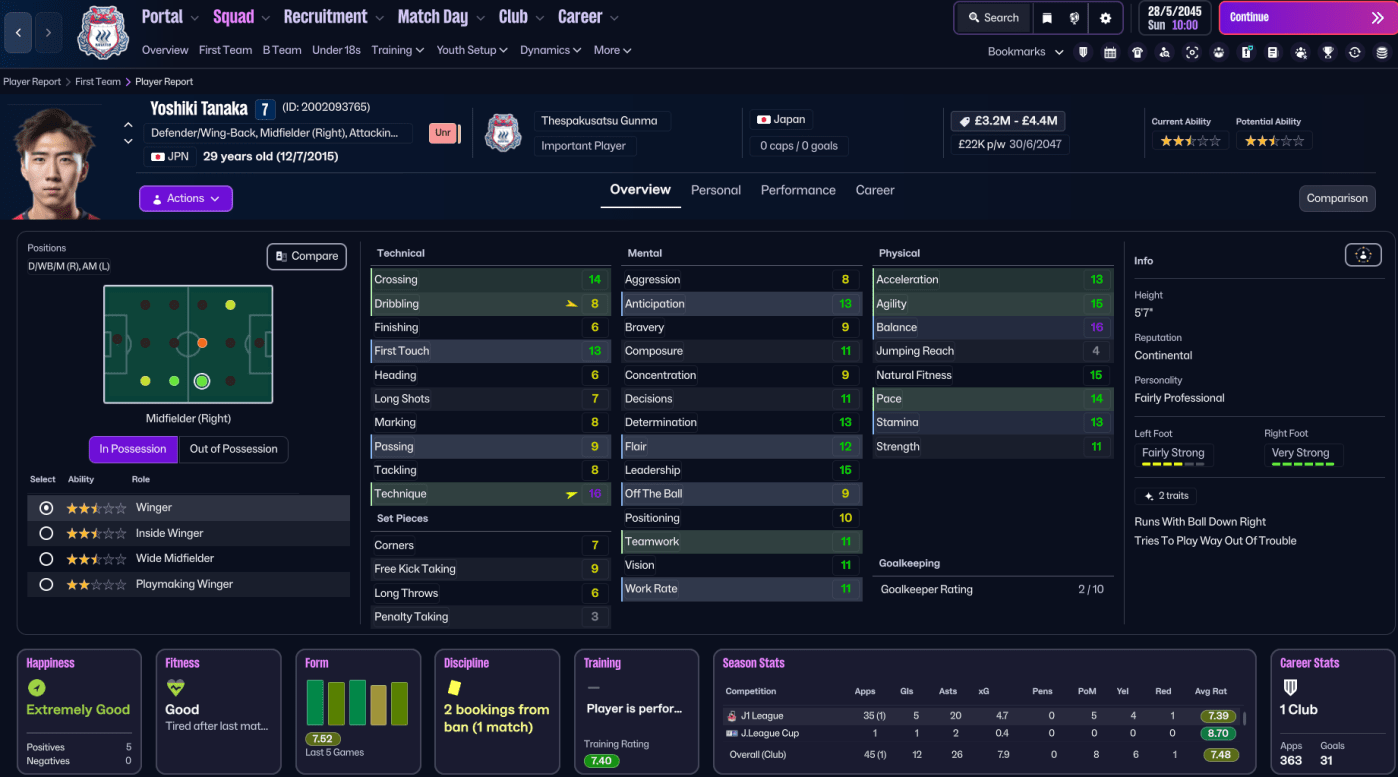
Thespakusatsu Gunma bagged consecutive Japanese titles and became world champions with a famous 3-0 victory over the mighty FC Barcelona in 2043. That success saw the club rise up the world rankings, becoming the 15th most reputable club in the world – 18 years on from lingering in J3 League mediocrity.
Less than a year on from moving into the new Thespakusatsu Gunma Stadium, the club was immediatelyheading back to its former home. The Gunma board announced a 12,937 extension that will take 15 months to complete, forcing a return to Maebashi Stadium for the 2043/44 campaign. The board also finally agreed to manager Robaato Rasamu’s requests to improve the youth facilities to “excellent,” but only after their training facilities had been downgraded.
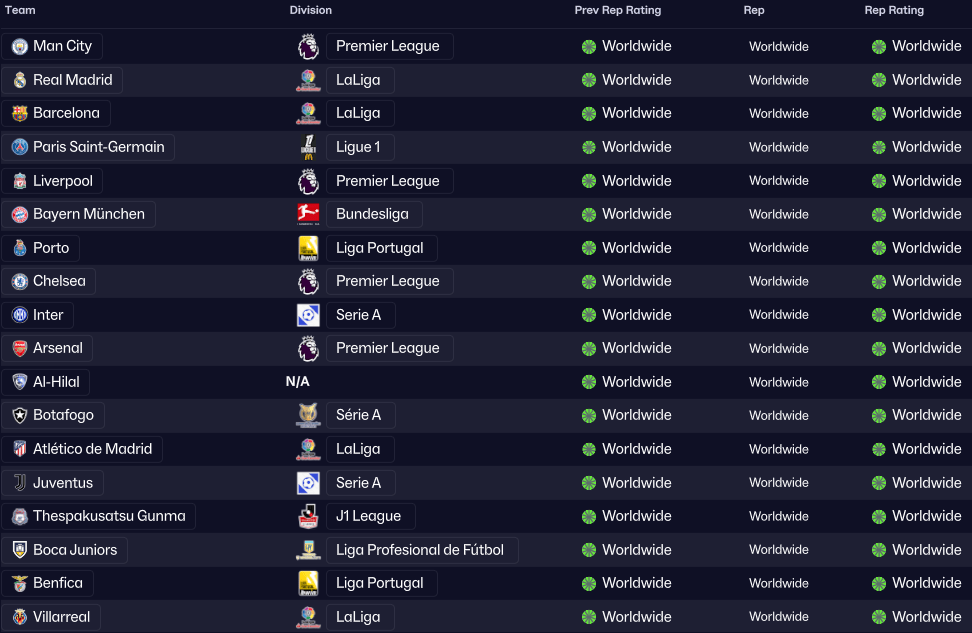
The summer of 2043 began with a bidding war for midfielder Hiro Tamada, who could barely get a game for Gunma, and he joined PSG for a new club record £10.5m. Defender Abou Zabré, who joined for £160k 12 months ago, forced a £9.75m move to Saudi and out-of-favour midfielder Toshiki Hayami joined Sanfrecce Hiroshima for £2.7m, centre back Satoshi Asahi went to Saudi for £3m and right back Hiroshi Ando joined Vissel Kobe for £2.4m. While the club saw off a potential record deal of £14m for midfielder Mitsuhiro Kato from Porto. And they didn’t need that money, because the bank balance surged to a new high of £66.3m, while Rasamu had a transfer kitty of £70m.
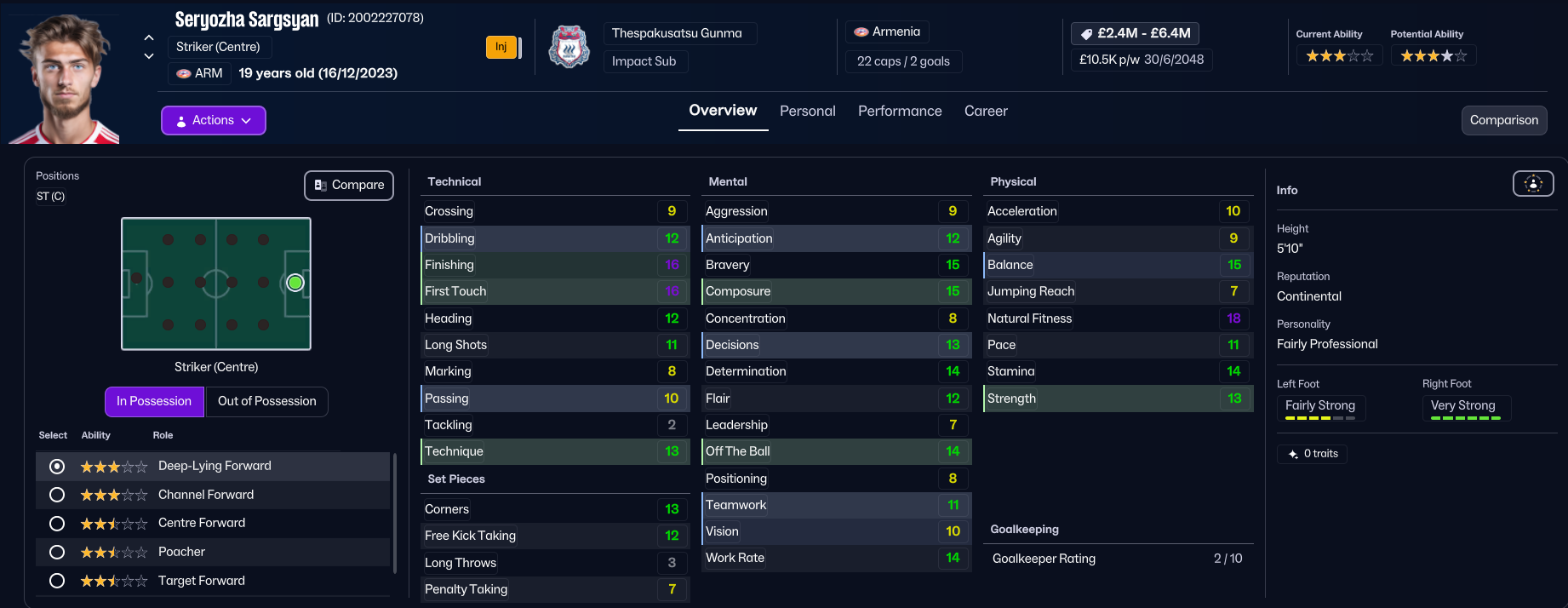
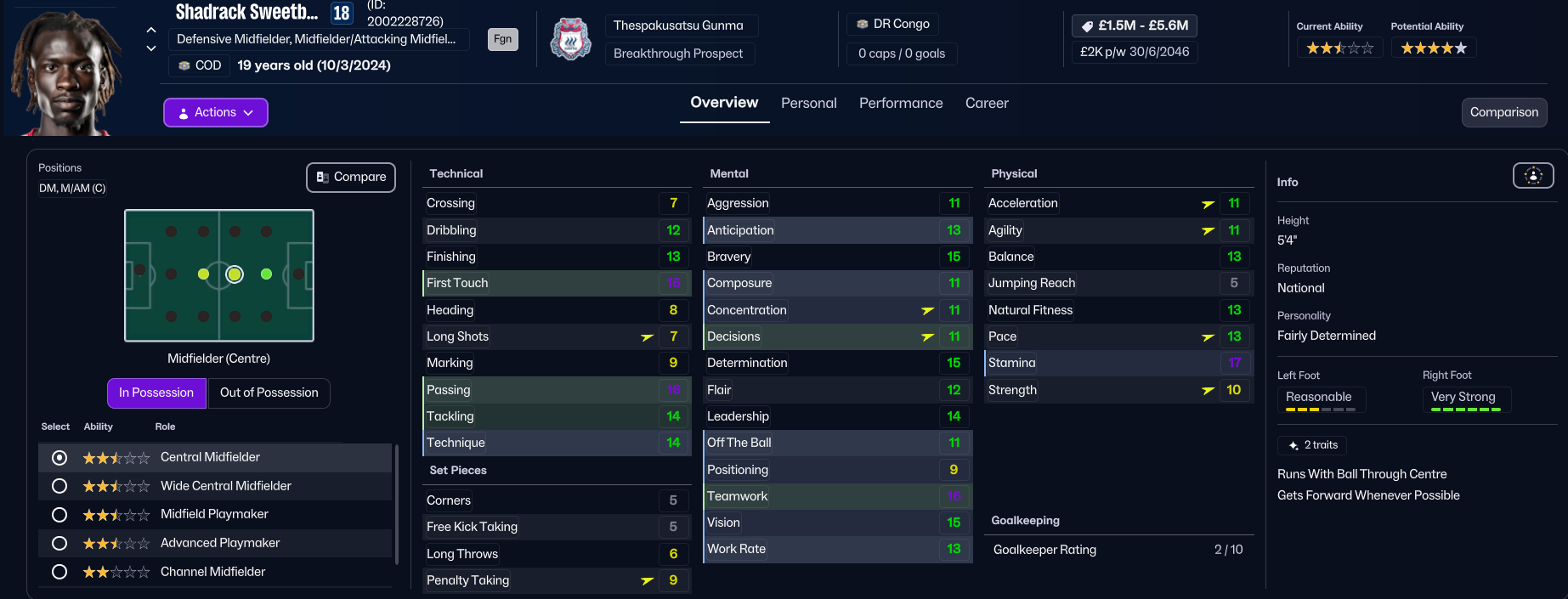
Rasamu made a few signings to bolster his young attacking options, with the pick of them being Armenian striker Seryozha Sargsyan, who joined for £500k from Shirak and will provide backup to Andrzej Szpucha. He also promoted midfielders Shadrack Sweetbert and Dida and 6-time capped Japan defender Masayuki Hasegawa.
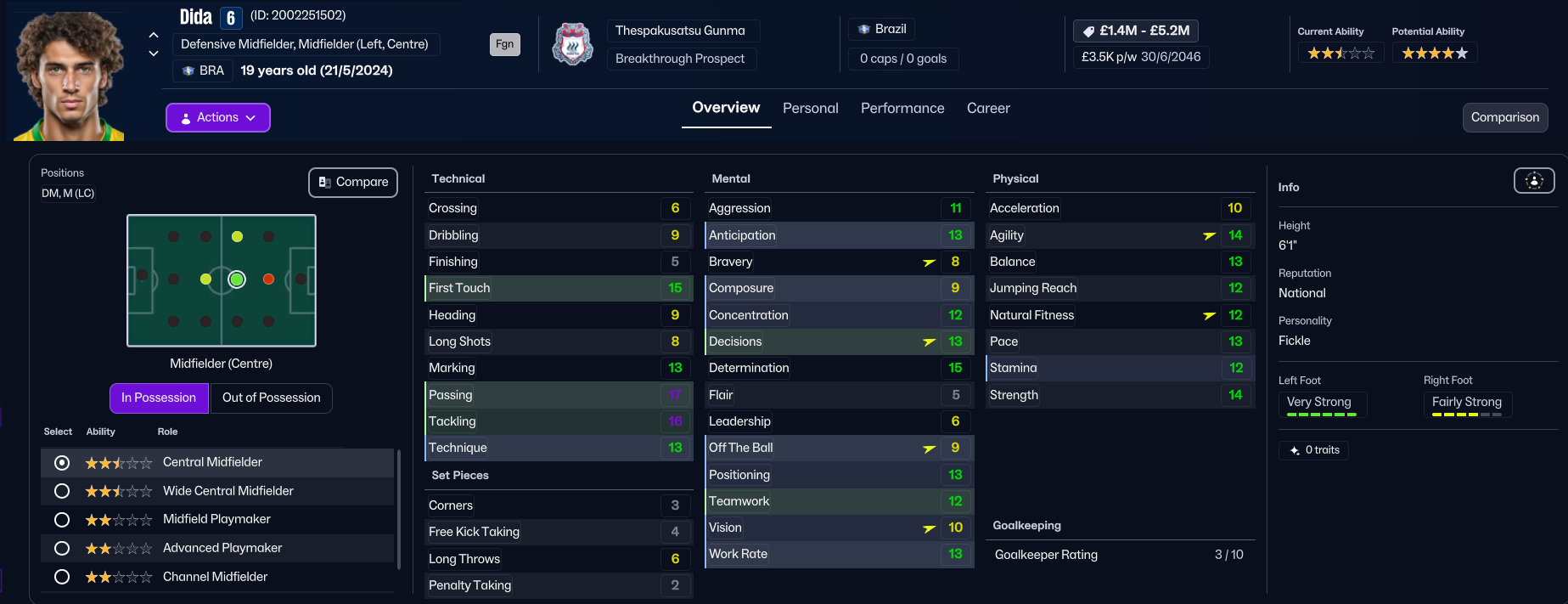
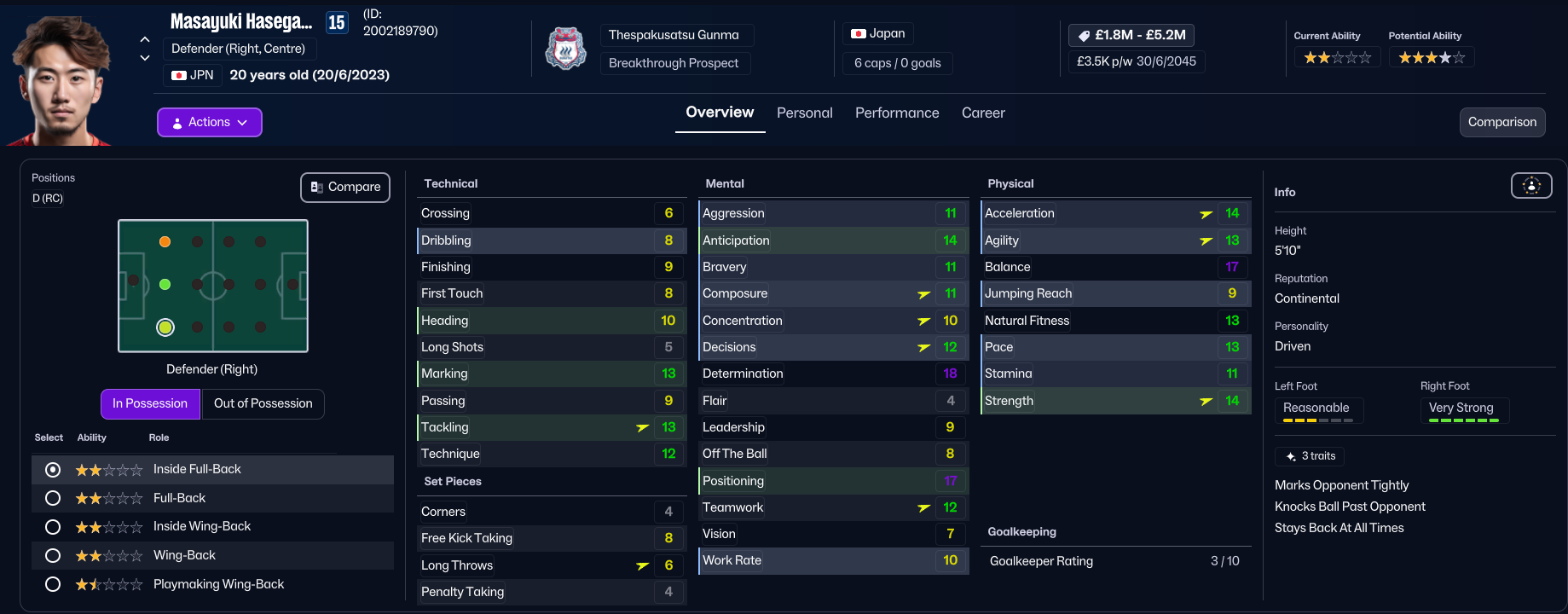
Rasamu stuck with the 4-3-3 approach that had worked nicely for the last two campaigns, with exactly the same first 11 as last season.
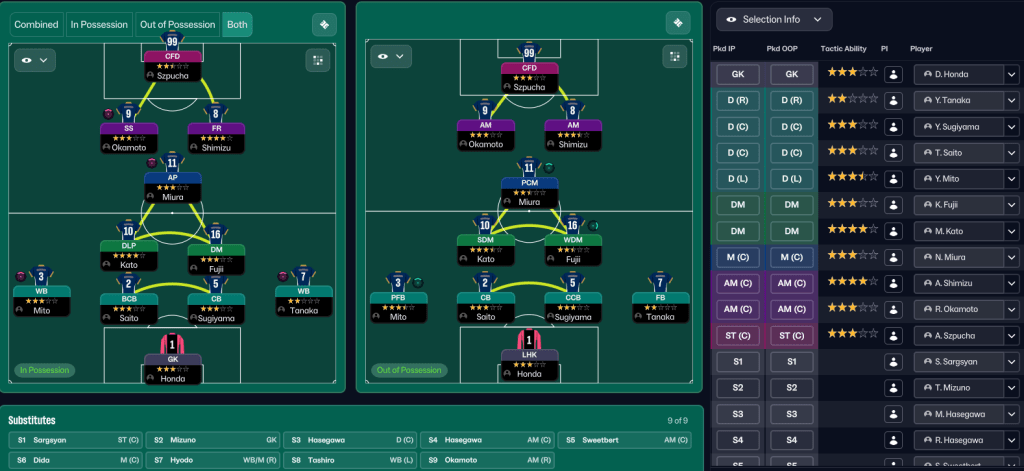
Targeting 3 Successive Titles
Coming into their 13th season in J1 League, the Japanese bookies finally made Thespa Gunma the favourites at 8/11 to win three in a row. Kashiwa are 5/1, followed by Gamba Osaka (11/1) and Shimizu S-Pulse, Urawa Red Diamonds and Kashima Antlers (20/1).
Gunma began their title defence with a thriller as academy product midfielders Atsushi Shimizu and Naoya Miura put them two up at home to Yokohama before Szpucha sealed a 3-2 win. Sweetbert scored 17 minutes into his debut, but it was in vein as they fell to a 3-1 defeat at Shimizu. Miura nicked a 1-0 at home to Jubilo, before new boys Sargsyan and Sweebert earned a 2-0 victory at Matsumoto, and they hit top gear to dominate Sapporo 3-0. The solid start continued and, despite losing as many games as all of last season, Gunma sat 2nd, just 1 point off top spot, heading into the winter break.
The new year began with a massive sale as Leverkusen offered £15m for Miura, and Rasamu negotiated them up to a huge record sale of £30m. That saw the improving Sweetbert earn the Japan international’s place in midfield, with the next prodigy on the conveyor belt stepping up in exciting midfielder Takashi Yamashita. Rasamu also allowed backup left back Hayato Tashiro, who got grumpy and wanted ludicrous money, to join Shimizu for £7.5m.
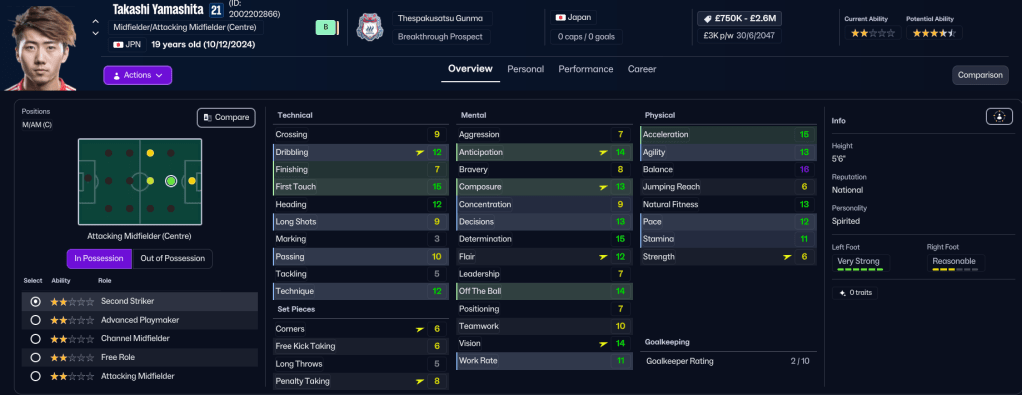
Gunma showed no signs of missing Miura as Yamashita scored two brilliant goals to kick off 2044 with a 4-1 win at Yokohama. A few days later, they added another piece of silverware to the cabinet, as Riku Hasegawa’s goal was enough to defeat Kashiwa and lift the Fuji Xerox Super Cup at the fifth time of asking. Szpucha missed most of the first half of the season through injury but returned in style with a brace leading a 5-1 thumping of Yamaga. The strong form continued in the new year, and a 2-0 win at Gamba and consecutive 1-0 away wins moved Gunma a huge 12 points clear in early April. And, with 8 games remaining, Gunma were firmly in the driving seat.

The run-in began with a 2-2 at home to Frontale, but Gunma had a far less manic conclusion than recent seasons. Okamoto, playing up front to cover yet another Szpucha injury, bagged a brace in a 2-0 win at FC Tokyo before Yamashita inspired a narrow 2-1 win over 2nd-place Hiroshima and Okamoto scored again in a 2-0 win at Zelvia. Those victories all but guaranteed the title, despite Kashiwa having a mass of games in hand. And they confirmed three J1 League titles in a row in pretty tame fashion as a 0-0 at home to Nagoya was followed by Kashiwa losing 2-0 at Ehime.
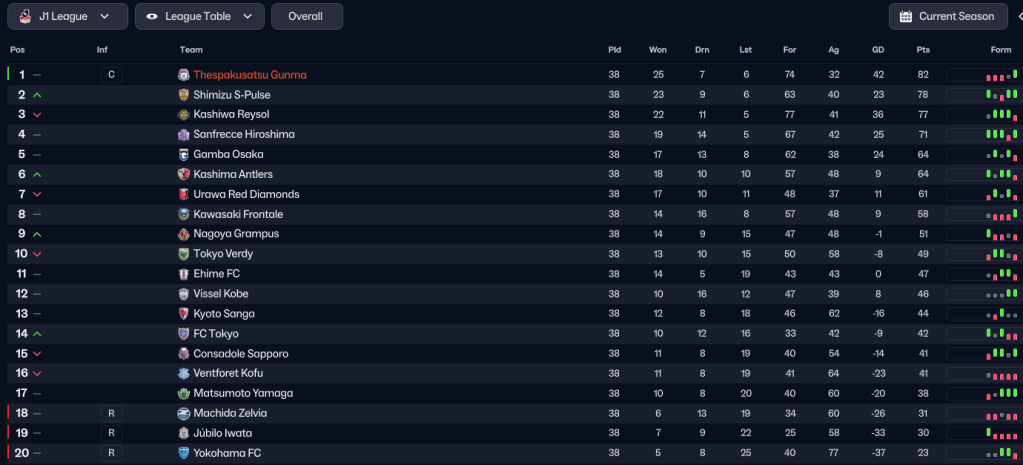
Despite a tricky end to the season, Gunma won their 4th Japanese title by 4 points from Shimizu. They finished on 82 points (10 fewer than last season) after 25 wins, 7 draws and 6 defeats, scoring 74 and conceding 32. This title was more of a team effort, with full backs Yoshiki Tanaka and Yoshimitsu Mito leading the way with 10 assists apiece. They had much lower contributions from main men Szpucha and Shimizu, who worryingly decided his time at the club would be up at the end of his contract in 2045.
Targeting Four Consecutive Titles in 20th Season
Interesting news in the summer saw academy product striker Masaya Nishi, who departed for Saudi in 2035, announce his retirement. He came through the Gunma academy in Rasamu’s first youth intake in 2025 and remains the club’s record league scorer with 101 goals. But his retirement aged 34 is a sign of just how long this save has lasted!
The recent transfer activity allowed the Gunma board to clear the debts accrued by building the new stadium. It also saw the club head into 2044/45 with a new high of £90m in the bank and a £94m transfer budget. Rasamu decided to cash in on injury-prone striker Szpucha, who returned to Poland with Legia for £2.6m, while 5ft 7in centre back Toshiya Saito moved to Saudi for £7m, midfielder Kazuki Hamano joined Kashima for £2.5m and striker Fumiya Wada went to Sharjah for £700k.
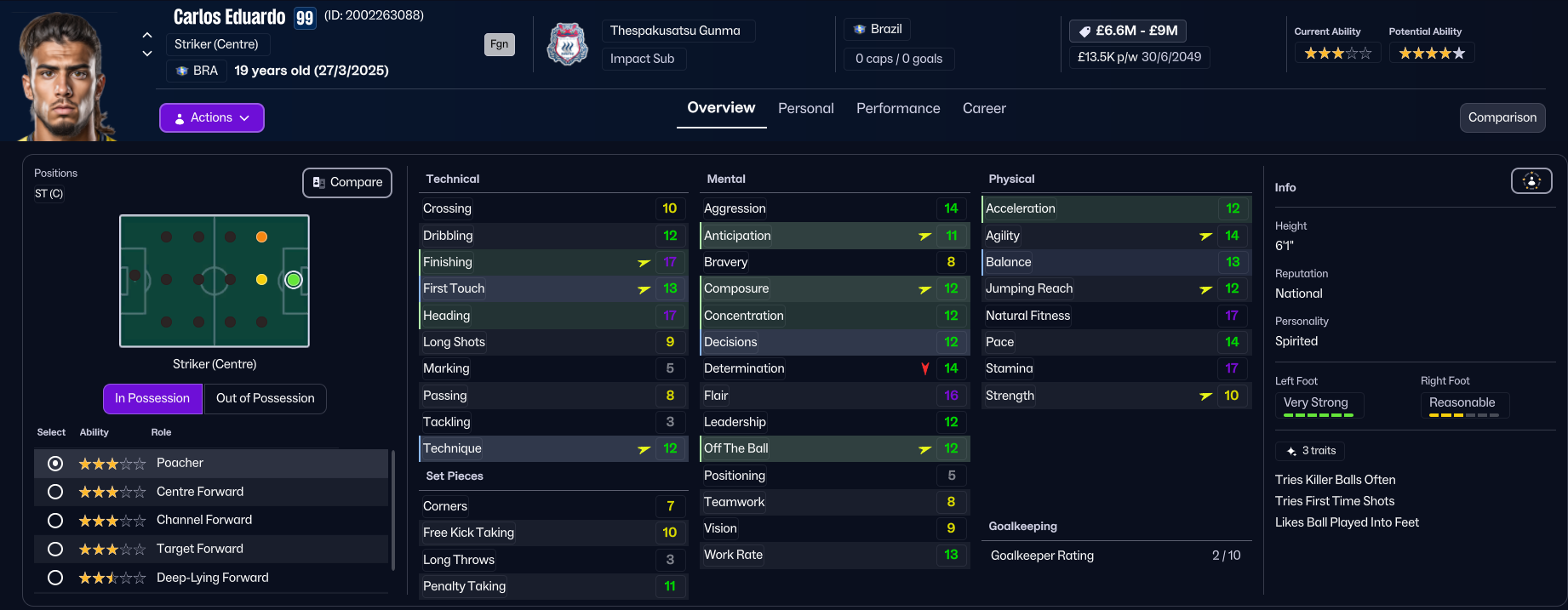
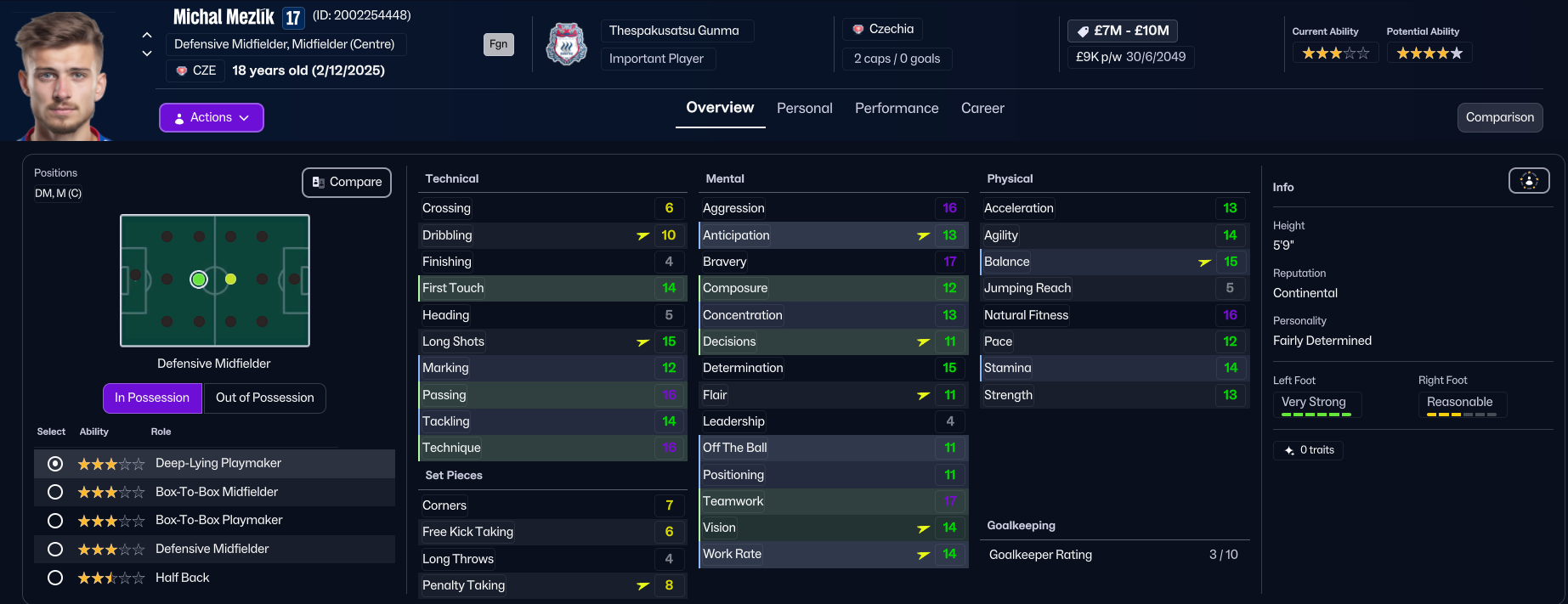
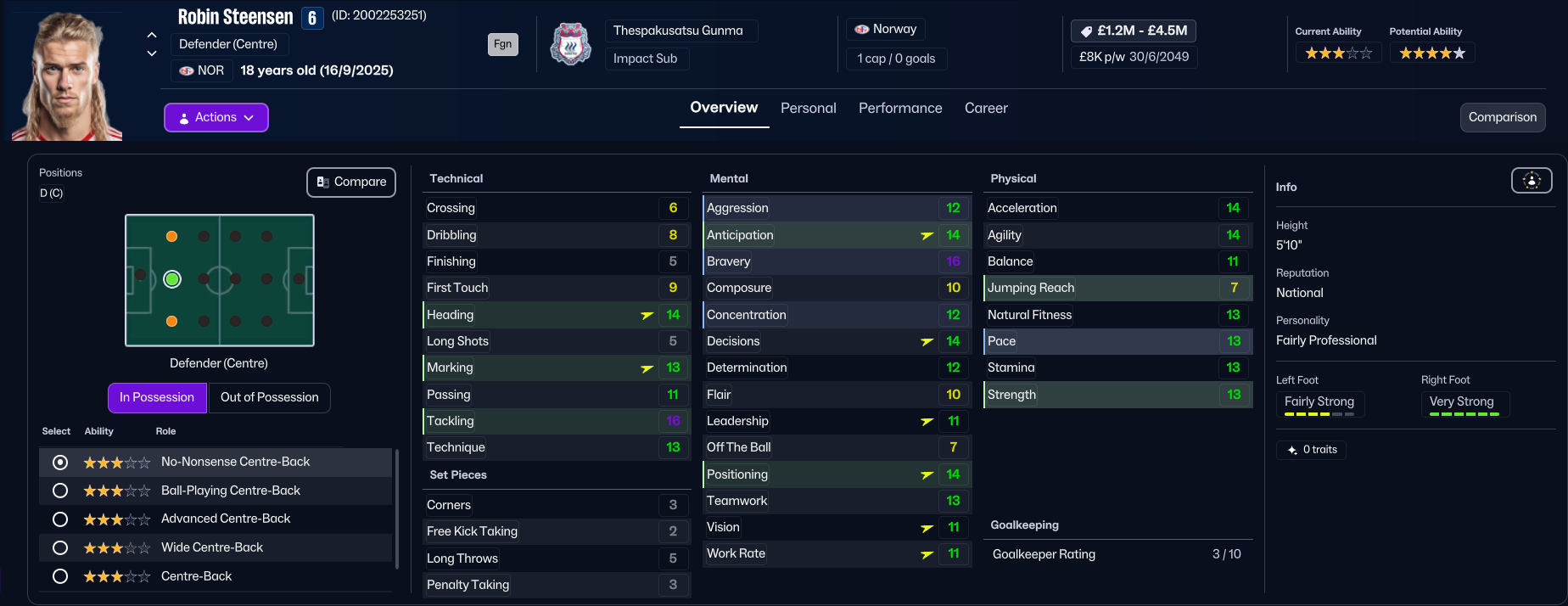
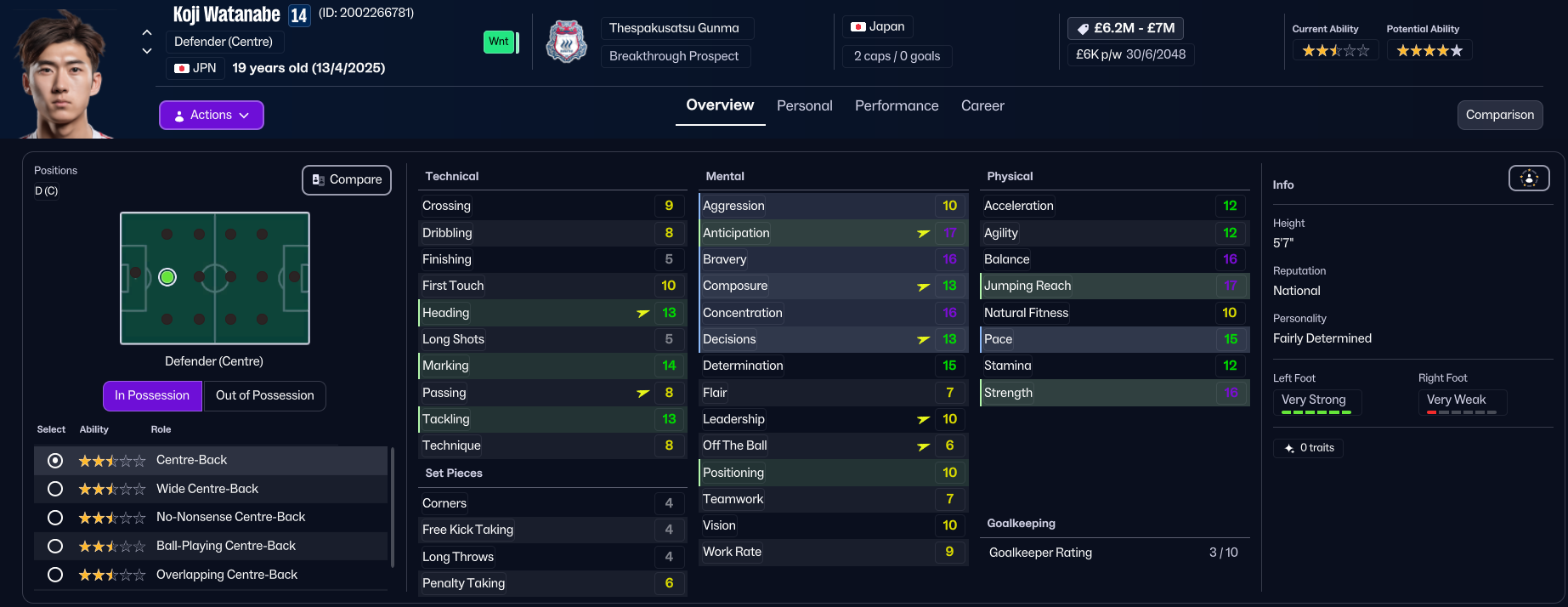
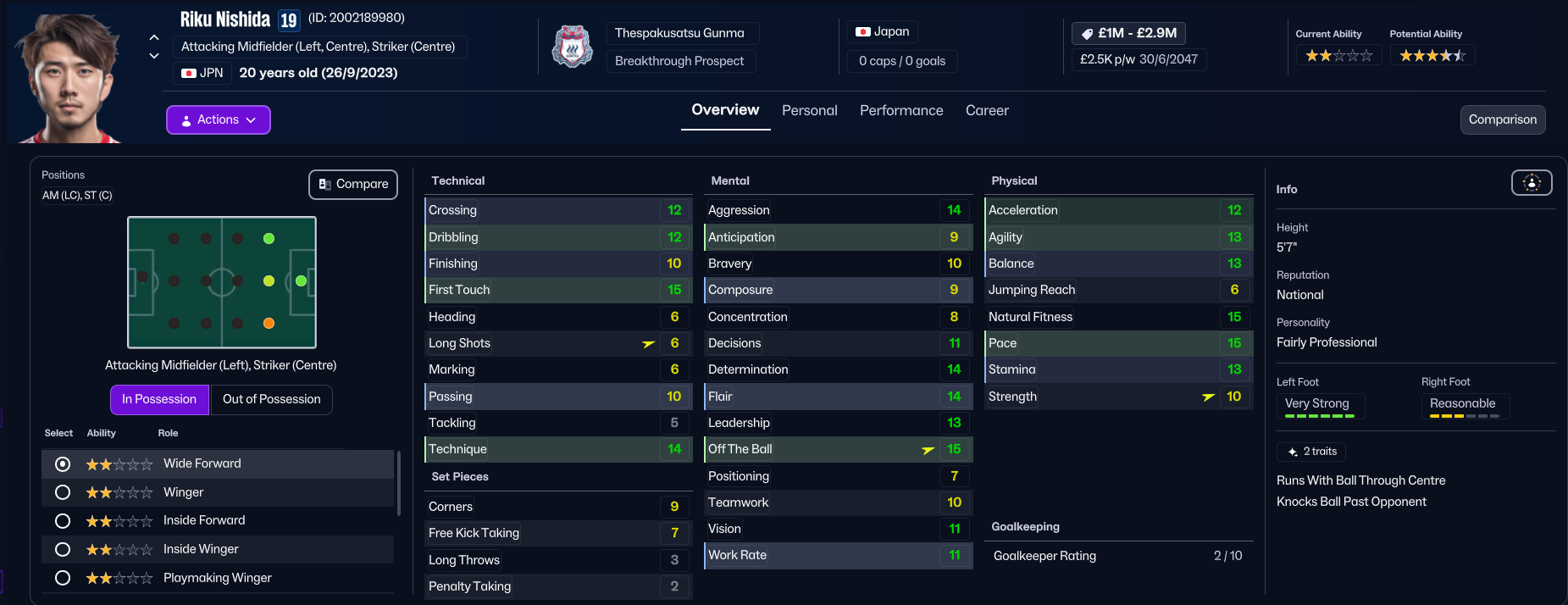
Rasamu sanctioned those sales because he’d identified better replacements. A long-term target was finally interested, so he paid a club record £8.5m to bring in Carlos Eduardo from Palmeiras. He was joined by Czech midfielder Michal Mezlík for £4m from Sigma Olomouc and Norwegian centre back Robin Steensen for £4.5m from Bodo, plus a few young talents who’d start in the youth sides. While Rasamu promoted exciting centre back Koji Watanabe, attacker Riku Nishida and wingback Taisei Ishii.
The season began with a testimonial for Gunma’s legendary record league appearances holder Mito (now 366), who turned 30 in May, against St Louis on the club’s tour of the USA. Since J1 League started back in 1993, no club has ever won four successive titles, with Gunma joining Kashima (2007-2009) and Kashiwa (2039-2041) as the only teams to win three straight. And the bookies made them 15/8 favourites to make history, followed by Shimizu (12/5), Kashiwa (6/1), Gamba (13/1) and Urawa Reds (18/1).
Rasamu decided the players available were better suited to a slightly tweaked, more progressive version of the 3-4-3 approach he’d used in previous seasons. That began well as Eduardo scored twice on debut, sandwiched by a Shimizu screamer, to earn a 3-0 opening victory at Sapporo. Next up, they entertained former affiliate club ReinMeer, who’d impressively climbed to J1 for the first time, and Mezlik scored on debut in a comfortable 2-0 victory.
The expansion of Thespakusatsu Gunma Stadium was completed at the end of August, taking it to a new capacity of 38,812, the 7th biggest in J1. A new club record 37,676 people flocked to see Gunma’s heroes and homegrown star Okamoto stole the show with both goals in a 2-0 win over Kobe. That was part of a stunning start to the season as Gunma won the first 10 league games and went unbeaten through the first 15 through to their annual defeat at Kashiwa, led by Eduardo hitting the ground running with 12 goals in 12 starts. And they took a 4-point lead into the winter break. The solid form continued, and a two-horse race ensued, with Gunma leading Gamba by 3 points with 5 games remaining,

Gunma stretched their lead by 2 points as Sweebert and Okamoto edged a 2-1 win at home to Nagoya, while Gamba drew at Ehime. Eduardo bagged a hat trick, which took him past Szpucha’s club record for most league goals in a season, to down Kyoto 4-1 and scored the opener in a comfortable 3-0 victory at FC Tokyo. The next day, Gamba lost 2-1 at Kobe to hand Gunma their record-breaking fourth successive title. That took the pressure off and allowed the whole of Gunma to turn up for an emotional farewell to Shimizu, who followed through on his promise to leave at the end of the season. And typically, his final contribution was creating the final-day winner for Sugiyama.
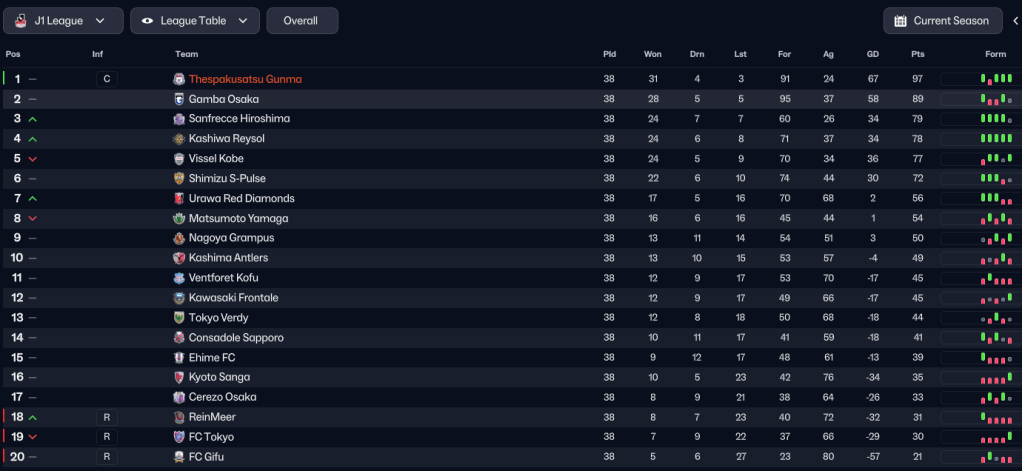
Gunma went on to win J1 League with a new record tally of 97 points, surpassing Kawasaki’s total of 92 set back in 2022. They won 31, drew 4 and lost 3, scoring 91 and conceding just 24. Eduardo was the top scorer with 30 in 36 (6 more than former striker Ishii) and Tanaka and Mito led the assists chart with a new league record 20 and 14.
Mixed Fortunes in AFC Champions League
Gunma cruised through the group stage of the Asian Champions League in 2043/44, then thrashed Western Sydney 10-3 on aggregate, but a tired team got completely outplayed and lost 3-0 to Al-Ittihad in the quarters. A year later, they also eased through the group with predominantly rotated teams, then eased past Adelaide United 5-2 on aggregate. More familiar opponents followed as, for the seventh time in eight years, Gunma faced Al-Nassr in the quarters. And they came out on top for the fourth time as early Sugiyama and Eduardo headers edged a 2-1 victory. Three days later, an all-Japanese clash saw Gunma face Shimizu, and again started well as Okamoto finished smartly after 20 minutes. They controlled the game, had 20 shots to 8, and eventually killed it off as Eduardo tapped in Hyodo’s cross with 8 minutes remaining.
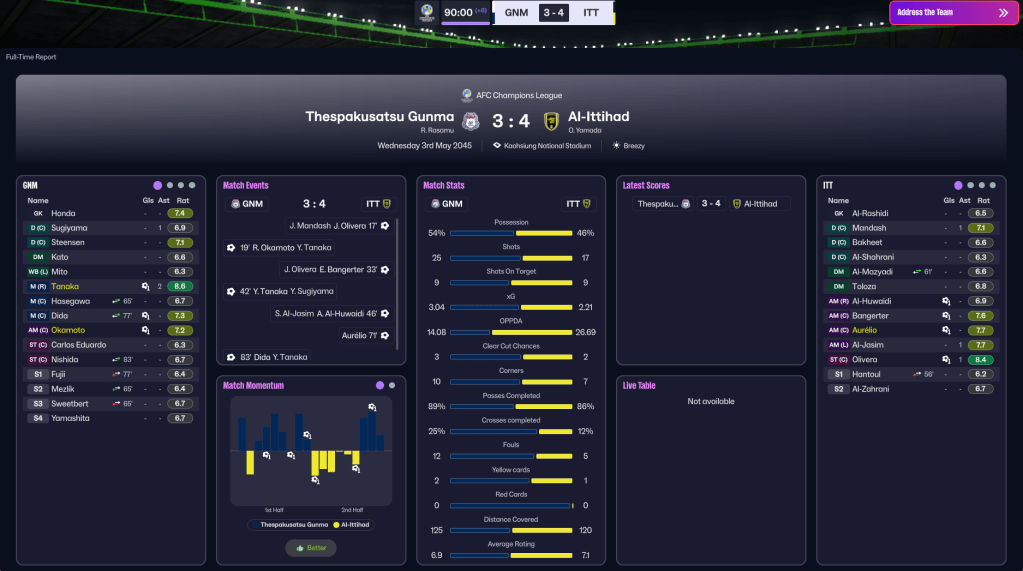
Gunma had a shot at revenge against holders Al-Ittihad, who beat Gamba 3-2, as they went into their third AFC Champions League Final in four years. Gunma were without talisman Shimizu, who twisted his ankle in the semi, for the big game in Taiwan’s 40,000-capacity Kaohsiung National Stadium. So Rasamu lined up:
Honda; Sugiyama, Fujii, Steensen; Tanaka, Mezlik, Kato, Mito; Okamoto, Sweetbert; Eduardo
Subs: R Hasegawa, Mizuno, M Hasegawa, Nishida, Yamashita, Dida, Hyodo, Nishimura, Watanabe, Ishii, Kikui
Gunma started well, having 4 shots inside 10 minutes but put them all wide and, predictably, Al-Ittihad scored their first attack. However, straight from the kickoff, Gunma won a corner and, after Steensen recycled play, Okamoto drilled home from the edge of the box. Al-Ittihad again scored against the run of play, only for another corner to be recycled and Tanaka got in at the backpost to score another equaliser. After 13 shots to 5, Gunma went into the break at 2-2 but, annoyingly, the Saudis scored straight from the kickoff in the second half and scored a complete fluke to go 4-2 up. But Gunma continued to be the better team, missing a few decent chances before substitute Dida gave them hope. But, of course, nothing else happened and Rasamu felt they’d been a little hard done by to lose this game.
Special One Rasamu Celebrates Glory
The shift back to 3-4-3, which puts additional creative onus on the two wingbacks, worked wonders this season. Indeed, Tanaka (26) and Mito (17) combined for a ridiculous 43 assists, followed by Shimizu (14), Hyodo (8) and Hasegawa and Okamoto (6). Eduardo had a wonderful first season with 36 goals in 48 games, followed by Tanaka (12), Mito, Sugiyama and Shimizu (10) and Okamoto (9).
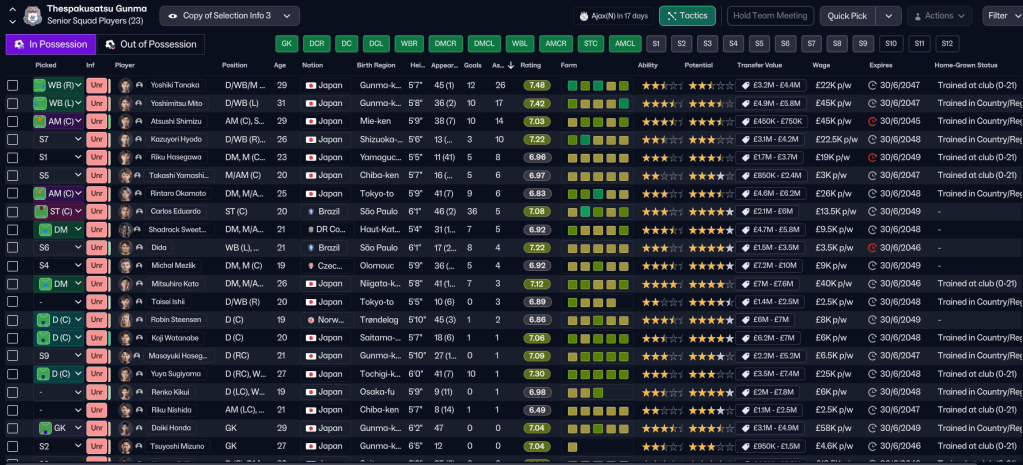
Youngster Mezlík has taken over as the best player at the club with a score of 453 in Rasamu’s attribute ID system, and he looks like becoming a really special player. Mito and Tanaka both have 141 assists for the club, while Mito is the first player to pass 500 matches in all competitions, leading the way on 529.
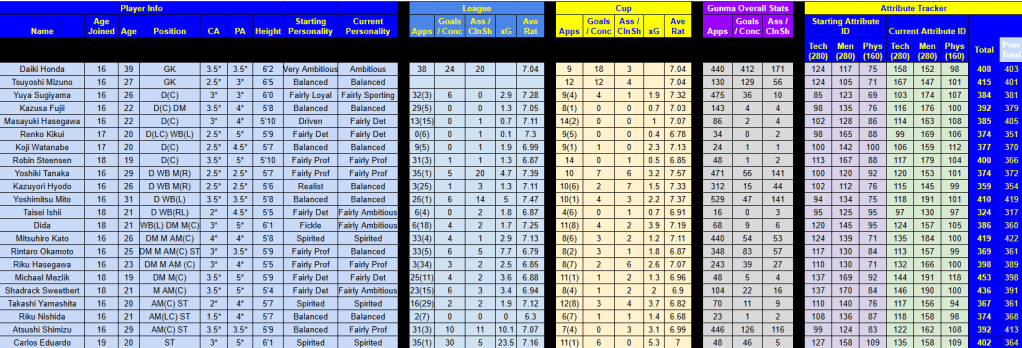
A special mention has to go to Atsushi Shimizu, who departs the club at the end of the season as a Gunma icon. Since coming through the academy in 2032, Shimizu has racked up 446 games, scoring 126 and racking up 116 assists, consistently being the club’s best player. However, he’ll be seeking pastures new and massive amounts of money as he joins Saudi side A–Shabab in July.
The latest league success saw Gunma legend Rasamu become the greatest Japanese manager of all time with five titles and two domestic cups – and modestly declared himself “a special one.” But how much time Rasamu will stay at the club remains to be seen. Gunma would head to their first Club World Cup in the summer, and the manager wanted another crack at winning a second Champions League. But next season would likely be his last at Gunma.
Could Rasamu claim that elusive second Champions League and make it five successive Japanese titles? Join us next Friday to find out!


 Football Manager Addict
Leave a comment