
Energie Cottbus was very much an East German football team on the up as Ruprecht Prusseit and his team of freebies and loanees achieved back-to-back promotions to 2. Bundesliga. However, the Dresden-born manager had plenty of work ahead of him as he prepared for his first taste of the German second tier.
Another cause for concern was the club’s finances, which stood at minus £1.2m heading into the new season, but had dropped as low as minus £3m the previous campaign. More concerningly, the club had a net debt of over £11m.
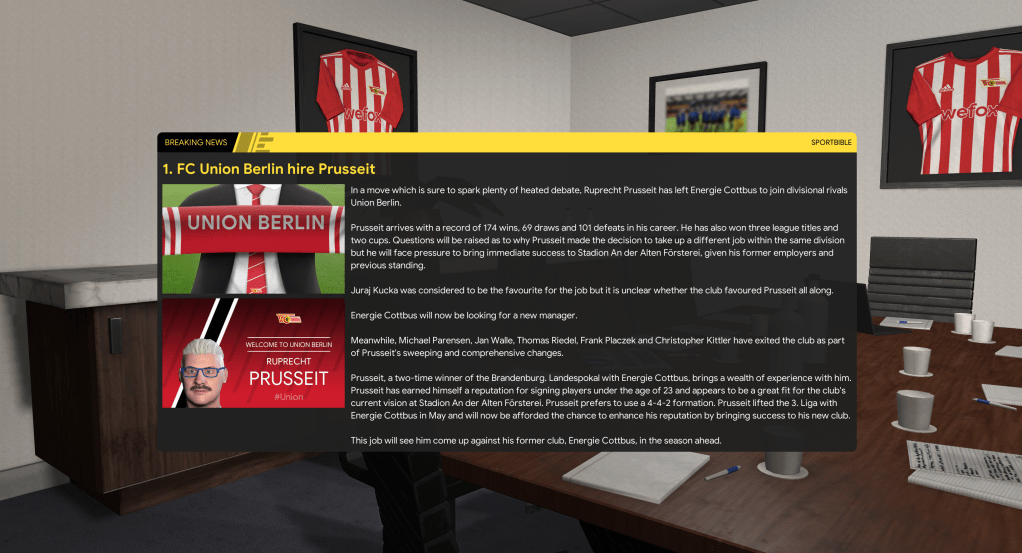
However, the summer saw a massive opportunity come Prusseit’s away as, fresh from Bundesliga relegation, Union Berlin sacked Dan Putrescu and soon approached him for an interview. The interview went very well and Union quickly asked for his staff changes and, a few days later, came in with a huge offer. And Prusseit signed a deal that nearly tripled his wages on £7k per week.
Ruprecht Prusseit joined club number five as he took charge of Union Berlin!
Who Are Union Berlin?
1. Fußballclub Union Berlin e. V., or 1. FC Union Berlin, is a professional club based in the Köpenik region of East Berlin. The club’s roots go back to original club FC Olympia Oberschöneweide, which went through numerous name changes before 1. FC Union Berlin was founded during the reorganization of German football in 1966.
The club nearly collapsed due to financial issues after German reunification in 1990 and was twice denied a licence to play in 2. Bundesliga in 1993 and 1994. They finally made it into the second tier in 2001, and reached the German Cup Final the same season. More tough times followed as they found themselves down in the fourth tier in 2006, but a swift rise saw them win the inaugural 3. Liga in 2009.
Union stayed in tier two until 2019, when they won their first-ever promotion to Bundesliga by beating Stuttgart in the relegation playoff. That made the club the first team from the former East Berlin to play in Bundesliga and only the fifth from the OstDeutscher region after Dresden, Rostock, Leipzig and Cottbus.
Union have struggled through this save, finishing in the bottom half in every season bar a 9th-place in 2024. They won a relegation playoff in 2028, improved to 12th in 2030 only to finally succumb to relegation 12 months later.
This move represents a massive step up in club for Prusseit. The club has a bank balance of £36m, a wage budget of £673,000 and a whopping transfer budget of £15m. And, considering Prusseit had only ever spent £3,900 on players, that was a massive step up! Union play at the 22,012-capacity Stadion an der Alten Föresteri, which was built back in 1920.
Promotion is an absolute imperative this season, so the pressure will very much be on Prusseit to swiftly deliver. But he started out by selling some of the deadwood that had gotten Union relegated in the first place, bringing in £7m for 12 players. However, he also lost star striker José Egueras, who wanted to leave after relegation, to Athletic for his £7.75m minimum fee clause then winger Alberto Segura to Köln for a new club record £14.25m.
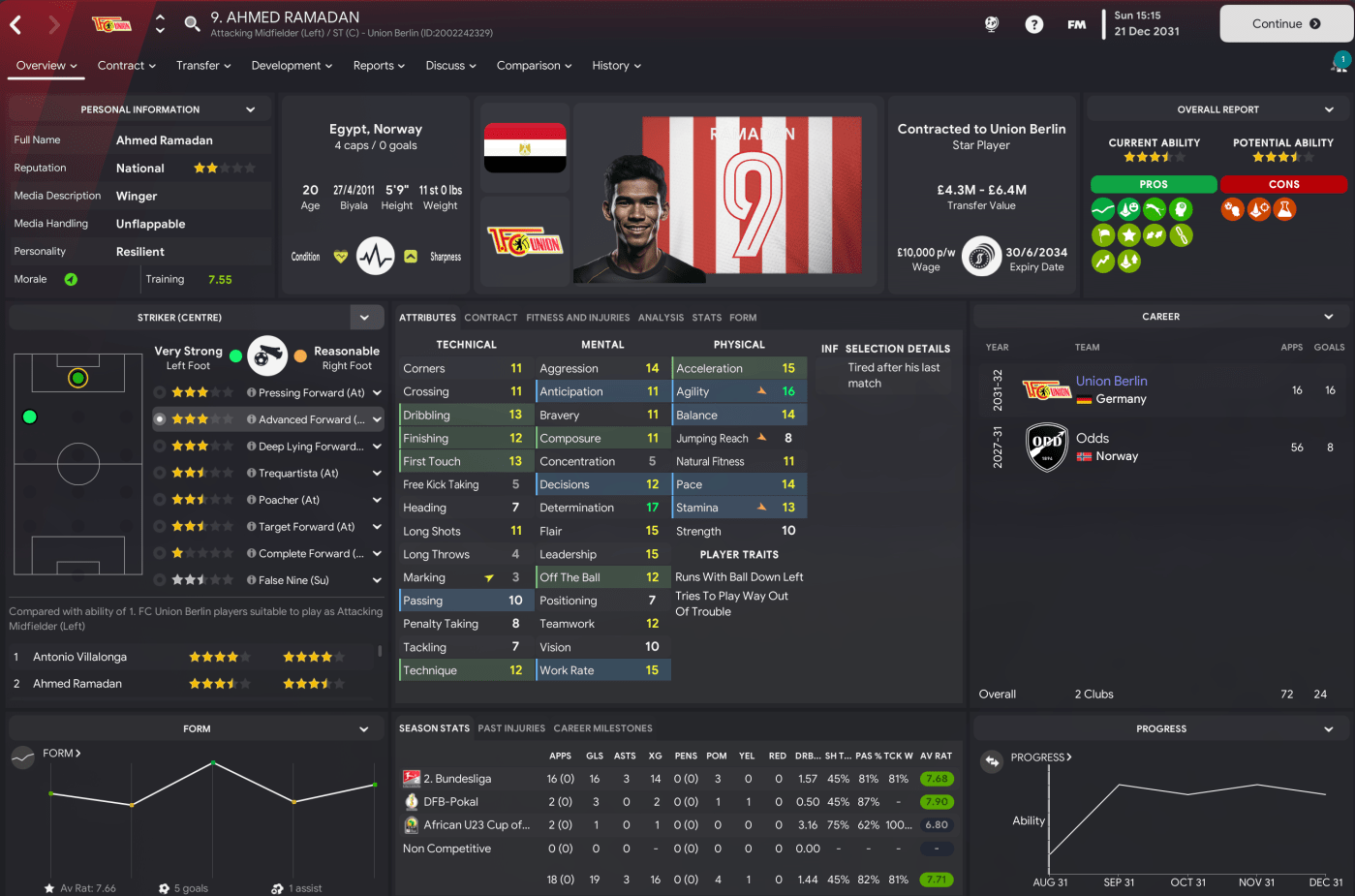
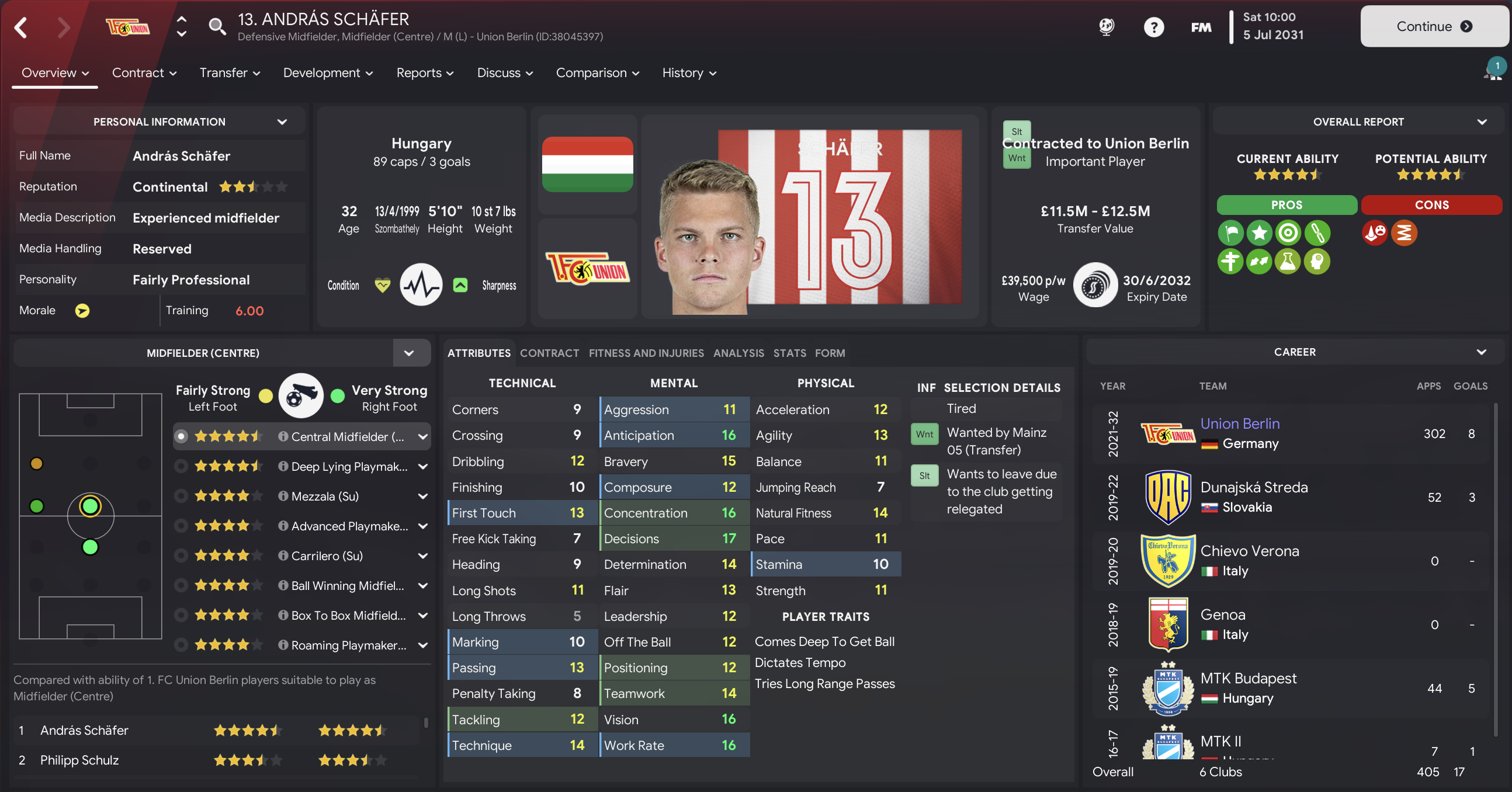
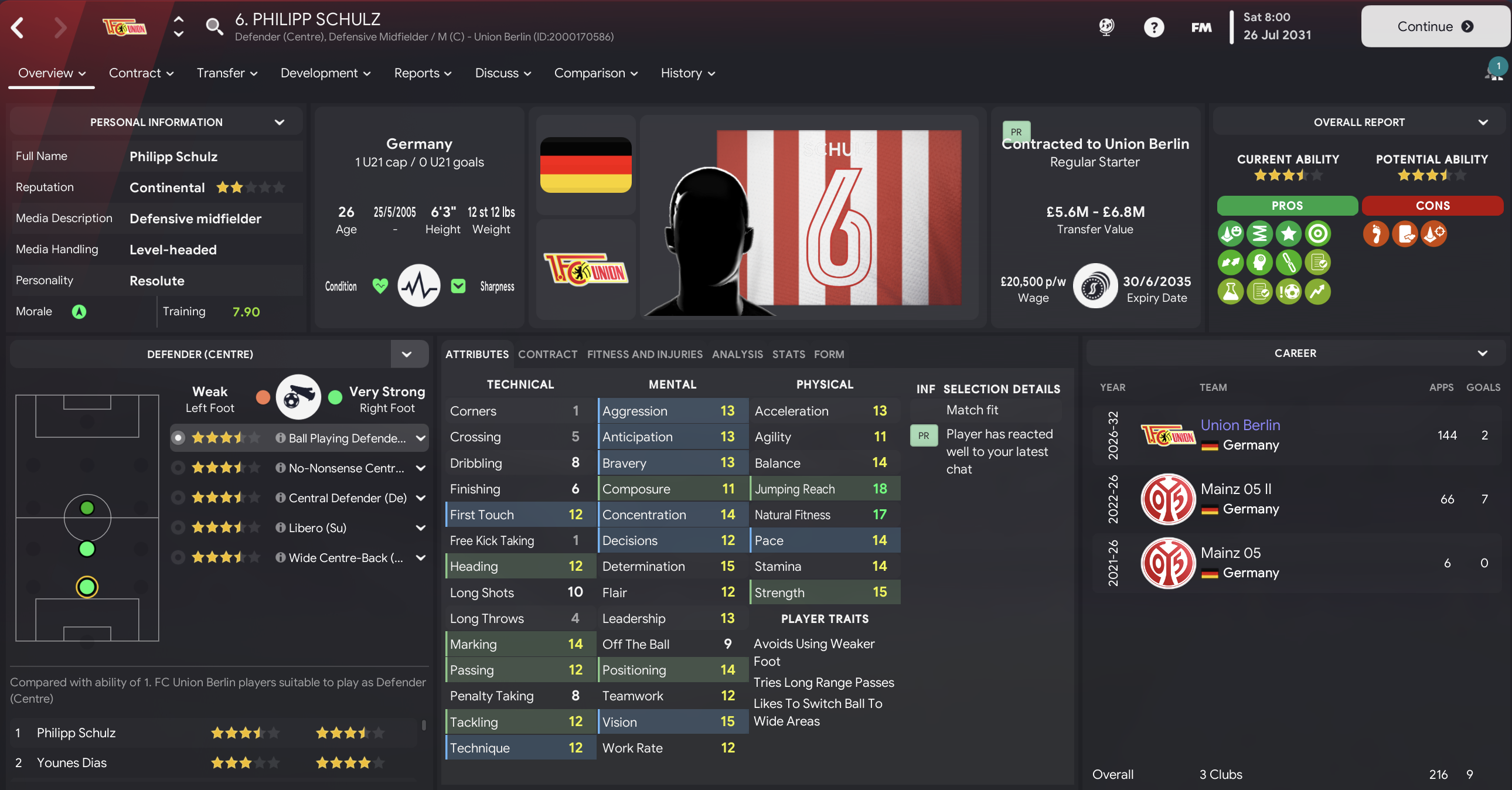
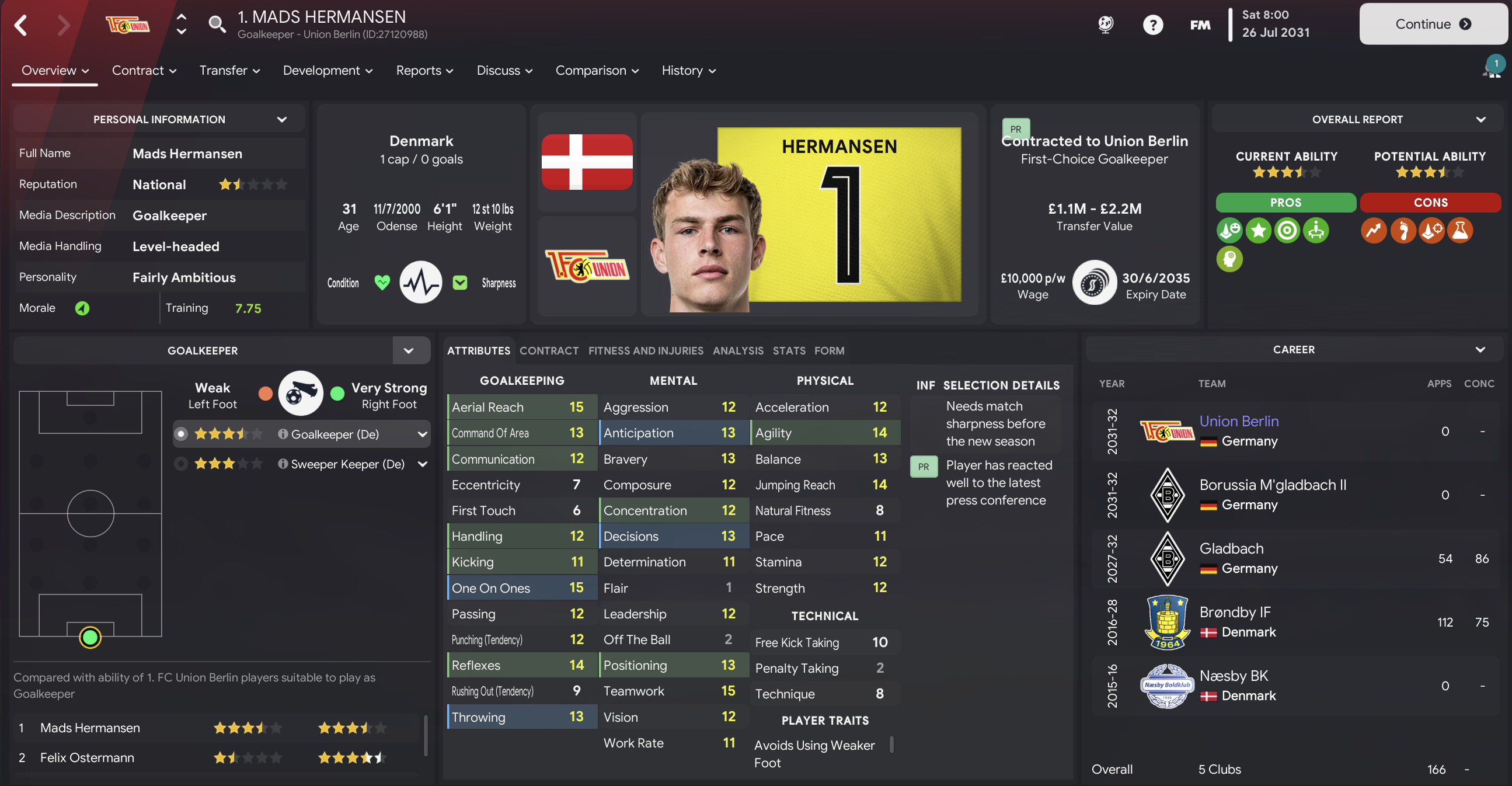
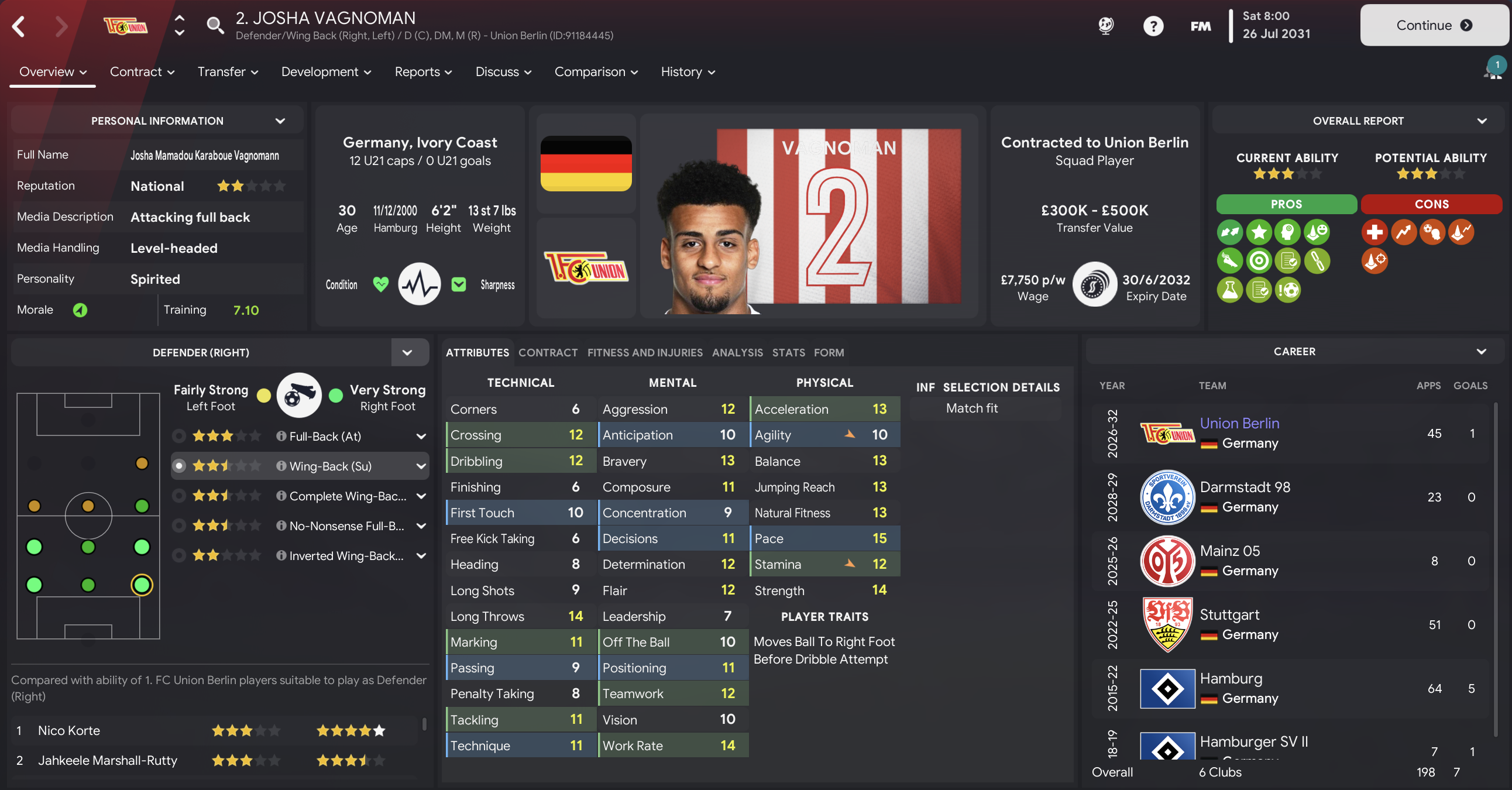
The best player remaining at the club is midfielder András Schäfer, who’s racked up over 300 league games for the club, followed centre-back Philipp Schulz and goalkeeper Mads Hermansen. They also had a site favourite on the books in versatile full-back Josha Vagnoman.
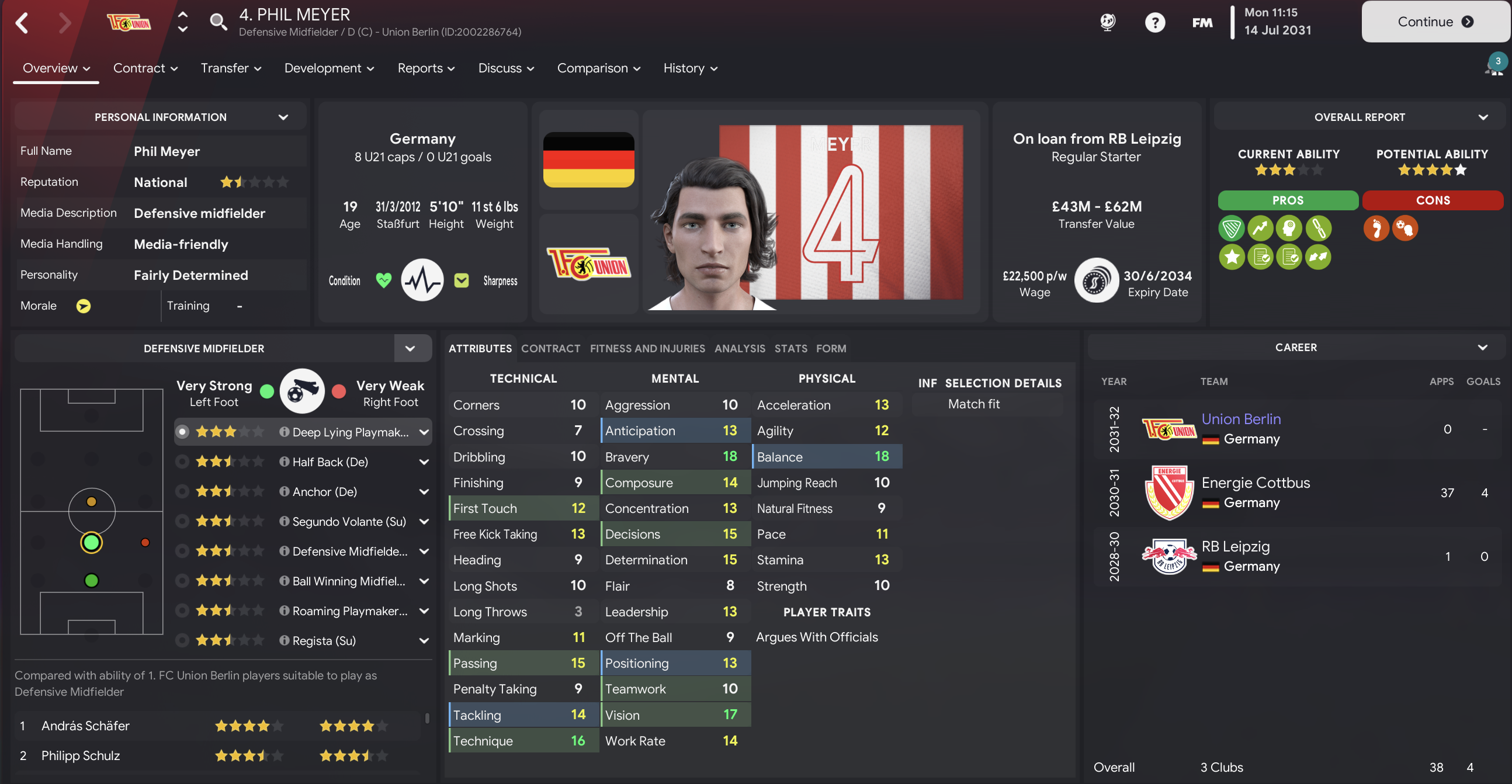
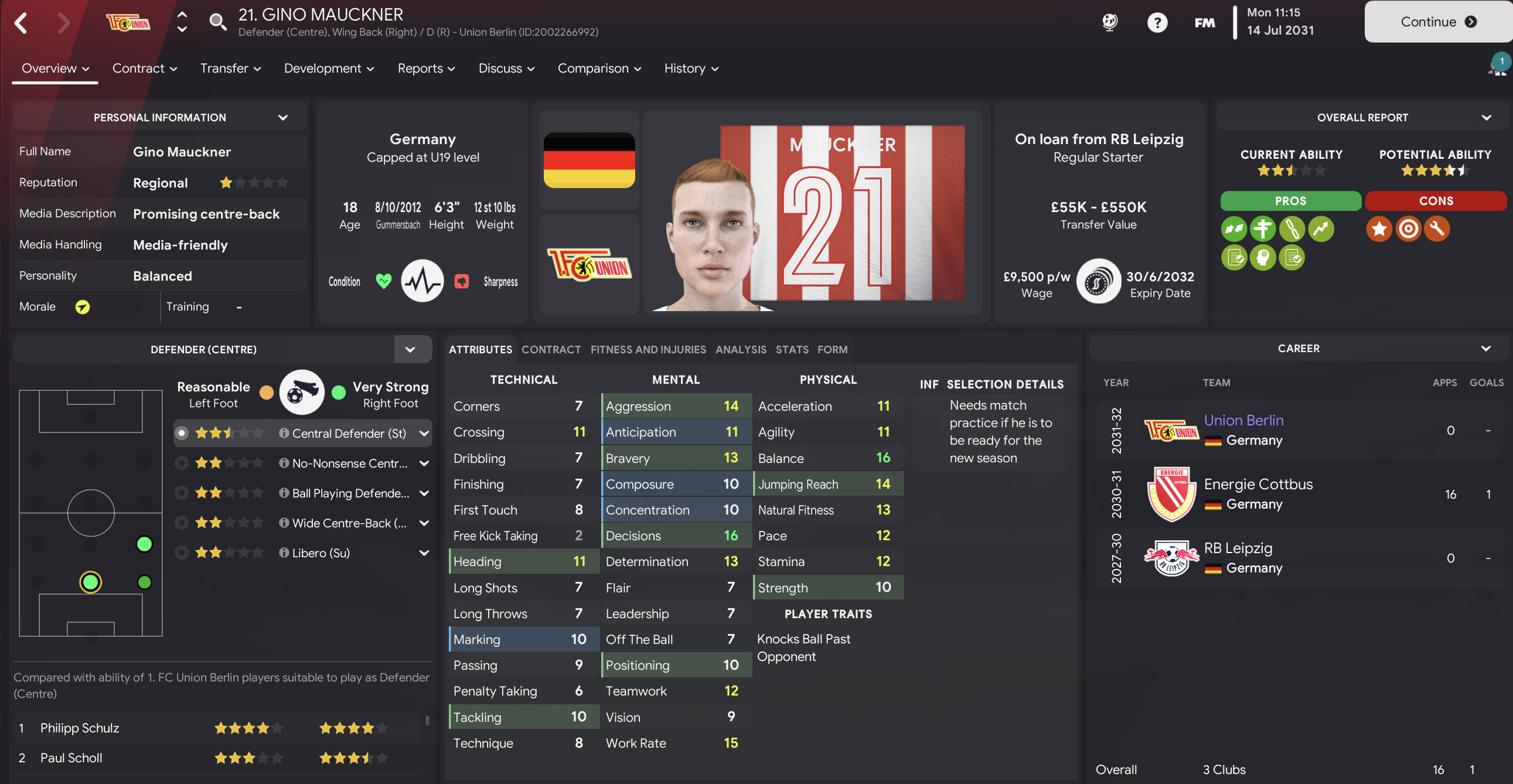
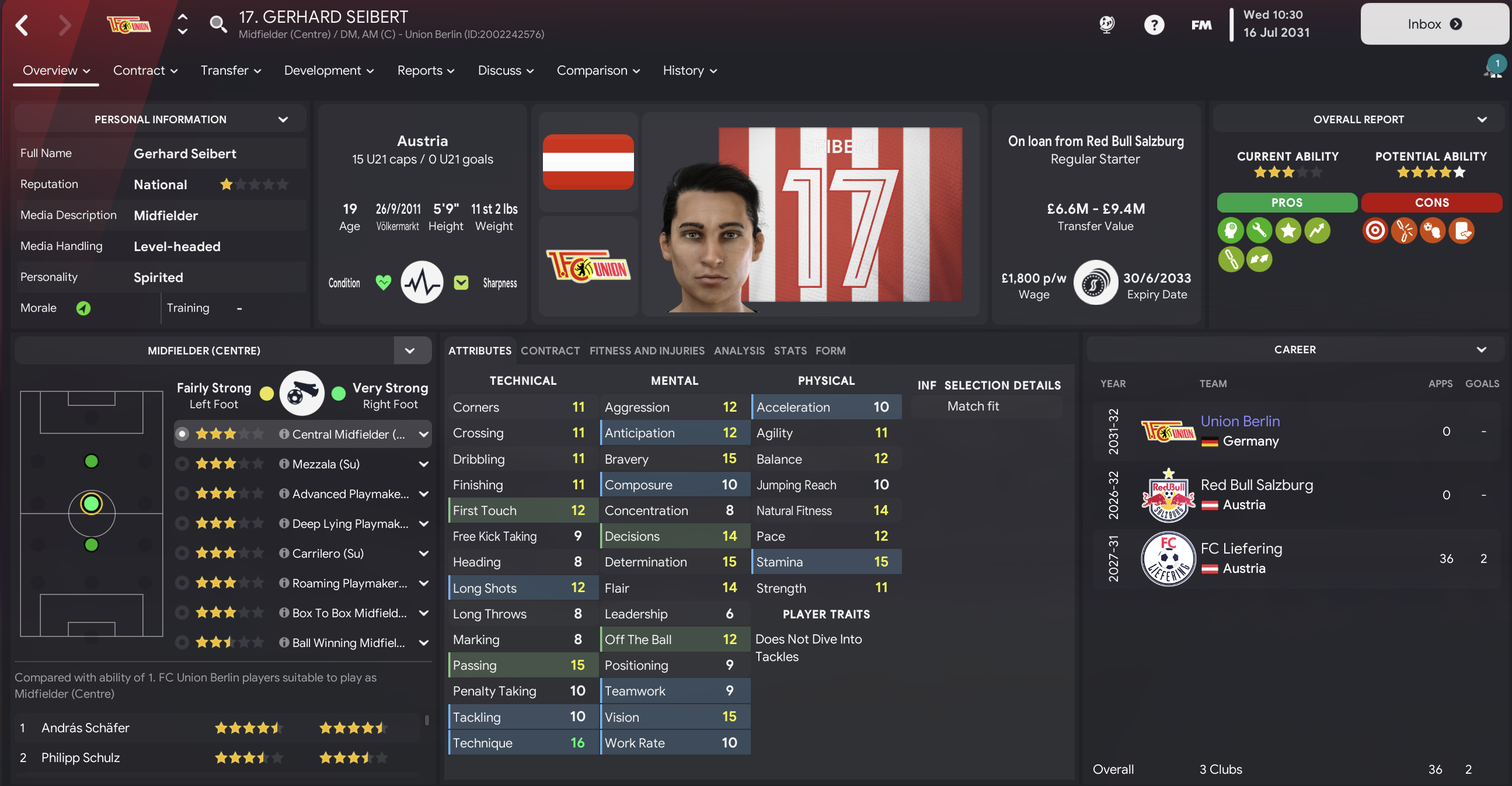
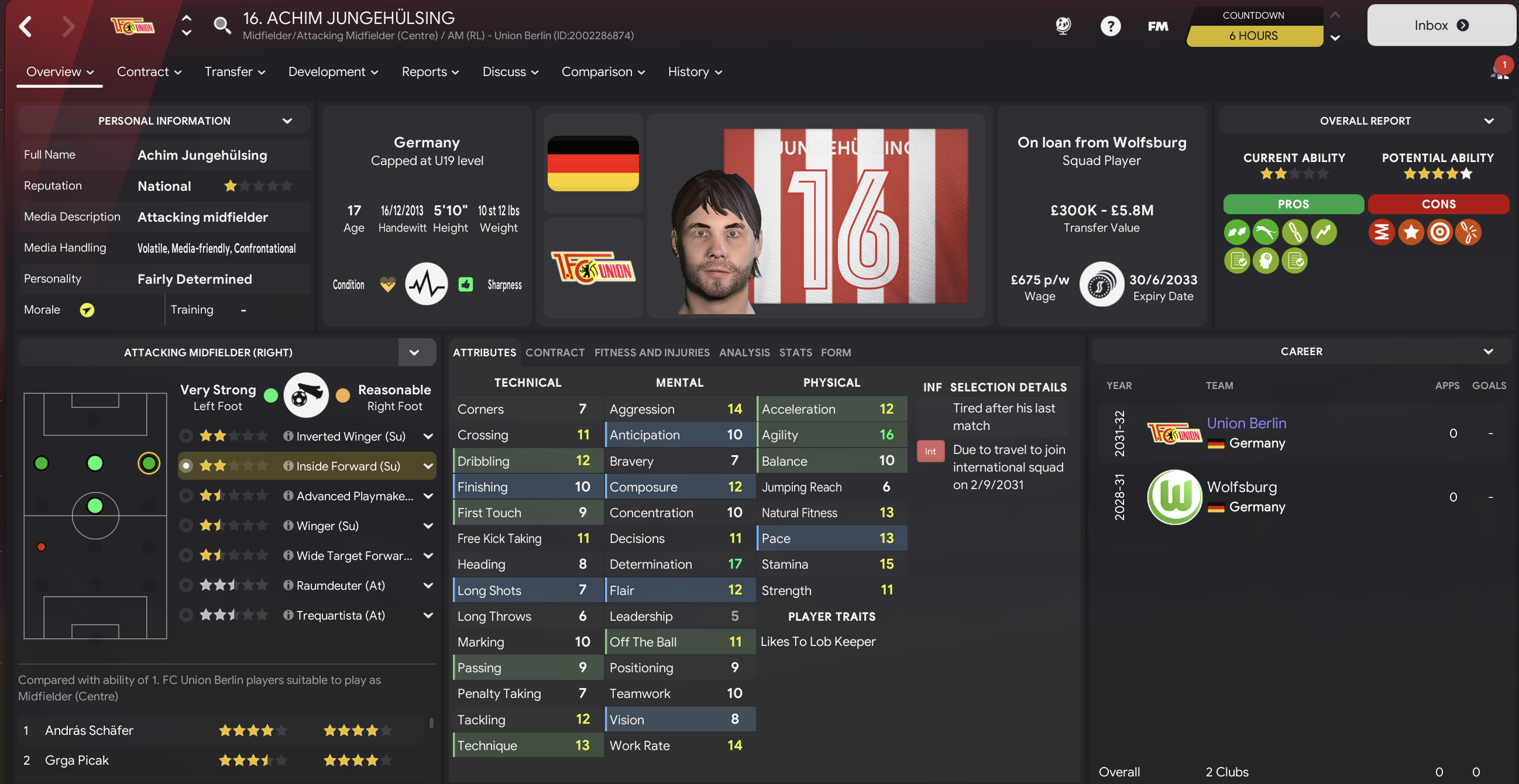
Prusseit wasted no time in strengthening the squad, starting with a few loans including familiar faces Phil Meyer and his teammate Gino Mauckner then Red Bull Salzburg midfielder Gerhard Seibert and Wolfsburg winger Achim Jungehülsing.
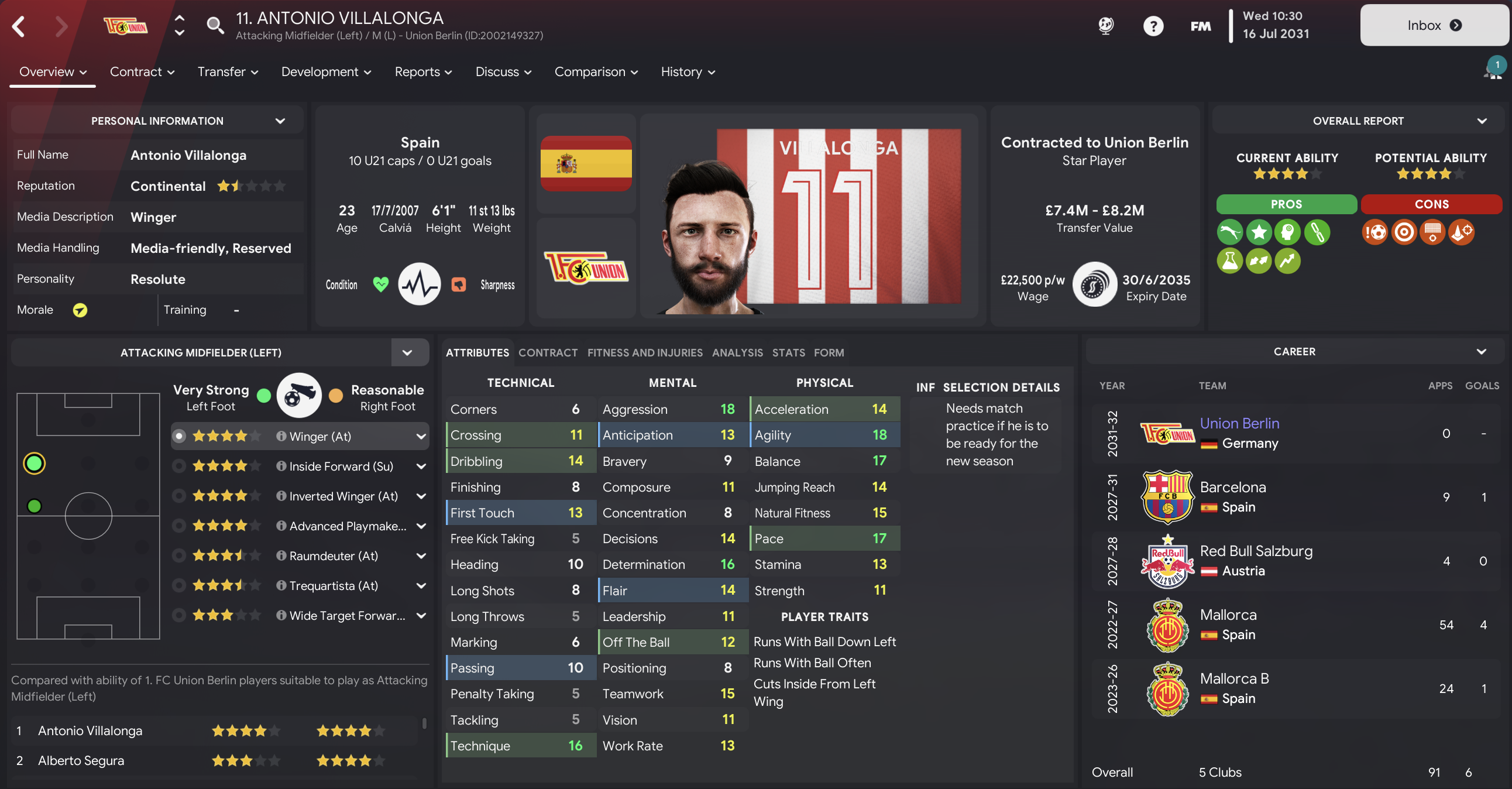
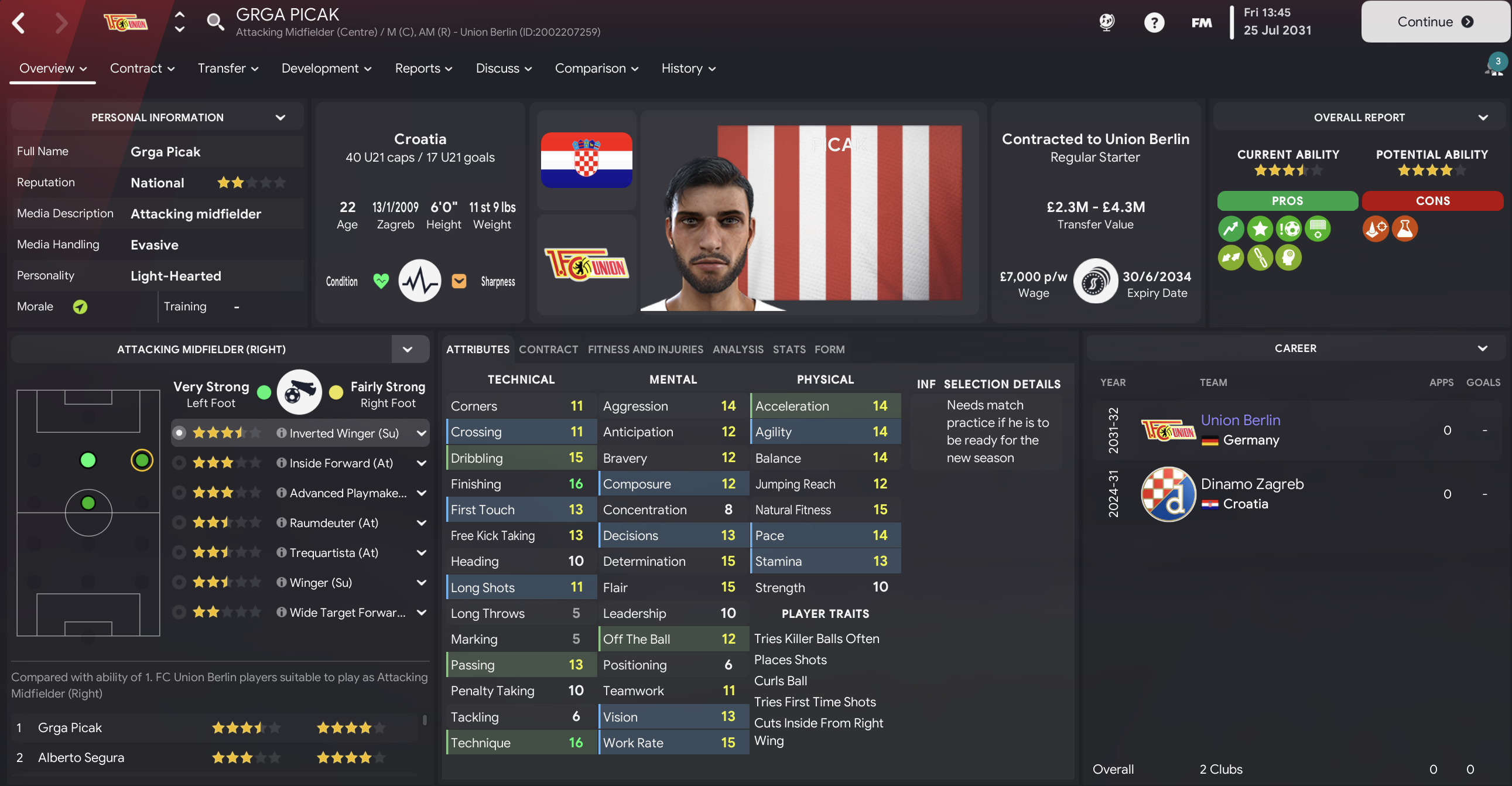
Prusseit made his first proper cash signing as he paid £3m for rapid Barcelona winger Antonio Villalonga, who became the best player at the club. More exciting youngsters followed in winger Grga Picak for up to £4m from Dinamo, striker Ahmed Ramadan for up to £3m from Odds, right-back Nico Korte for up to £5m from Hansa Rostock and striker Dominic Frerking for £1m from Frankfurt. He also snapped up left-back Jan Hosek for £60k and powerful former Spurs centre-back Younes Dias on a free. Then, on his first-ever transfer deadline day, Prusseit snapped up exciting Czech striker Matej Lnenicka for £4.1m from Viktoria Plzen. That saw Prusseit break the Union record for high spending, investing £16.3m over the summer.
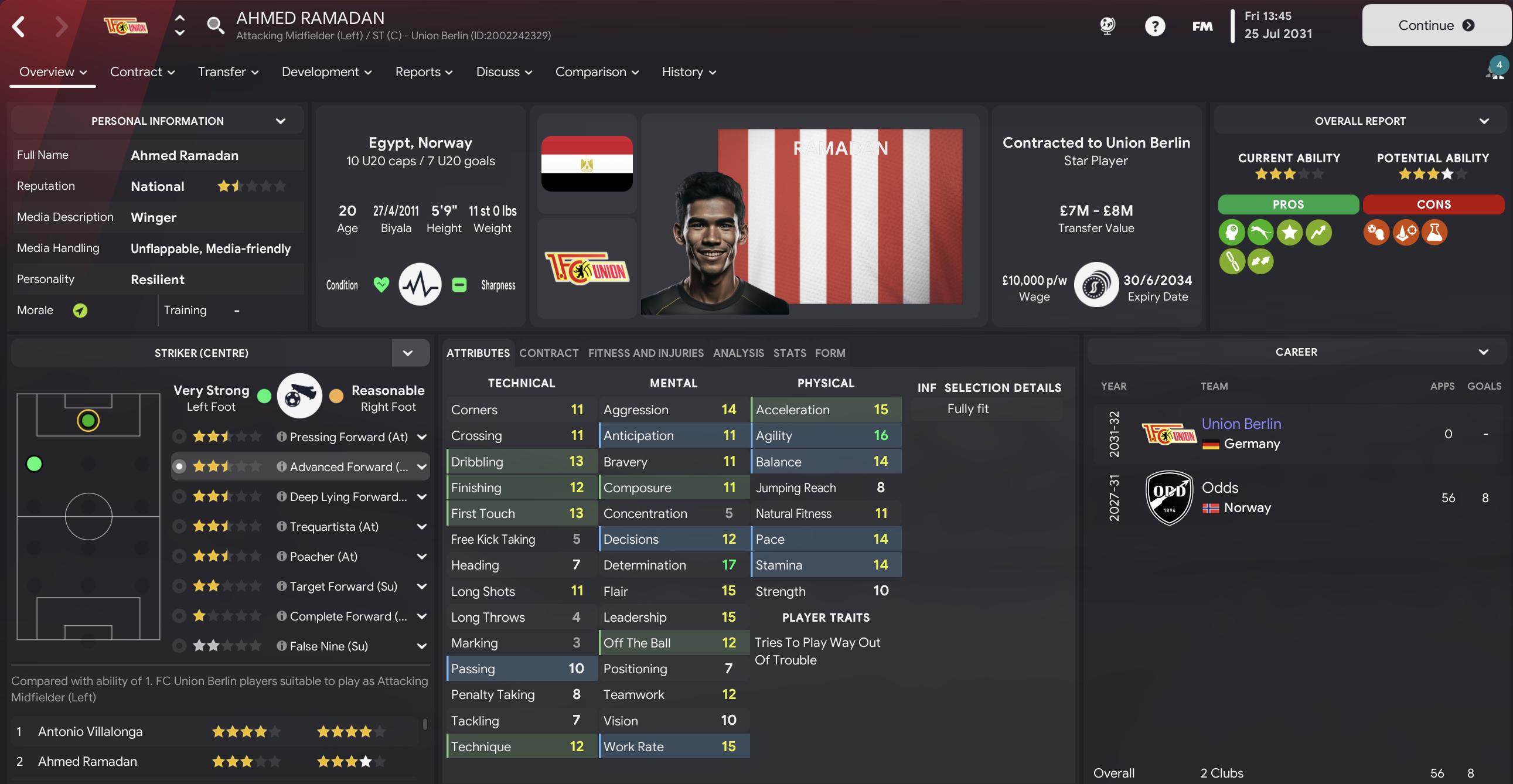
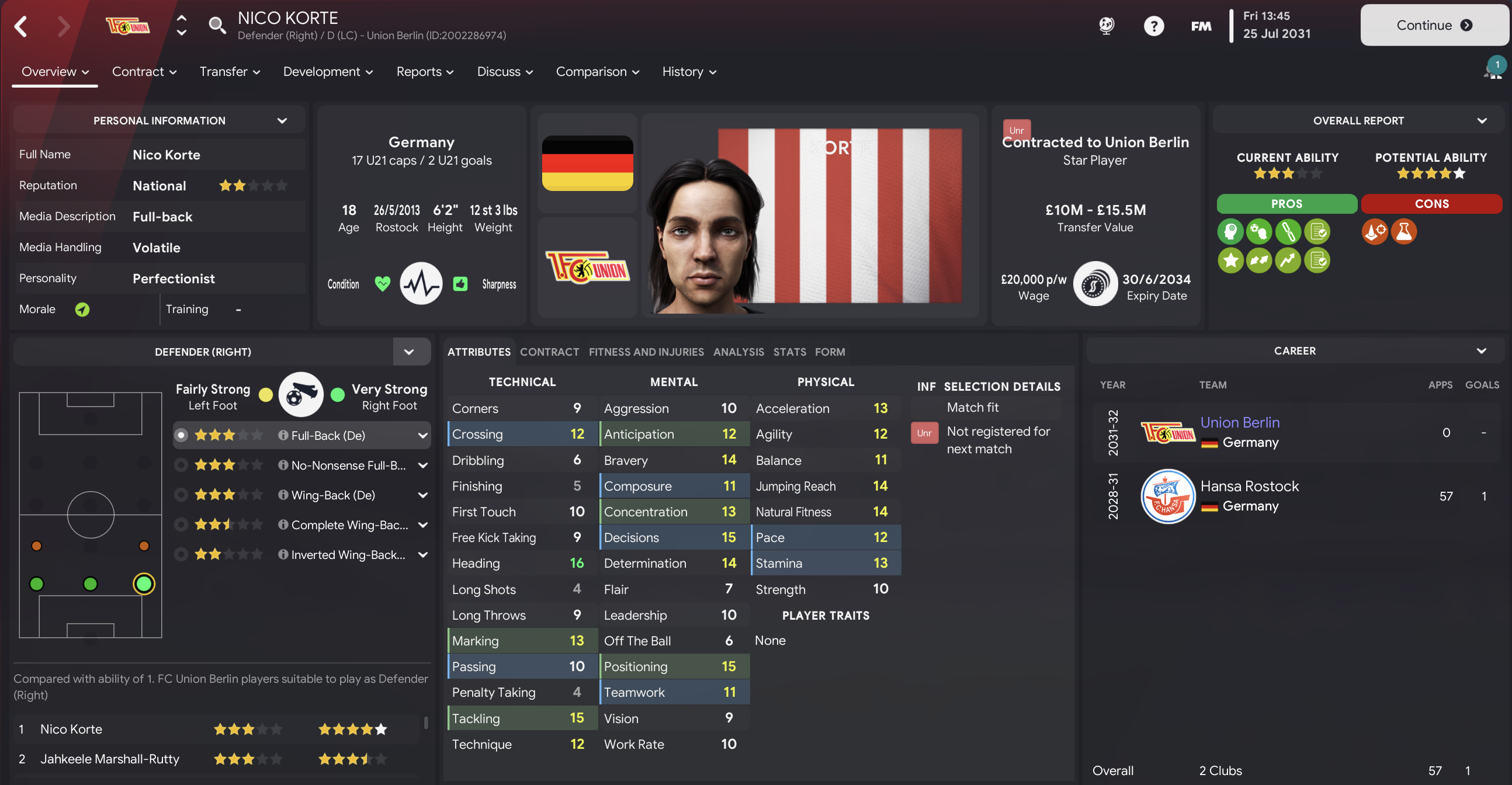
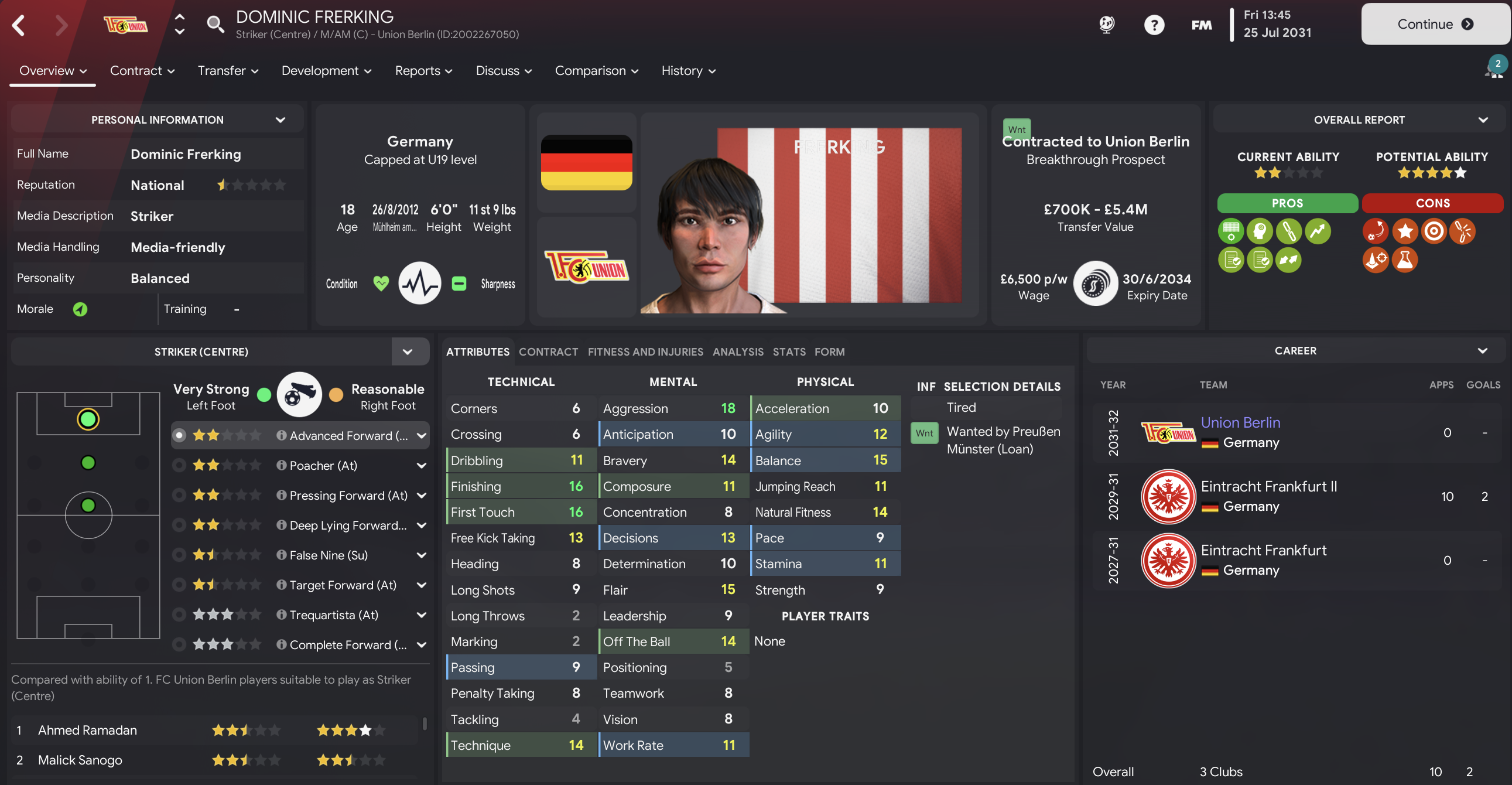
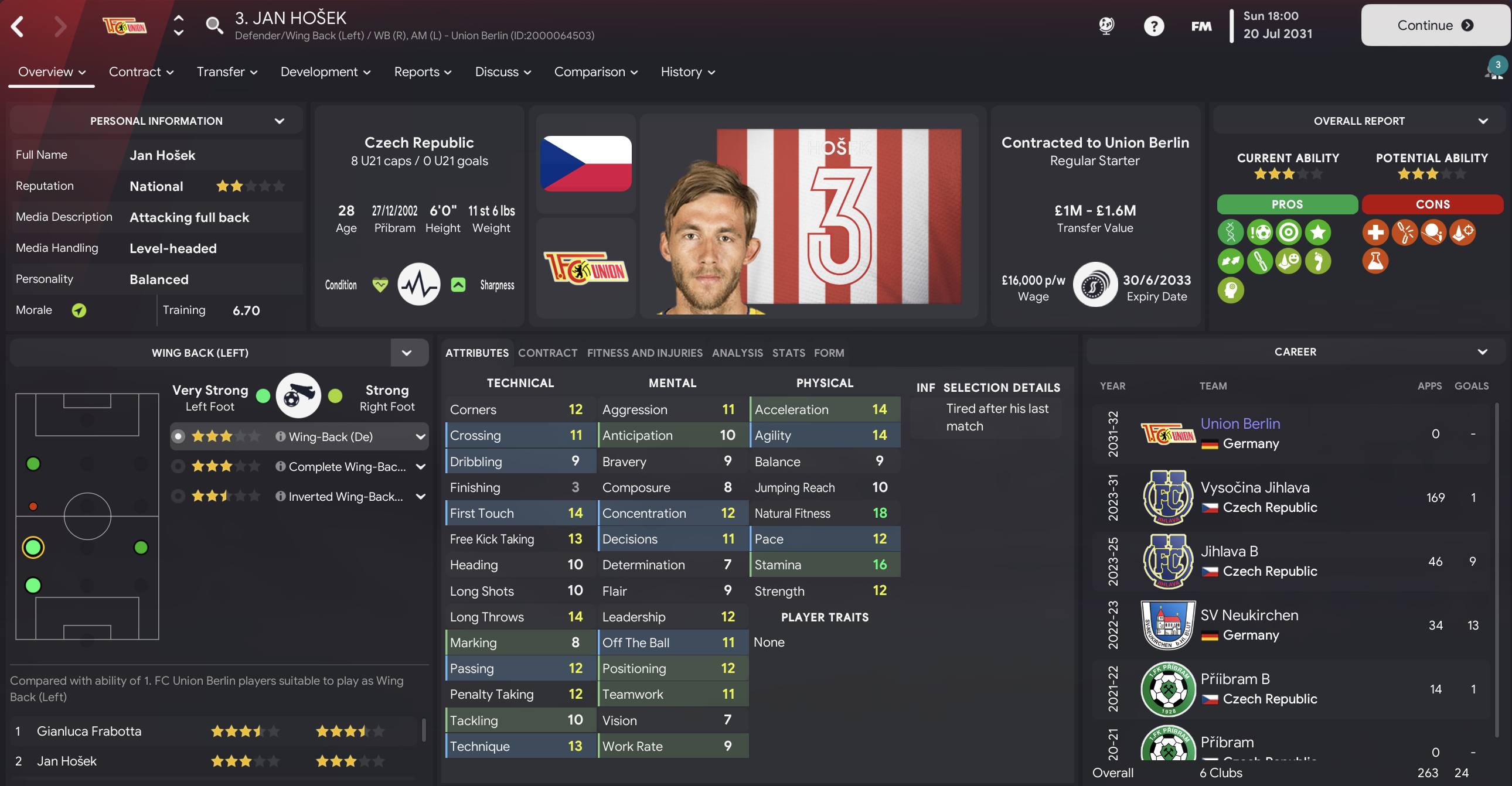
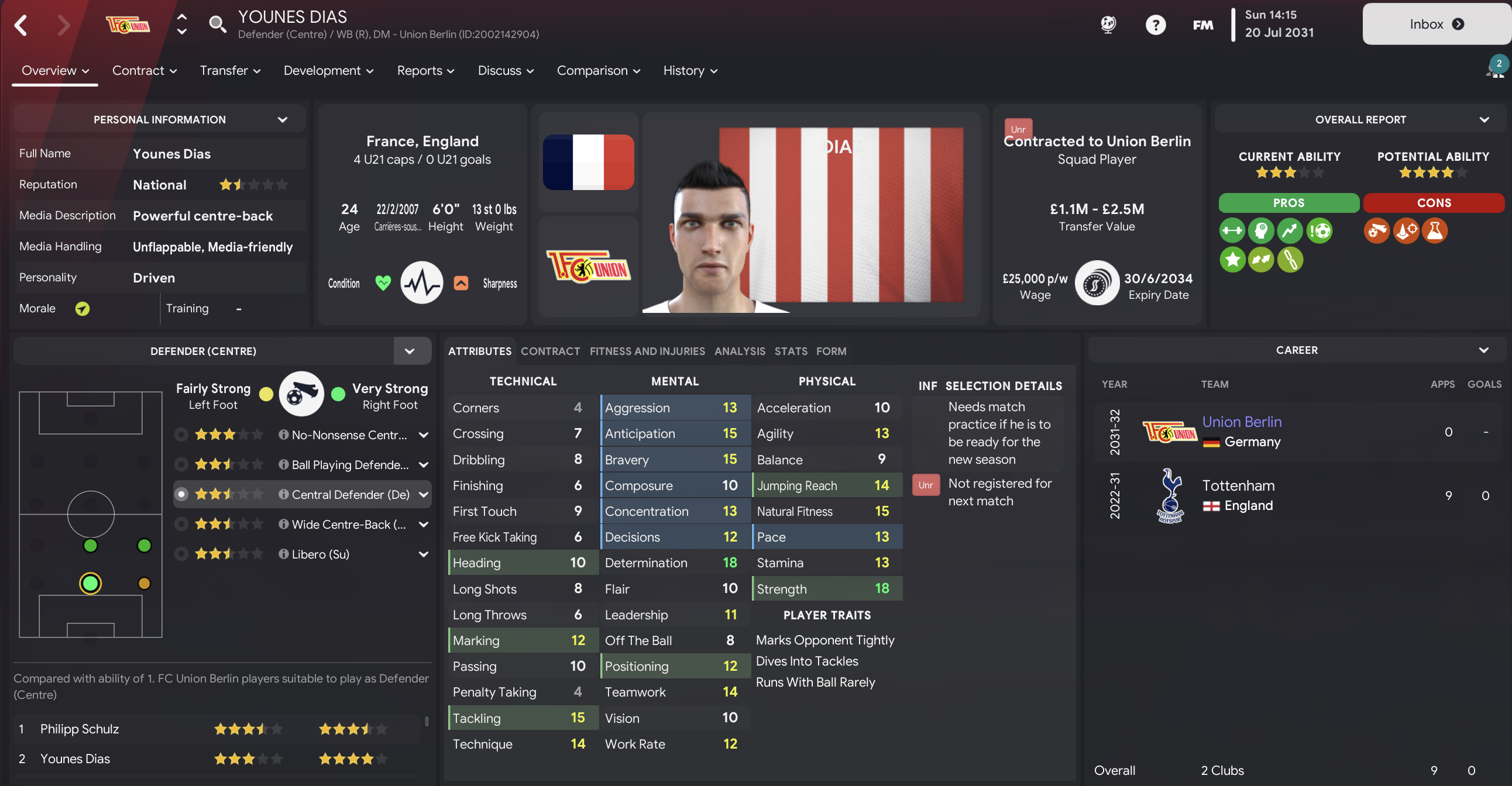
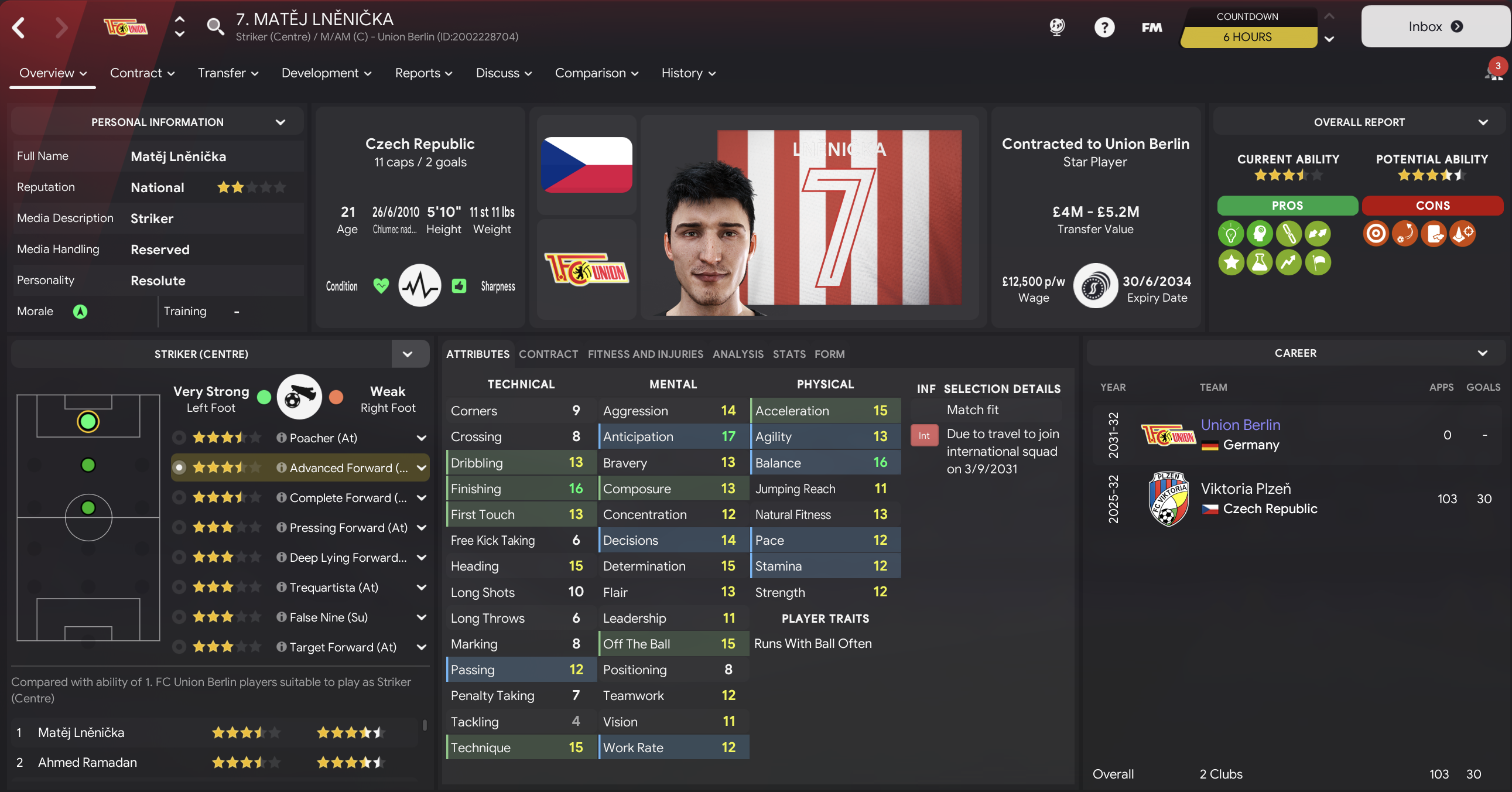
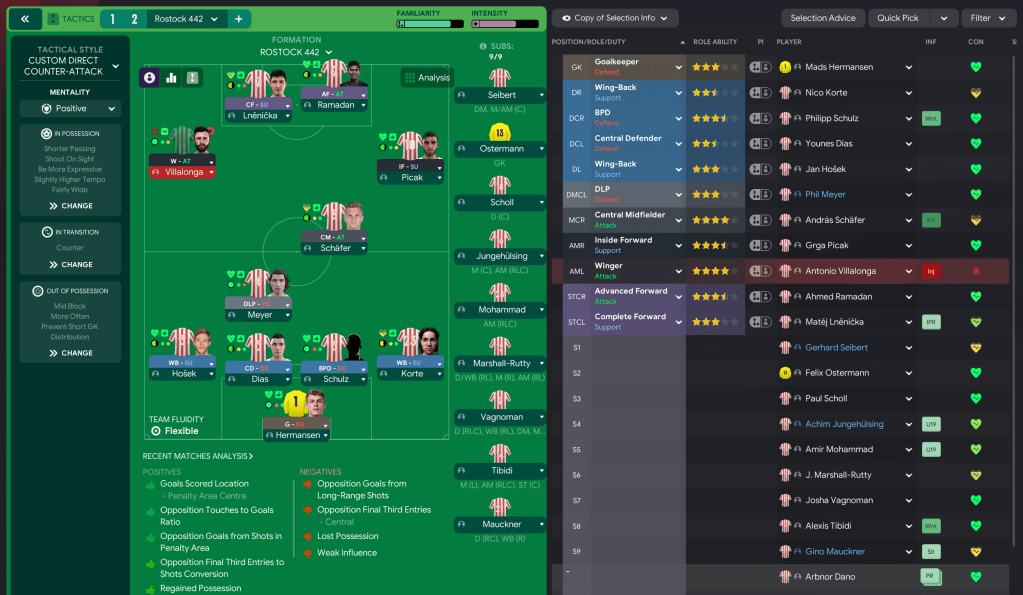
With the squad rebuilt, Prusseit initially decided to go with a standard 4-3-3 approach, but the arrival of Lnenicka persuaded him to go with the 4-2-4 he’d used successfully at Rostock II.
Flying Start To 2. Bundesliga
Prusseit’s new club was huge favourite to win 2. Bundesliga with odds of Even followed by Augsburg (7/4), Nürnberg (11/4), Bochum (3/1) and Darmstadt (6/1).
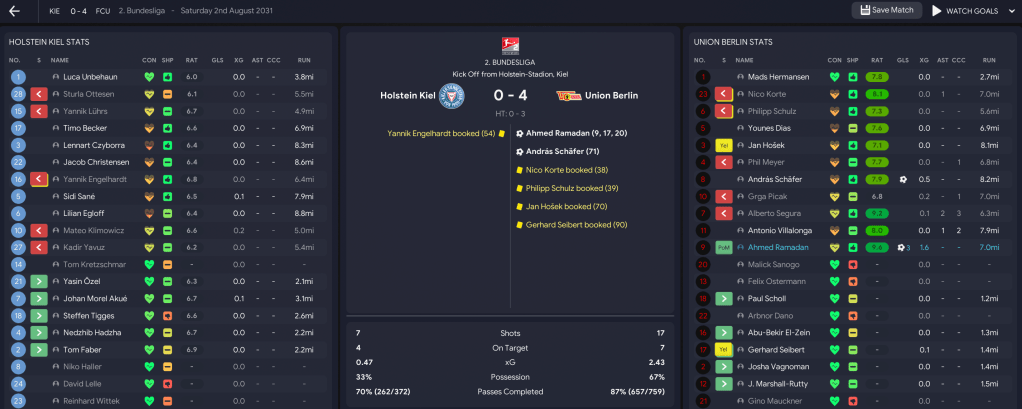
His first game in the German second tier was at home to promoted Ingolstadt and his new side put on a show. Segura opened the scoring before a debut brace by Ramadan, both assisted by Villalonga, and a late fourth from winger Jahkeele Marshall-Rutty. Ramadan impressed again at Holstein Kiel, going one better with a hat-trick inside 20 minutes before Schäfer added a fourth. Meyer scored his first Union goal in a 1-0 win over another promoted side Jahn Regensburg, Picak got his first 20 seconds into a trip to Paderborn before Ramadan sealed a 2-0 victory then Picak and Ramadan made it five from five at home to Hannover.
An international break followed deadline day and Lnenicka wasted no time in getting his first Union goal, scoring inside 80 seconds on his debut at Greuter Fürth. Ramadan and Picak sealed a 3-0 win but Prusseit was most impressed with his backline repelling Greuter’s 18 shots.
First Clashes With OstDeutsch Sides
Two all-OstDeutsche class in Prusseit’s first meeting with his former employers’ senior team Hansa Rostock. Loanee Jungehülsing became the youngest scorer in Union history aged 17 years and 277 days but a first defeat of the season followed as Rostock twice came from behind to win 3-2 through two Oliver Batista Meier penalties.
Prusseit then faced his first clash with fellow OstDeutsche side Magdeburg. And Cottbus time they came out on top as late Schäer and Scholz strikes earned a 3-1 victory. Their away form proved a little shaky, losing their next two at Karlsruhe and Heidenheim, but Ramadan hit a new club- and league-record four-goal haul to inspire a 5-3 thumping of fellow relegated side Bochum.
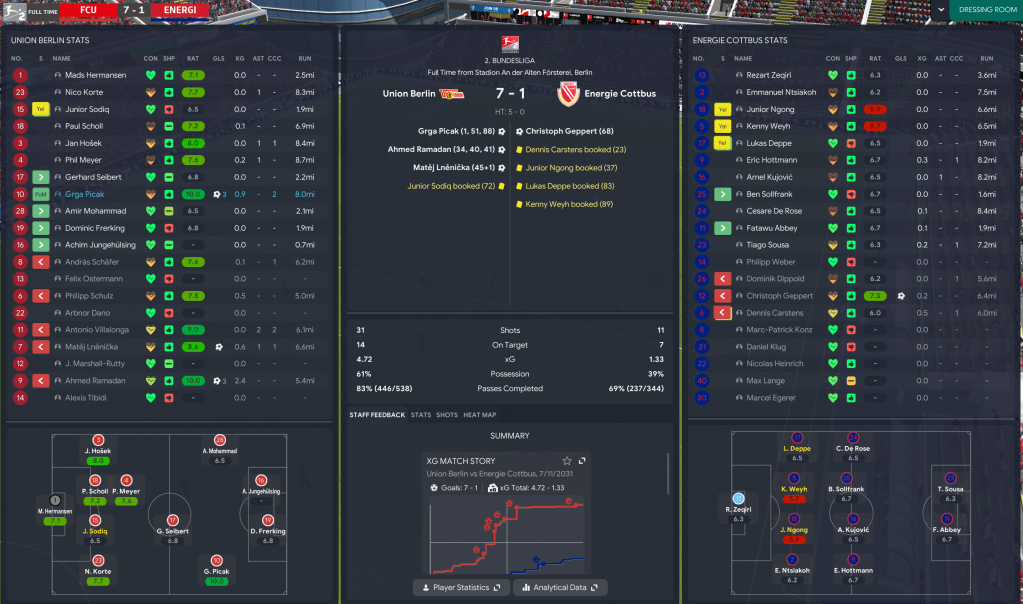
Back on home ground, there was a huge game for Prusseit as his former club Energie Cottbus came to town. And his team clearly understood how much their manager was up for it as Picak scored the opener after 29 seconds, which set up an absolutely dominant first half in which they racked up 23 shots and scored five, including a Ramadan hat-trick. Picak wrapped up his hat trick after the break as Union inflicted a 7-1 battering.
Prusseit tested out a more conservative 4-3-3 at St. Pauli, which stopped the losses with a 0-0. He used it again to take on 4th-place Nürnberg at home and it worked nicely in a 3-1 win before a 1-0 defeat at Augsburg. But he returned to the 4-4-2 for the final game of 2031 as they recovered to hammer Darmstadt 4-1 led by a Lnenicka brace, in which Union set a new low club-record attendance of 15,098.
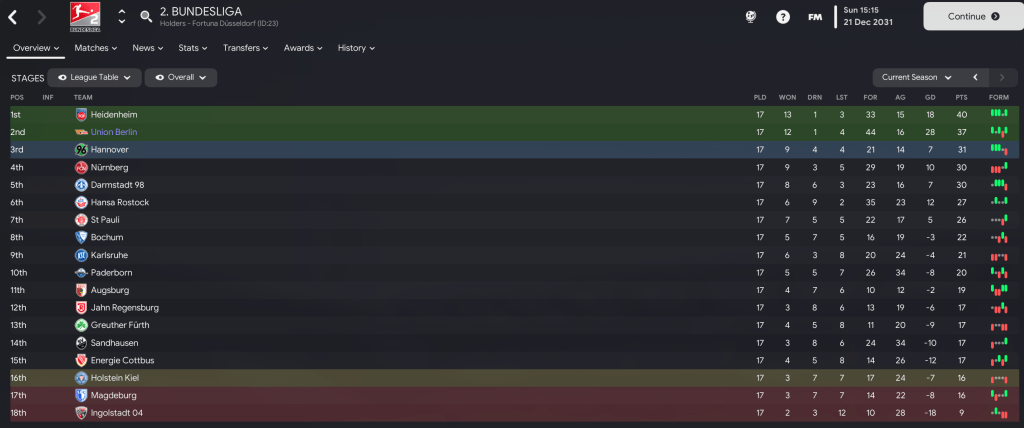
That left Union in second heading into the month-long winter break, trailing in-form Heidenheim by three points. Ramadan was the top scorer in the league with 16 in 16, while he and Lnenicka were second and third in the average ratings (7.68 and 7.49), and Lnenicka is second in the assists chart with seven, plus five goals in 11 games.
Could Prusseit lead Union Berlin to the promotion and title that his board and supporters were expecting? Join us on Monday to find out!


Leave a Reply