
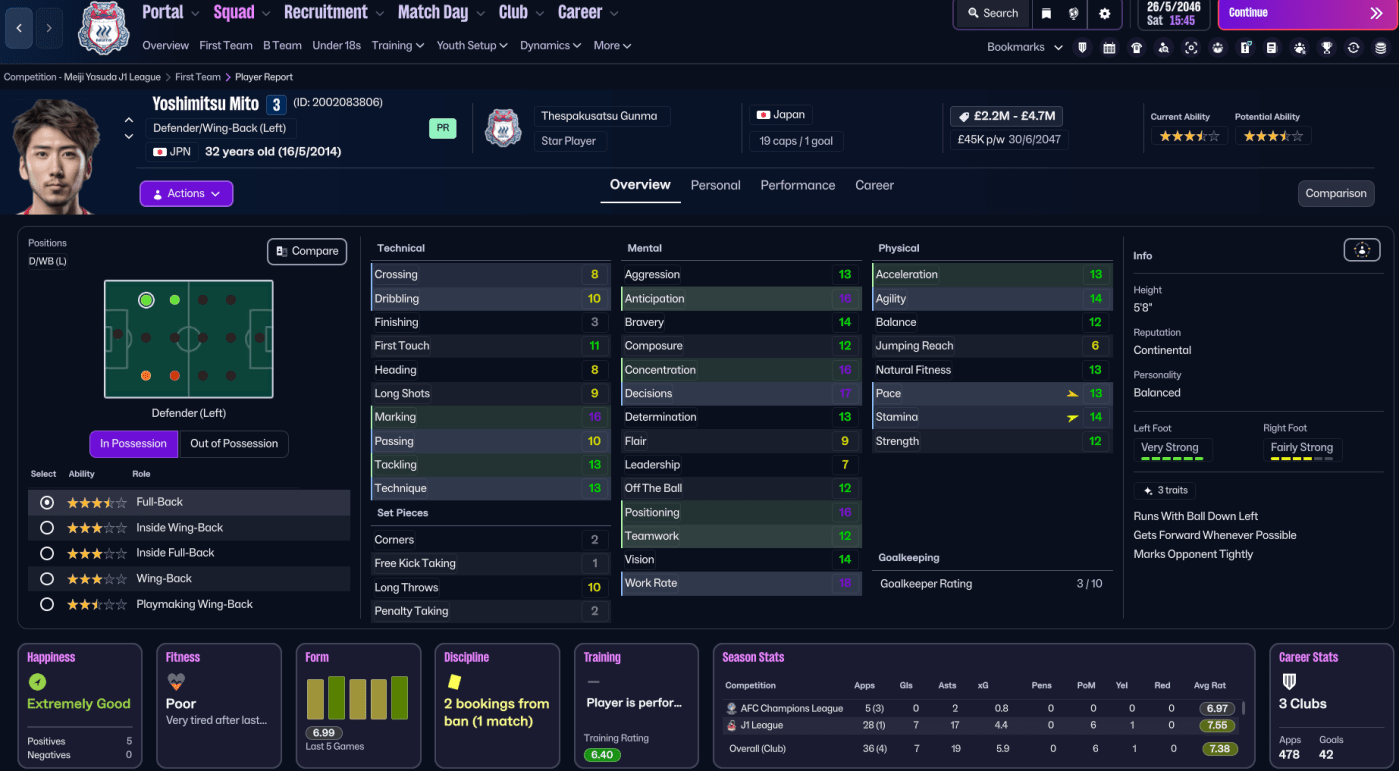
Thespakusatsu Gunma racked up a record four consecutive Japanese titles, taking them to five in total, with a new league record 97 points in 2045. However, it was the end of an era in July as a special homegrown talent, Atsushi Shimizu, departed the club after 13 years to claim a payday in Saudi at the age of 29. And this was likely to be the final season at the club for manager Robaato Rasamu, now 62 and heading into his 21st season at the club.
Gunma Take on the World’s Elite
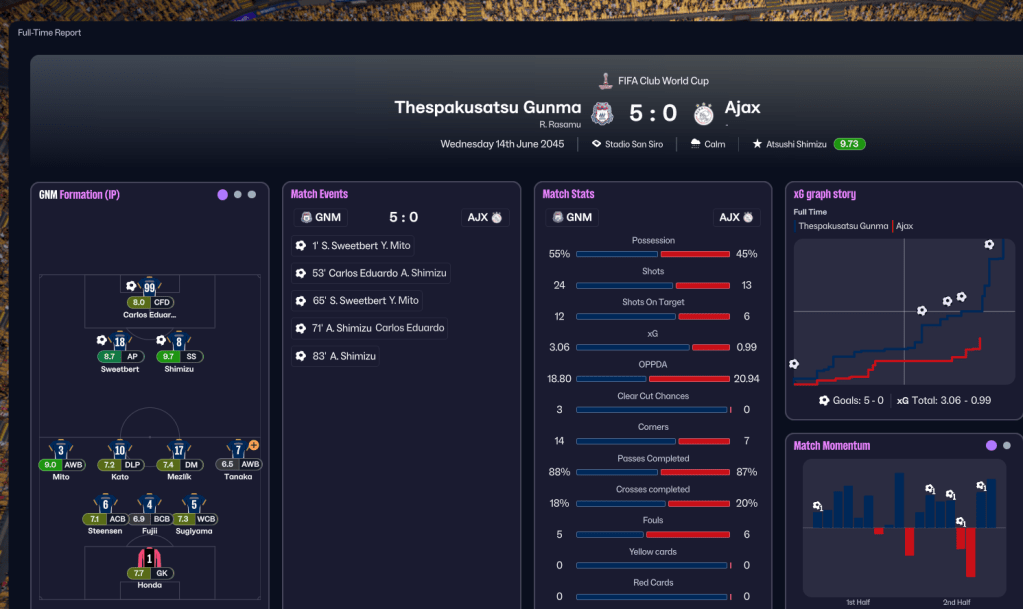
The summer of 2045 was cut short as Gunma’s continental performances took them to the Club World Cup for the first time. Rasamu gave the team two weeks off before flying out to Milan, Italy, to prepare for a group alongside Ajax, Colo-Colo and Mamelodi Sundowns. Gunma kicked off against Ajax, and the time off seemed to have worked wonders as they cruised to a stunning 4-0 victory, led by the soon-departing Shimizu’s late brace after his replacement in waiting Shadrack Sweetbert had also scored twice. Four days later, they faced Colo-Colo and an unlikely brace of headers by centre back Masayuki Hasegawa, which doubled his career tally, secured a comfortable 3-1 victory. The group wrapped up against the South African side, and a rotated side won 2-1.
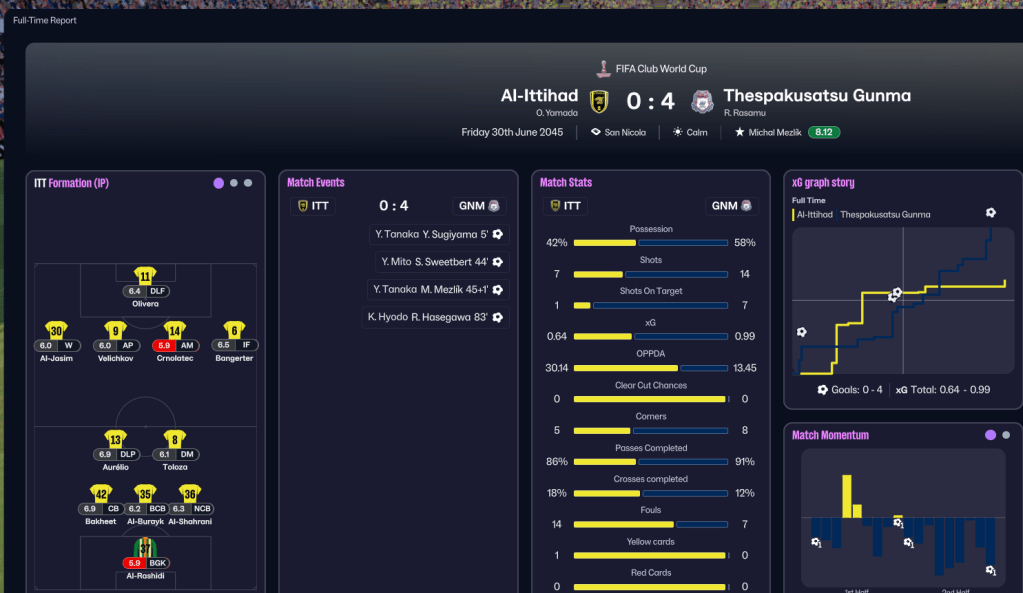
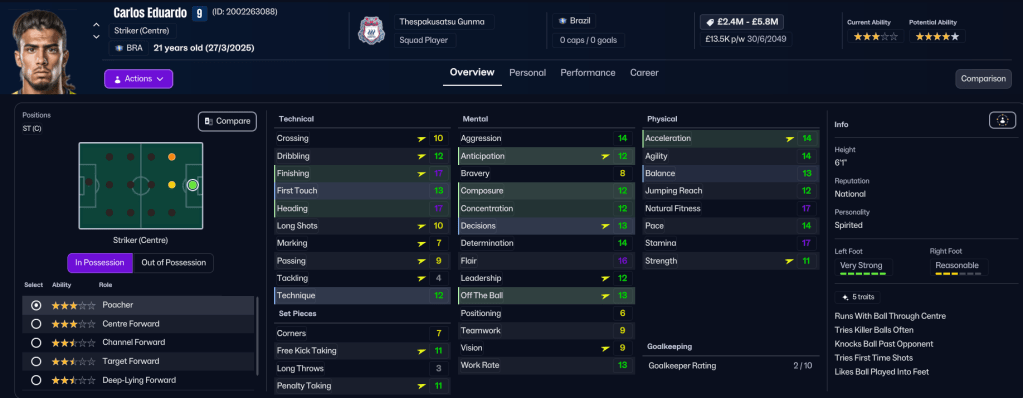
That teed up a second-round clash with Benfica, who were nullified with ease and striker Carlos Eduardo’s early tap-in was the only goal. Elsewhere, Asian champions Al-Ittihad thrashed Man City 4-1 and Shimizu beat Feyenoord 3-1. A repeat of last season’s Asian Champions League Final saw Gunma take on Al-Ittihad in the quarters. And they gained revenge in style as, the day before Shimizu departed, they cruised to a 4-0 win, including a wonderful Sweebert second and a curled beauty by midfielder Michal Mezlík, only giving up one shot on target.
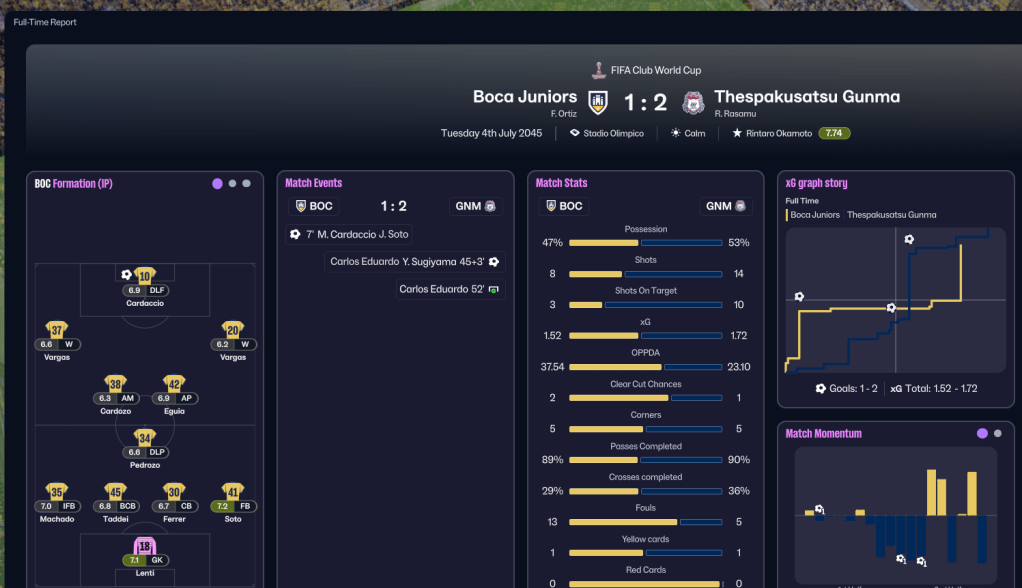
Unbelievably, Gunma found themselves in the World Club Cup semi-finals. They headed to Stadio Olimpico to face Boca Juniors while Liverpool took on Real Madrid in the other semi. The post-Shimizu era began poorly as Boca scored a nice goal after 7 minutes. But Gunma bossed the game, and centre back Yuya Sugiyama headed in a corner just before the break, before Eduardo’s penalty nicked a 2-1 victory.
They returned to Stadio Olimpico to face Liverpool, who beat Madrid 1-0 after extra time, in a huge test for Rasamu’s team. And he lined up:
Honda; Sugiyama, Fujii, Steensen; Tanaka, Mezlík, Kato, Mito; Okamoto, Sweetbert; Eduardo
Subs: Nishida, Mizuno, M Hasegawa, R Hasegawa, Yamashita, Dida, Hyodo, Kikui, Ishii, Nishimura, Watanabe, Hirama
Liverpool bossed the early stages, having 5 shots but none on target. But it was Gunma who had the first chance, as Okamoto slid Sweetbert through, only for the keeper to make a great save. And they went into halftime at 0-0. But Liverpool went ahead thanks to some shambolic defending (courtesy of the shocking FM26 match engine, see below left), which forced Rasamu to go for it and Liverpool began to twist the knife, going on to deservedly win 2-0. Mezlík was named the Best Young Player at the tournament, with Sugiyama and club legend Yoshimitsu Mito making the Dream team.

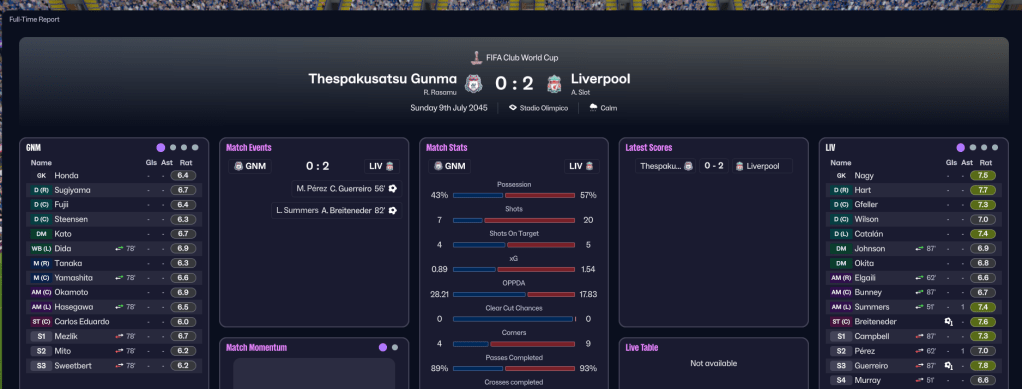
Celebrating 20 Years at Thespa Gunma
The big positive of the Club World Cup campaign was the finances. Gunma bagged a total of £53m in prize money from the campaign, taking the bank balance to a massive new high of £140m.
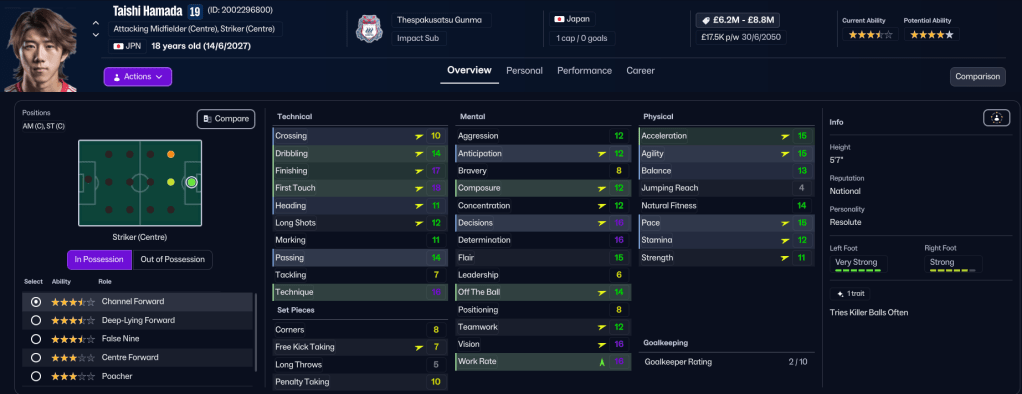
As one club legend departed, another one came in the other direction. Rasamu had spotted homegrown midfielder Shota Asada, now 35, was out of contract at Zelvia and, 10 years on from leaving the club for Saudi, before spells at Sapporo, JEF United and Zelvia, he returned for one final swansong. Realistically, he was nowhere near good enough, but Rasamu loved the nostalgia of Asada’s return. And, despite that wealth, Rasamu’s transfer policy was restricted by already having the maximum five foreign players in the first-team squad. But he did snap up an exciting domestic talent, signing striker Taishi Hamada for £6m from Gamba Osaka.
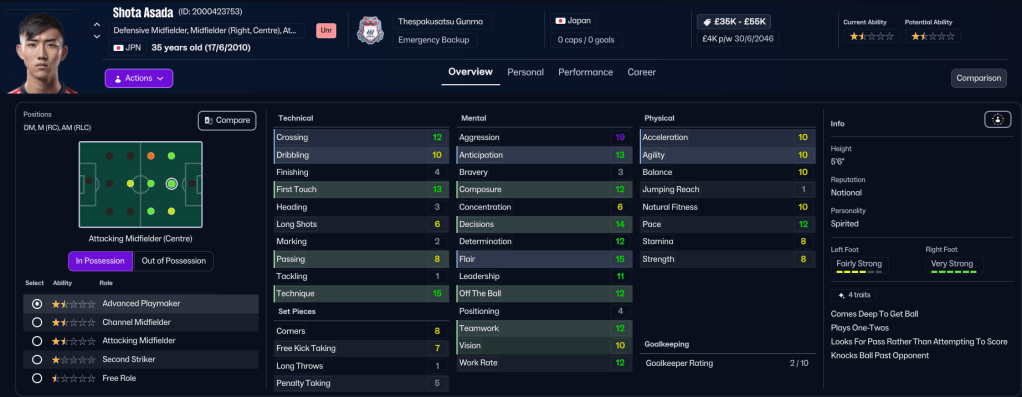
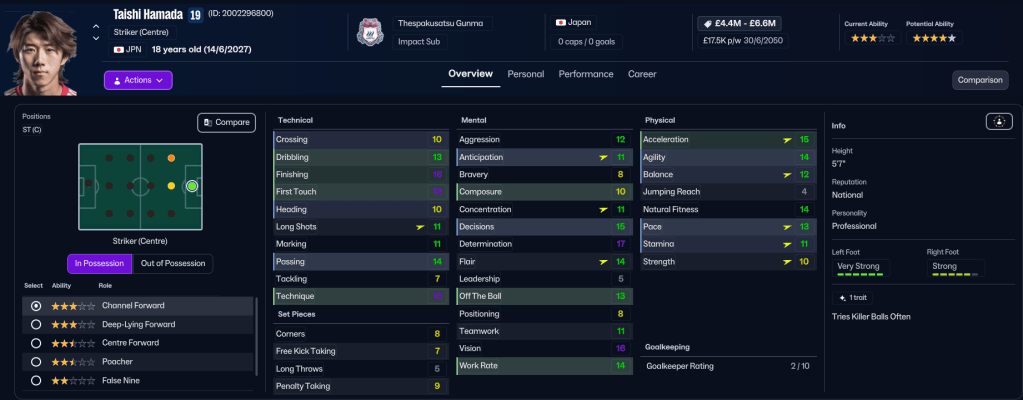
Rasamu stuck with his favoured 3-4-3 approach that he’d reverted to last season. Kazusa Fujii slots into defence alongside Sugiyama and Robin Steensen, Mezlík and Matsuhiro Kato patrol the midfield with Rintaro Okamoto and Sweebert in behind Eduardo.
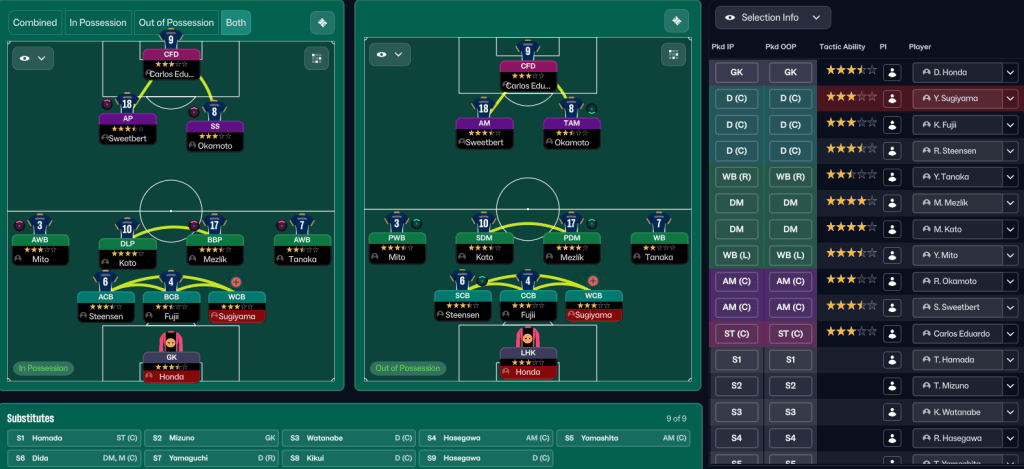
Targeting 5 Consecutive Japanese Titles
Gunma remain 7/4 favourites to extend their record streak of J1 League titles to five, followed by Shimizu S-Pulse (4/1), Kashiwa Reysol (9/2), Gamba Osaka (6/1) and Urawa Red Diamonds (12/1). Gunma’s latest title defence began with a wild game, as Okamoto’s brace sealed a 5-3 win at Kofu, which they’d led 5-1 until the last 10 minutes. They hit five again a week later, dominating Shonan 5-2 led by a Sweetbert double, before a 0-0 at Urawa and Mito celebrated his 400th league game for the club with the opener in a 4-2 win over Hiroshima.
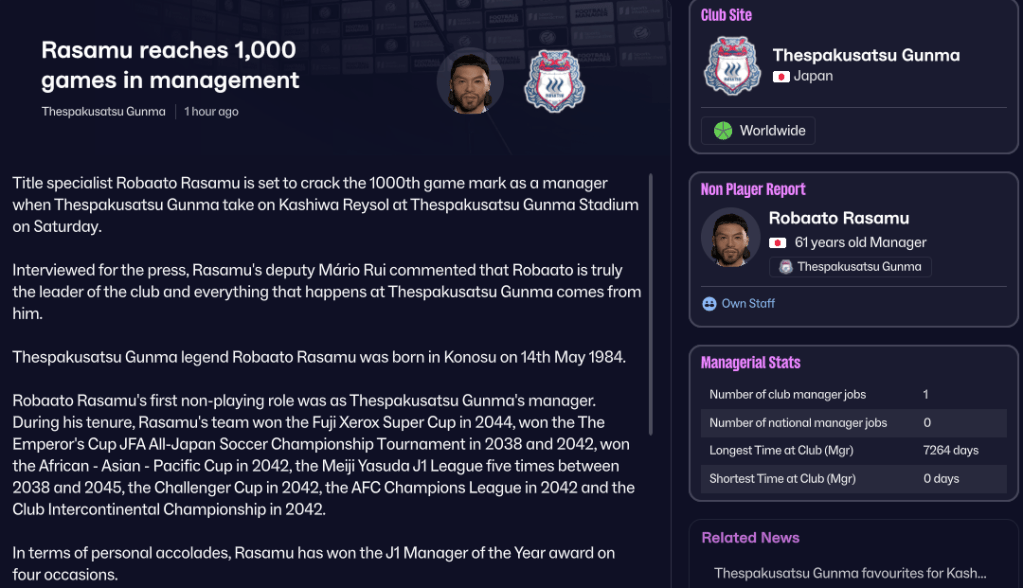
The goals continued to flow, including 6-1 victories at Zelvia and Sapporo, Hamada’s first league goal in a 3-1 win at Kawasaki Frontale and Eduardo’s hat trick in a 6-0 thrashing of Ehime, before Hamada’s late winner at home to Shimizu opened up a 9-point lead at the end of October. And Rasamu celebrated 1,000 matches in charge of Gunma with his exciting strikers Eduardo and Hamada downing Kashiwa 2-0.
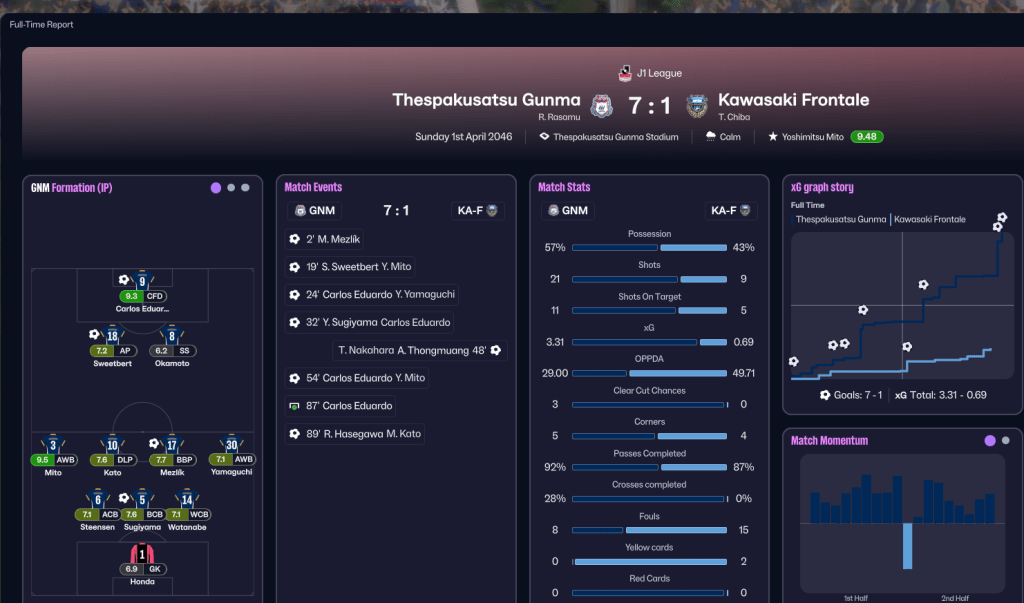
Gunma eventually lost 3-0 at Gamba, but bounced back in style to thrash Kyoto 5-1 and head into the new year with a 10-point lead. They also went into 2046 as cup winners, as Eduardo and an own goal saw Gunma defeat Shimizu 2-1 to lift their third Emperor’s Cup before the two teams locked horns again, and Eduardo and Hamada secured a 2-0 victory to claim their second Fuji Xerox Super Cup. The new year began just as the old one had ended, with the reliable Yoshiki Tanaka inspiring a 4-0 thrashing of Kofu. And they continued to dominate domestically, including an Eduardo hat trick leading a 7-1 demolition of Kawasaki.
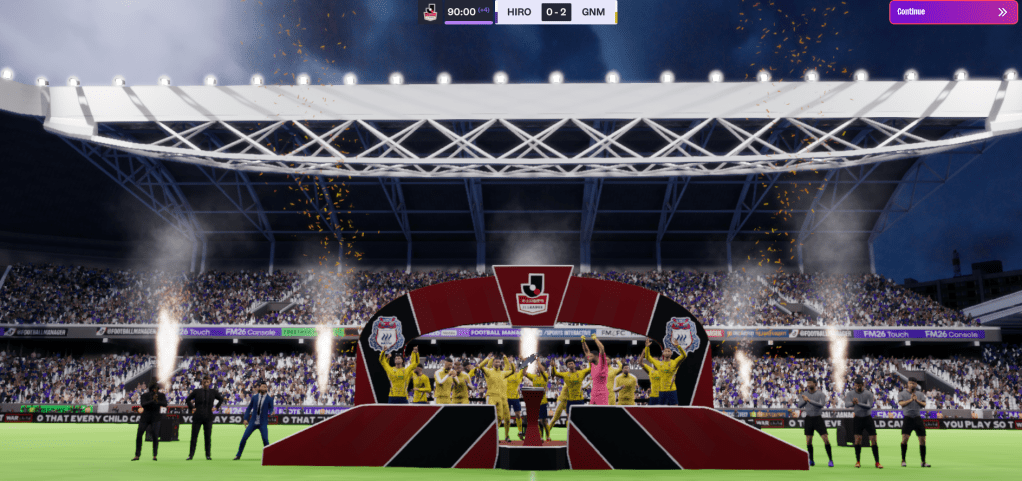
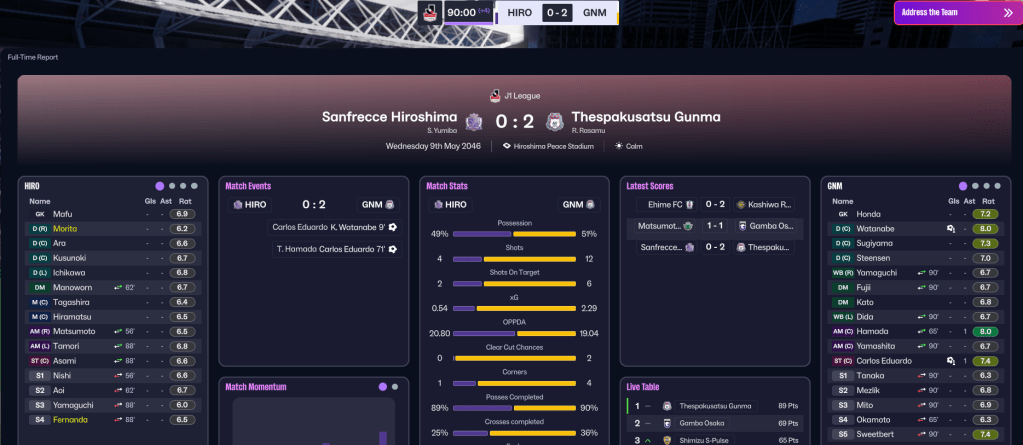
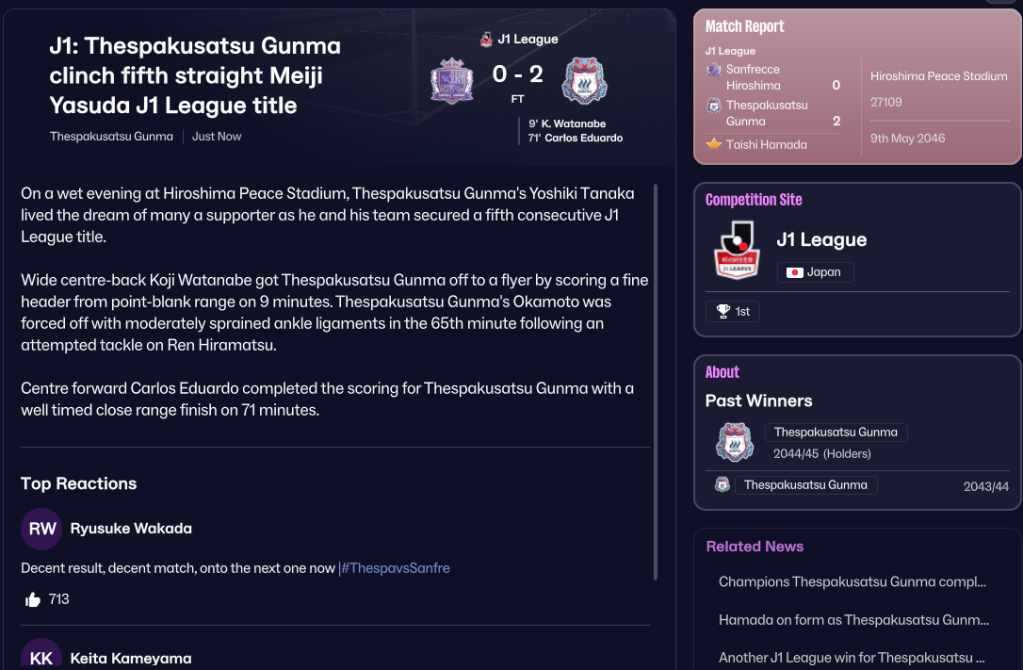
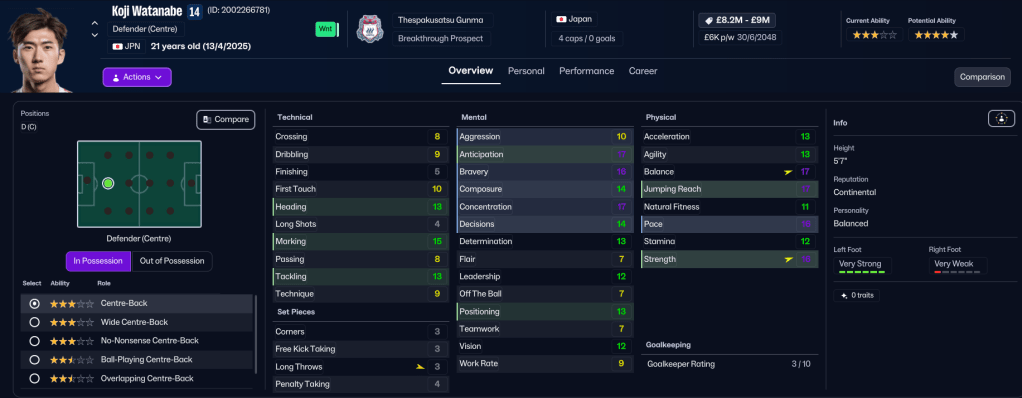
That helped Gunma hold an 11-point lead heading into the final 10 games, which was hammered home as consecutive Eduardo and Sweebert doubles downed Yokohama 4-0 and Nagoya 6-2 to almost guarantee the title with 6 games remaining. A week later, they travelled to Hiroshima and started well as Watanabe headed in a corner. Gunma completely controlled the game and Hamada created a second for Eduardo to cruise to a 2-0 win. And that was enough for yet another Japanese title.
Thespakusatsu Gunma won five successive J1 League titles!
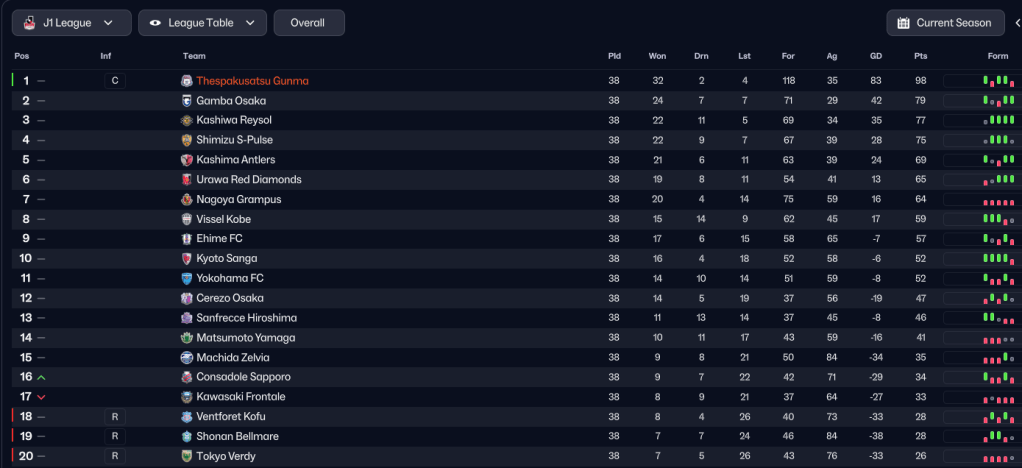
Eduardo broke his own club record league goals tally in a 2-0 win at Nagoya. And Gunma destroyed their competitors, winning the league by 19 points with a new record tally of 98 after 32 wins, 2 draws and 4 defeats. They also smashed the record goals tally, scoring 20 more than Gamba’s record of 98, scoring an incredible 118 and conceding 35. Mito was the best player in the league with a 7.55 average rating, ahead of Tanaka’s 7.46. Eduardo was again the top scorer with 31 in 37, with Sweebert 6th with 16 in 35, and Mito led the assists with 17, ahead of Tanaka (16) and Sweetbert (13). Tanaka and Mito also led the key passes (101 and 94) and chances created (32 and 27) charts, while Kato (3,097) attempted the most passes ahead of Mezlík (2,988). Mito became the first Gunma player to win the league’s MVP award and Rasamu bagged his fifth manager of the year award.
A Final Shot at the AFC Champions League
Gunma’s bid to win a second Champions League began with Hamada getting his first two goals for the club in a 4-1 win at Ha Noi. Asada got his first goal back at Gunma in a 2-0 win at home to Sydney FC, and they again cruised through the group with rotated teams. Melbourne City were dismissed 4-1 on aggregate before, to the surprise of nobody, they drew Al-Nassr in the quarters for the eighth time. Early goals by Riku Hasegawa and centre back Kogi Watanabe were enough to edge a 2-1 win. That teed up an all-Japanese semi-final with Kashiwa, whose prolonged dropoff was proven by them sitting 7th in J1 but defeated back-to-back holders Al-Ittihad 3-2 in the quarters. Gunma dominated from start to finish, with Eduardo seizing on a mistake to score after 11 minutes, before Sweetbert’s 20 yarder and Renko Kukui sealed a comfortable 3-0 win.
Four days later, another all-Japanese clash followed as Gunma faced Gamba, who beat Al-Hilal 3-0 in the semis, in the Final. Rasamu had Tanaka sidelined with a hernia, so he lined up:
Honda; Watanabe, Sugiyama, Steensen; Yamaguchi, Mezlík, Kato, Mito; Okamoto, Sweetbert; Eduardo
Subs: Hamada, Mizuno, Fujii, R Hasegawa, Yamashita, Kikui, Dida, Asada, Sugiura, M Hasegawa, Hirama
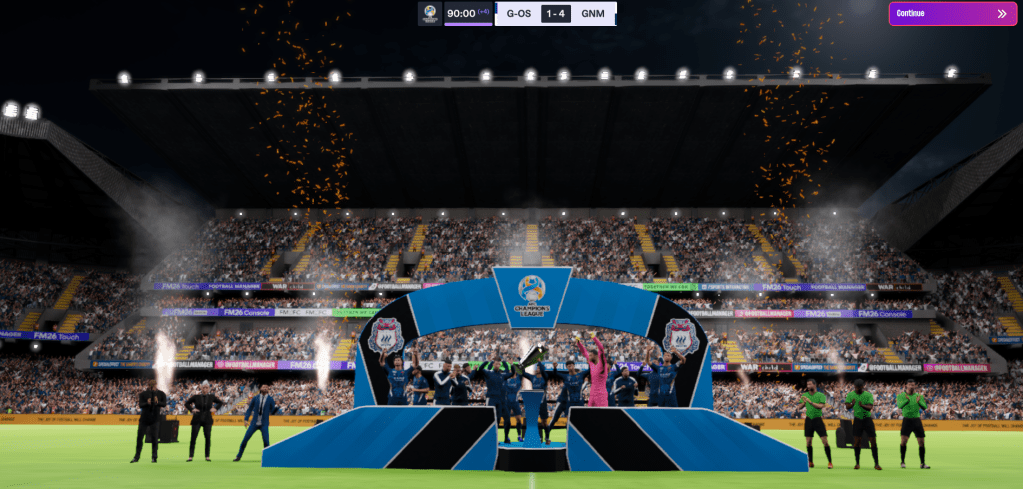
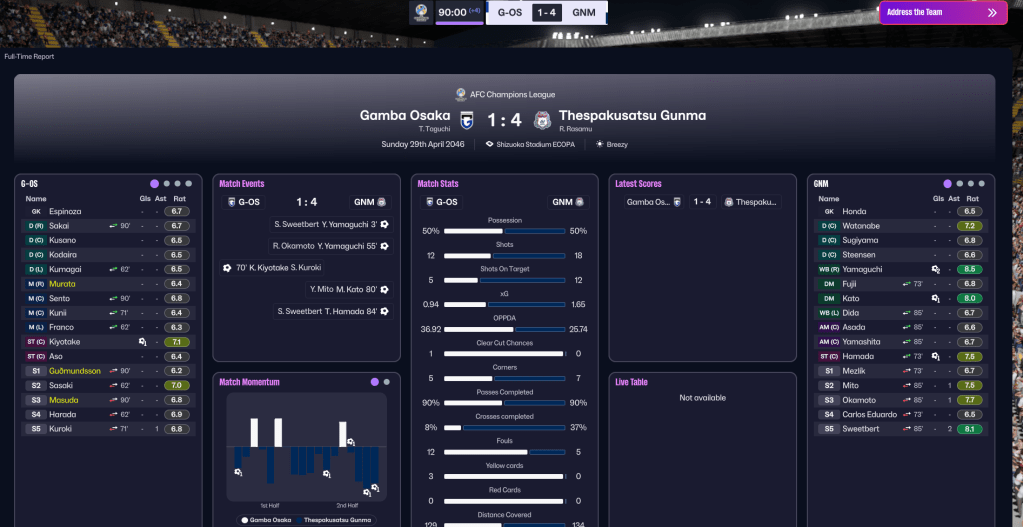
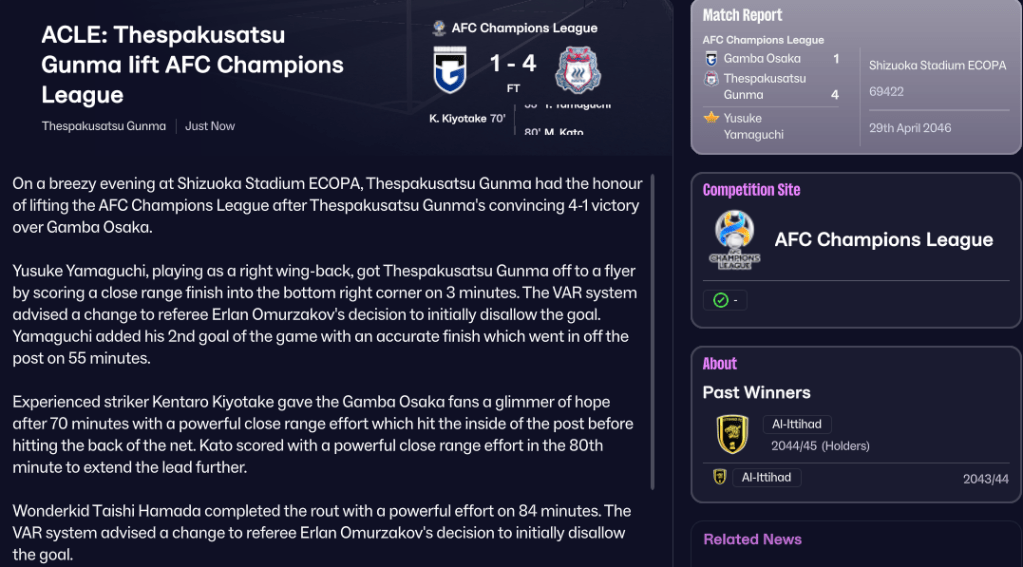
Gunma went close from kick off as Kato’s shot flew narrowly over the bar. And it didn’t take them long to hit the front as Sweetbert’s low cross was turned in by Tanaka’s replacement, 19-year-old Yusuke Yamaguchi, who scored his first senior goal on the biggest of occasions after 135 seconds. Gamba grew into the game, but Kato went close with two long-range efforts pushed wide by the keeper, and they went into halftime a goal to the good. Gunma bossed the early stages of the second half and, seemingly inspired by the earlier goal, that man Yamaguchi doubled his tally, playing a delicious one-two with Okamoto then calmly finishing into the bottom corner. Gamba got a goal back against the run of play, but Gunma continued to dominate and their two homegrown heroes teamed up for a third, as Mito’s low cross was powered in from 20 yards by Kato. And they killed the game off as Sweetbert sent substitute and former Gamba player Hamada through to a bag a fourth on 84 minutes.
Thespakusatsu Gunma lifted their second Asian Champions League!
Going Out on a High at Thespa Gunma
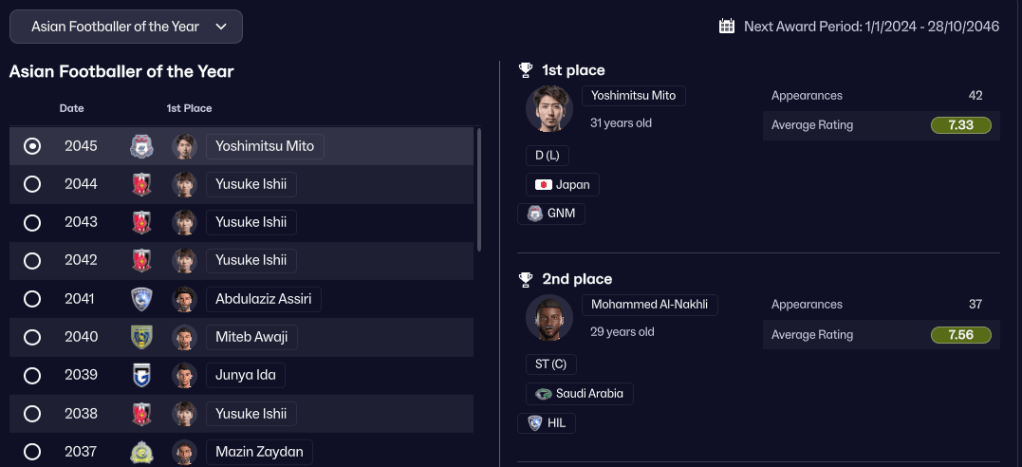
A fitting end to the save saw left wingback Mito become the first Gunma player to win Asian Footballer of the Year, usurping former striker Yusuke Ishii, who’d won the previous three. And he was part of a Gunma youth setup that was named among the world’s best for the first time, having produced the likes of Naoya Miura, Shimizu and Kato.
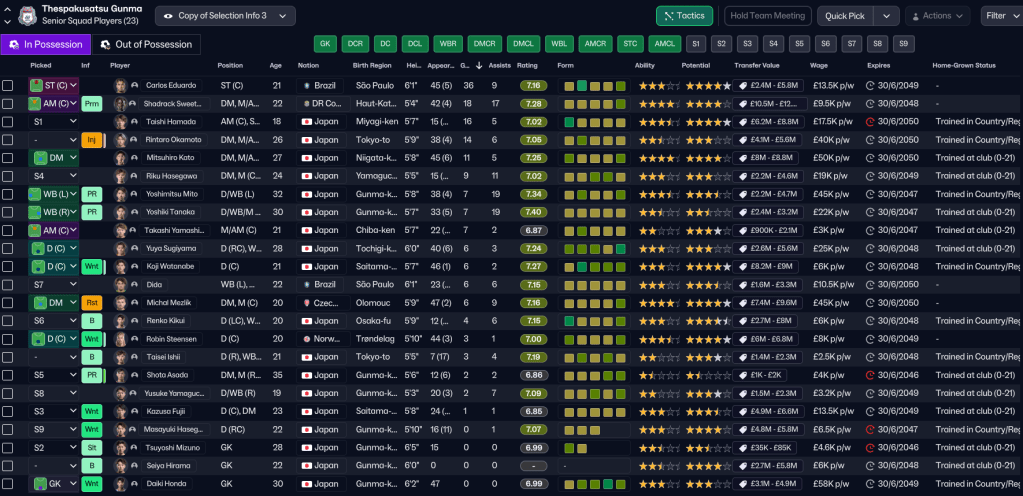
The 3-4-4 approach worked wonders again, led by advanced wingbacks Mito and Tanaka equally sharing 14 goals and 38 assists, the latter followed by Sweetbert (17), R Hasegawa (11) and Mezlík and Eduardo (9). While the impressive Eduardo again led the way with 36 goals in 50 games, followed by the brilliant Sweetbert (18), Hamada (16), Okamoto (14), Kato (11), R Hasegawa (9) and Mito and Tanaka (7).
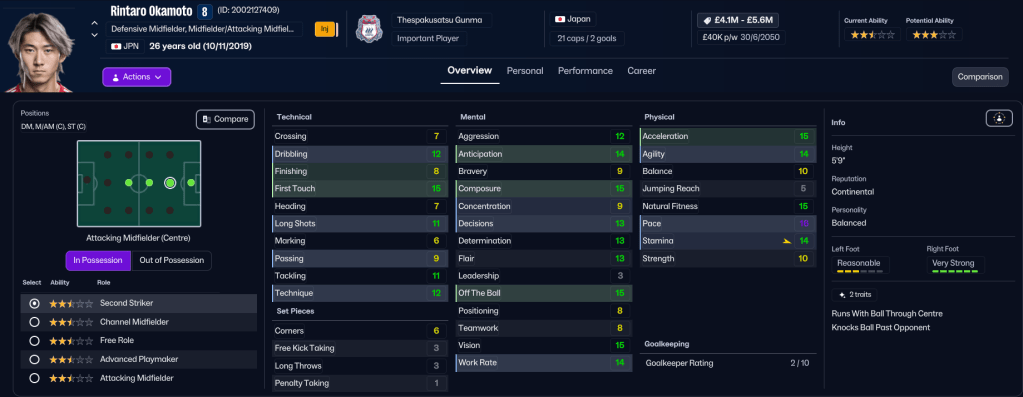
Mezlík (466) and Sweetbert (447) have developed into two of the best players Gunma have ever had, according to Rasamu’s attribute ID system (only behind Lucero’s 475). And they now have eight players scoring over 400. The amazing Mito has played a club record 569 games in all competitions, while he and Tanaka have both got 160 assists and more than 50 goals each. Okamoto leads the way on 97 goals in 388 games, but Eduardo has scored an impressive 81 in 96 games.
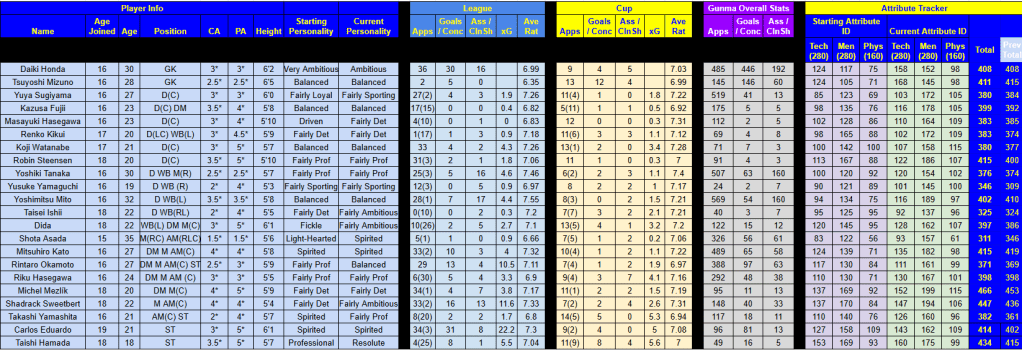
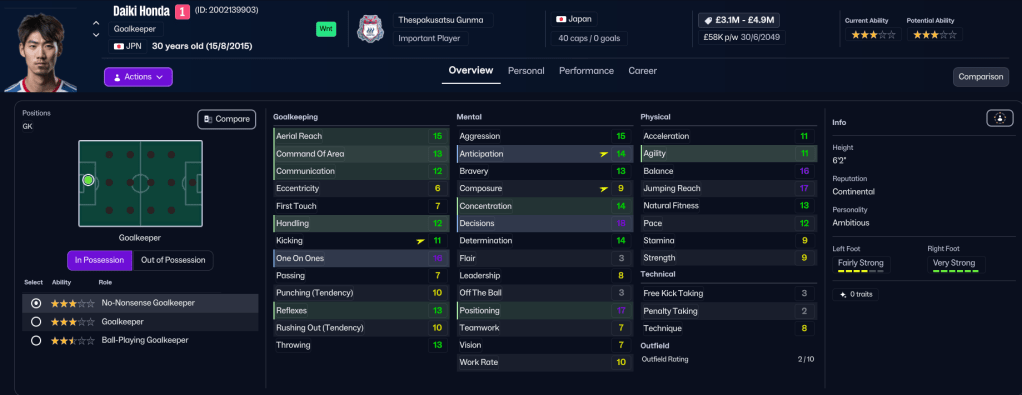
However, a fifth successive title and a second Champions League success feels like a good time to bring this Wonderkid Factory story to a conclusion. It’s probably the best one we’ve ever had, developing some homegrown superstars in the likes of Mito, Kato, Watanabe, Sugiyama and Okamoto and the departed Shimizu and Miura. In a way, it felt sad to leave with the likes of Eduardo and Hamada developing superbly and set to become superstars. But, after 21 years, Rasamu felt he’d achieved all he could at Gunma. However, you can see just how good some of these players have become, in order of ability, in the screenshots below (and Mito at the top).
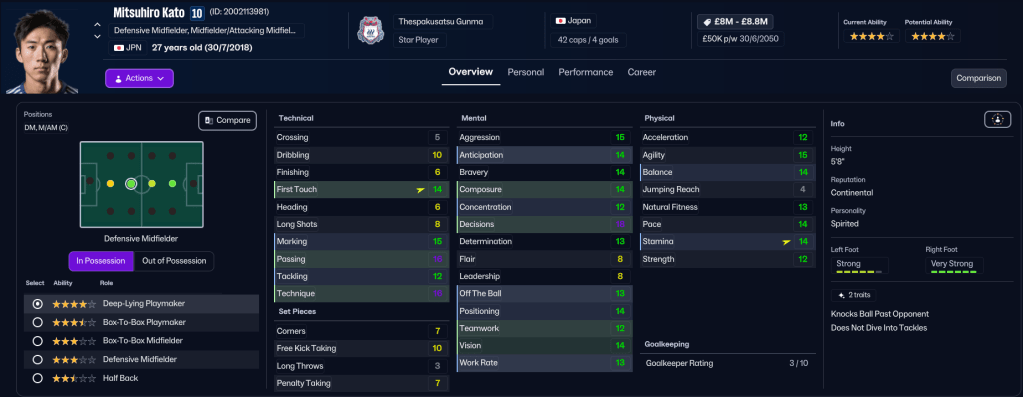
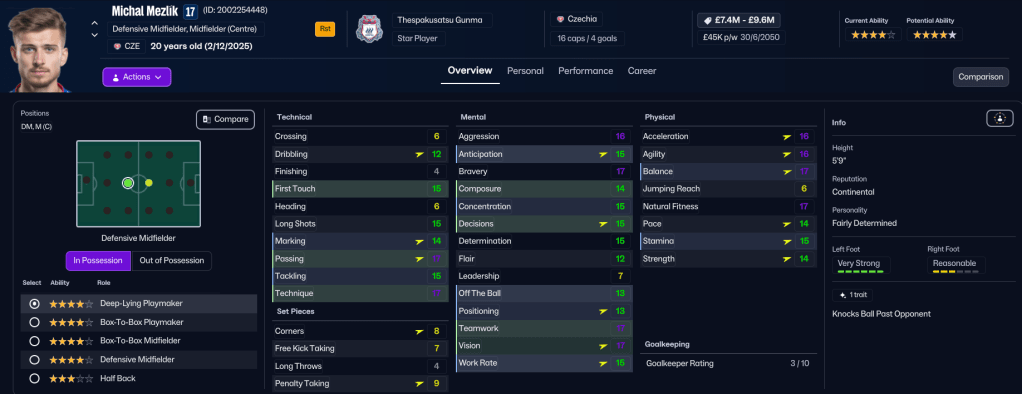
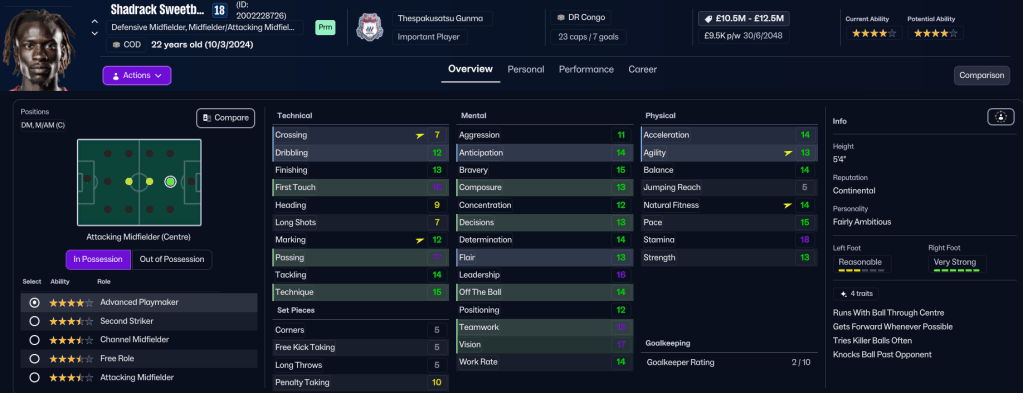
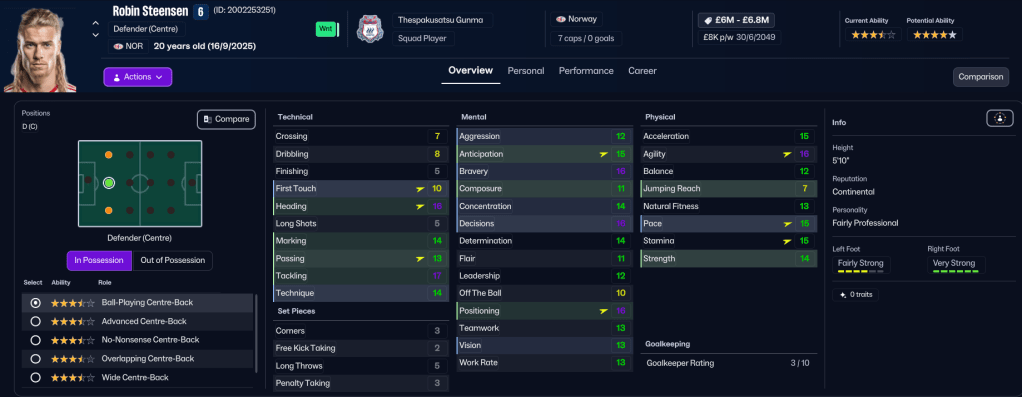
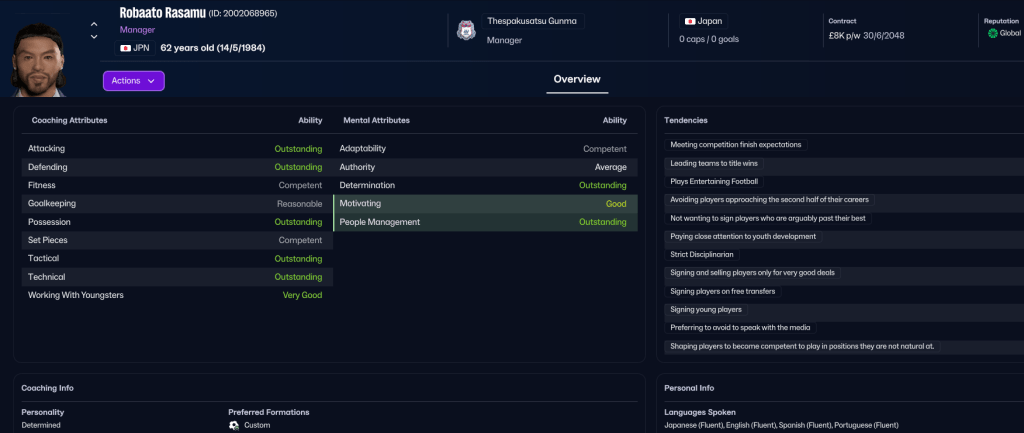
Rasamu departs Gunma after 21 years, 7,468 days and 1,038 matches. Of those, he won 599, drew 205 and lost 234, scoring 1,932 goals and conceding 1,123, with a win ratio of 57%. He won six league titles and 10 cup competitions, including two Asian Champions Leagues. Rasamu signed 101 players for a total outlay of £69.95m but sold 123 for an intake of £198m. Lucio Lucero was his record purchase for £9.5m, with Miura the record sale of £30m.
Thanks for reading this FM26 story and another highly enjoyable Wonderkid Factory. We’ll have more Football Manager content coming your way, potentially with a fifth Wonderkid Factory coming before the end of FM26.


 Football Manager Addict
Leave a comment