The streets of Gunma Prefecture hosted the biggest party the region had ever seen in June 2038 as Robaato Rasamu and his team of homegrown stars were treated to an open-top bus parade. They showed off the Emperor’s Cup and the J1 League trophies as they celebrated not only winning the club’s first major honour but also an unexpected double.
Gunma were also looking good off the pitch, as a £12.5m annual profit boosted the club’s bank balance to £41.9m. Rasamu had £35m in the transfer kitty and £170k spare in a weekly wage budget of £295k. That was boosted as captain Diogo Soares Cruz, who was 1 game short of the club’s all-time appearances record, decided he wanted a new challenge after 10 years at the club and moved to Saudi for £2.5m. They also sold midfielder Emiliano Ruiz Diaz and wingback Bui Quoc Dung to Saudi for £1.1m and £1m, a few homegrown players for an additional £2m, and Bulgarian striker Emil Ivanov went back home on loan.
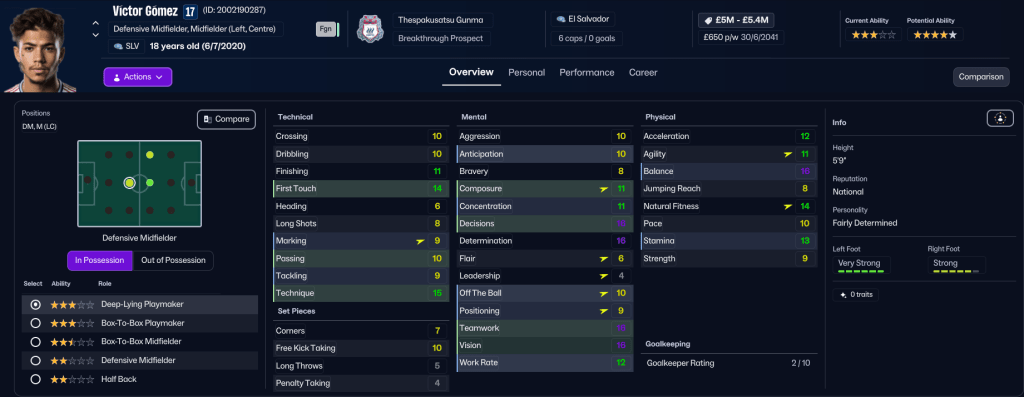
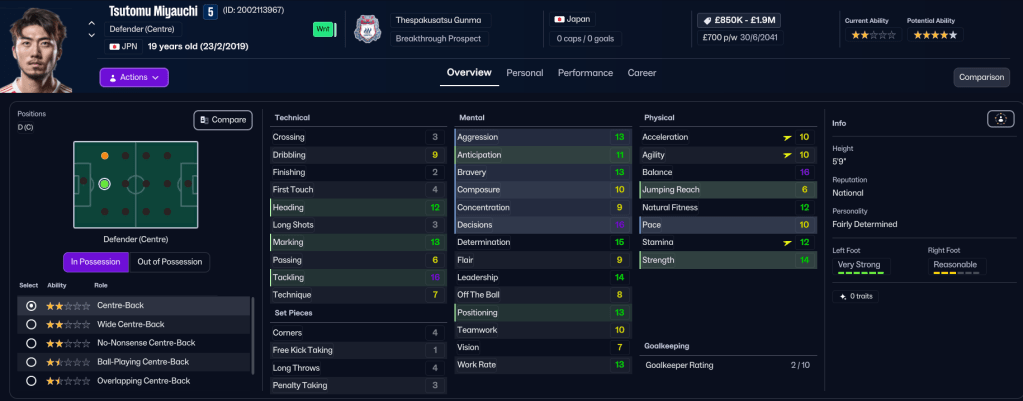
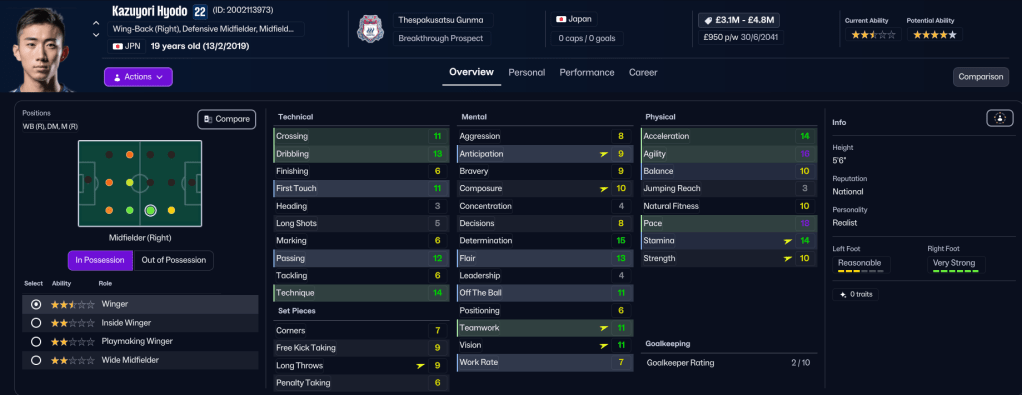
Rasamu couldn’t find anyone capable of replacing them, so stuck to his guns of trusting his youngsters. El Salvador midfielder Victor Gómez arrived at the end of his contract, while defenders Haruto Harada and Tsutumo Miyauchi and wingback Kazuyori Hyodo were promoted to the first team.
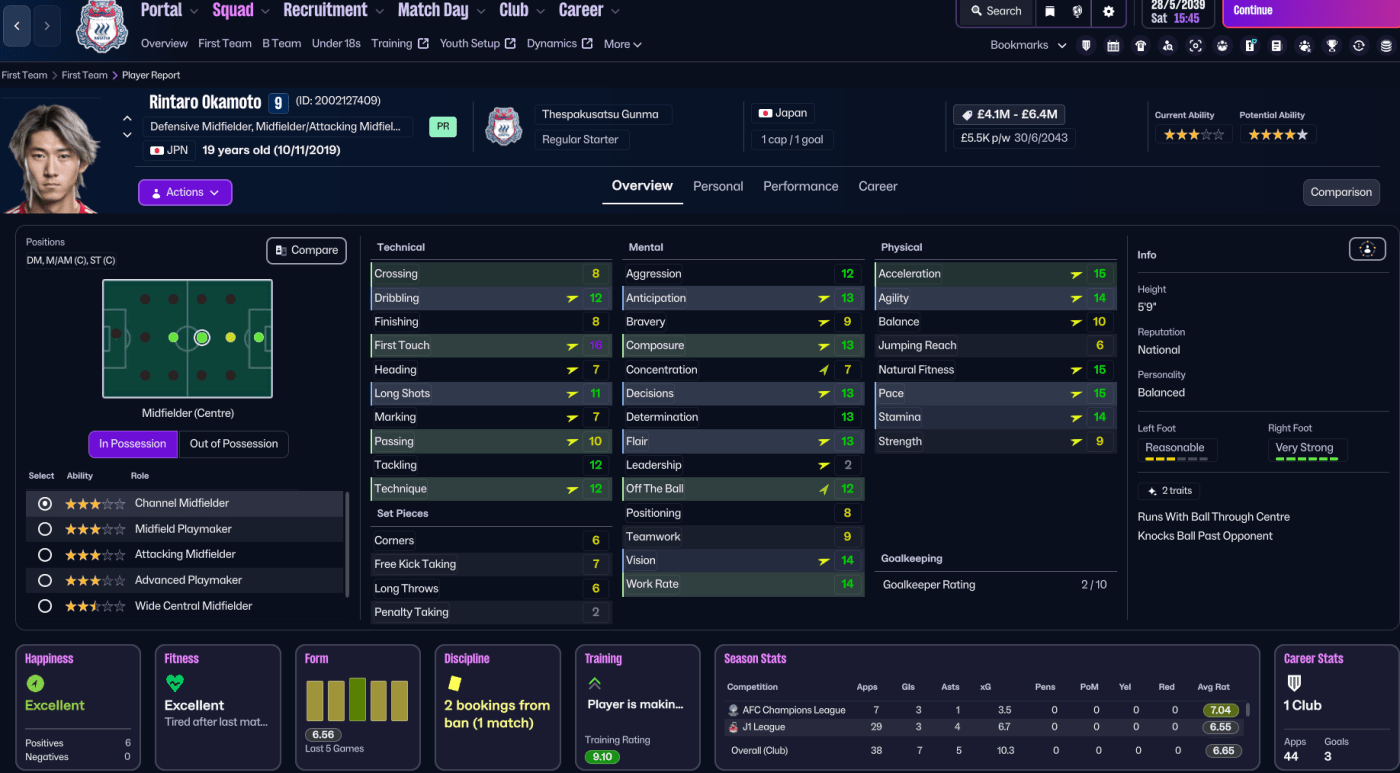
Rasamu’s latest project, driven by a lack of an all-out striker, was to convert 18-year-old, 5ft 9in midfielder Rintaro Okamoto into a striker. He’d been training in the position for few months and will lead the attack in front of Atsushi Shimizu and Peter Tweh, while Yuji Nagashima steps in to replace Soares Cruz, and Nobuhiro Yoshida replaces him as club captain.
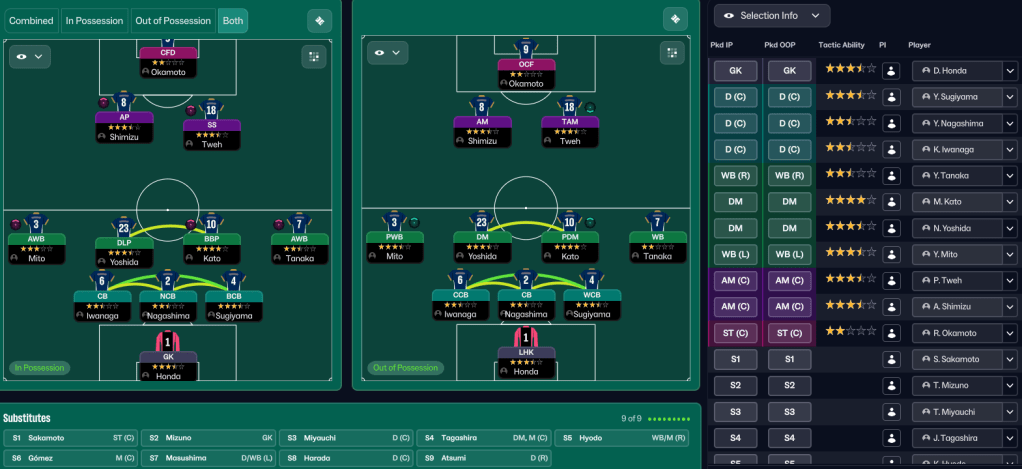
Goalkeeper Issues Mar Gunma’s First Title Defence
Champions Gunma remained fifth favourites to defend their crown with 25/1 title odds. Despite finishing 12th last season, Gamba remain 4/6 favourites, followed by Kashiwa Reysol (5/1), Kashima Antlers (14/1) and Urawa Red Diamonds (16/1).
Gunma’s title defence began with Tweh and Shimizu getting on the scoresheet and substitute striker Shunichi Sakamoto wrapped up a 3-1 win over Kofu, before continuing their 100% defeat record at Kashiwa. However, all three goalkeepers were called up to the Olympics, along with Okamoto. A greyed-out keeper kept a clean sheet in a 0-0 against Sapporo, but they had no such luck in the next month as they lost six out of eight to drop to 16th, while the chances of repeating last season’s double ended quickly with defeat in the Emperor’s Cup first round.
Starting keeper Daiki Honda got injured at the Olympics and Rasamu found himself under pressure. But that was eased by Shimizu’s brace earning a 2-0 victory at Cerezo before midfielder Jun Tagashira scored the only goal at Machida Zelvia and a Shimizu brace led a 3-1 win at his namesake Shimizu S-Pulse. That improvement saw Gunma sitting in 11th place heading into the winter break, 10 points behind leaders Gamba.
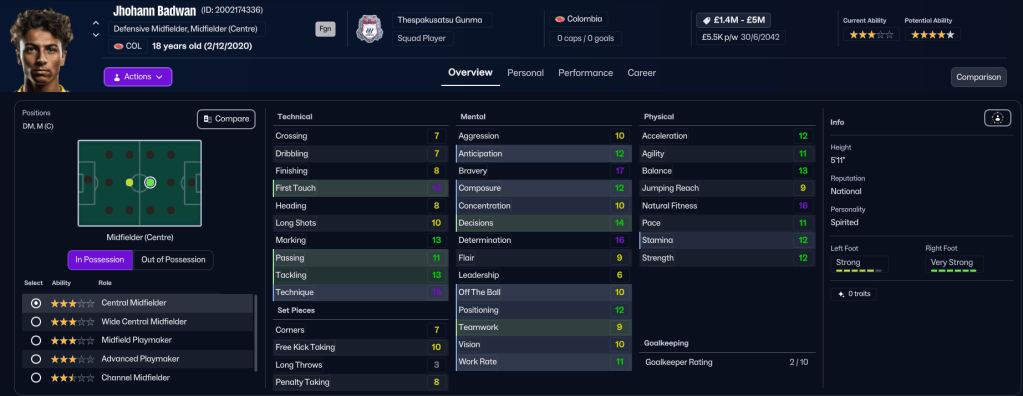
Rasamu made one addition going into the new year, snapping up exciting 18-year-old midfielder Jhohann Badwan for £850k from Atlético Nacional.
The Okamoto project hadn’t exactly worked as, despite playing fairly well, the youngster failed to score in 14 league games. Rasamu tinkered with player roles and instructions to play to his strengths and, deployed as a false nine, he finally got on the scoresheet with a tidy close-range finish to secure a 2-0 win at Nagoya Grampus in late February. That result was indicative of Gunma’s uptick in form, which helped them climb into the top eight by early April. Okamoto scored the only goal at home to Cerezo before a 2-1 win over title battlers Shimizu ended their outside hopes.
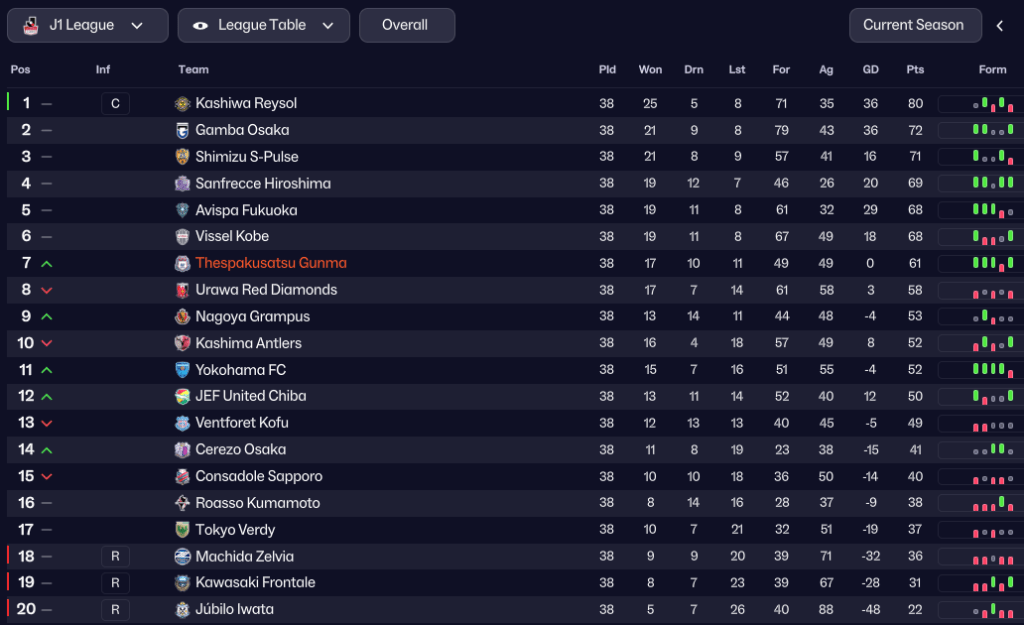
A solid end to the season saw Gunma finish in 7th on 61 points, after 17 wins, 10 draws and 11 defeats, scoring 49 and conceding 49. And, unsurprisingly, they didn’t have any players among the league’s top performers.
Fourth Season in the Champions League
Gunma had a much better time of things in their latest Champions League campaign. It began with 18-year-old striker Junichi Watanabe scoring on debut in a 2-1 win over Seoul, and he scored again in a 2-0 win at Melbourne City. They crushed Malaysia’s Johor and Thai side Chiangrai 4-0 and, despite oddly having to play Kashiwa and Kashima, they breezed through the group in 2nd place. Gunma again faced Chinese side Yukun in the last 16 and snuck a 1-0 away before Hyodo’s first senior goal began a comfortable 2-0 home win.
Bizarrely, for the third successive season, Gunma drew Al-Nassr in the quarters. Rasamu rested the first 11 for the preceding league game, and it nearly paid off as Okamoto’s best performance yet levelled them up at 2-2, only for the Saudis to nick a win.
Unspectacular Title Defence
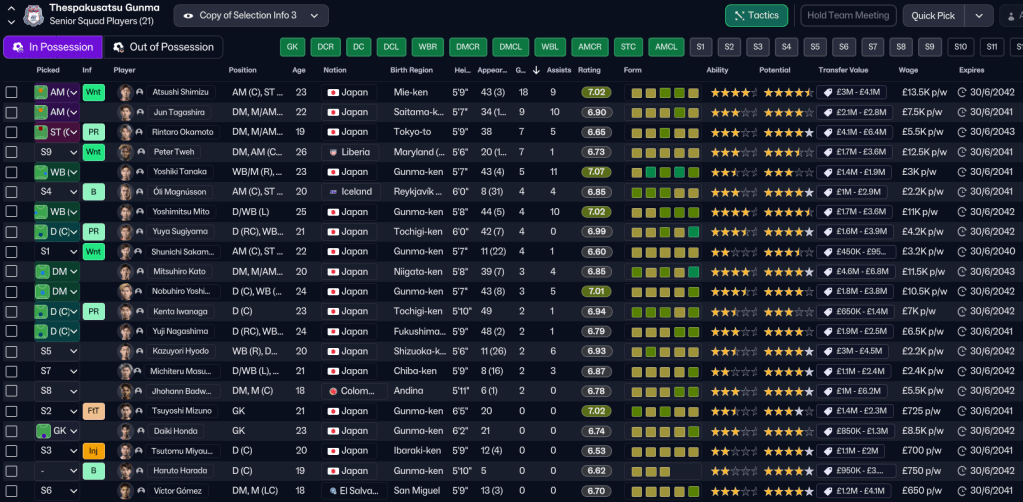
Gunma’s title defence didn’t quite go to plan, largely thanks to the Olympics call-ups debacle, but Rasamu was pleased that his side recovered well towards the end of the campaign. The biggest issue was clearly a lack of goals and cutting edge, as Shimizu led the way with 18, followed by Tagashira (9) and Okamoto and Tweh (7). Right wingback Yoshiki Tanaka topped the assists with 11, followed by left wingback Yoshimitsu Mito and Tagashira (10) and Shimizu (9).
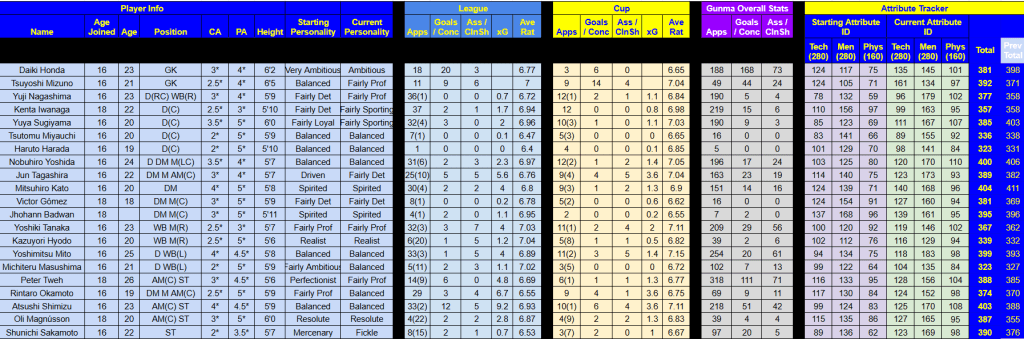
Midfield starlet Mitsuhiro Kato is the best player at the club with a score of 404 in Rasamu’s attribute ID system. He’s closely followed by Shimizu (403) and Yoshida (400). Click the chart below to see how the players have developed this season.
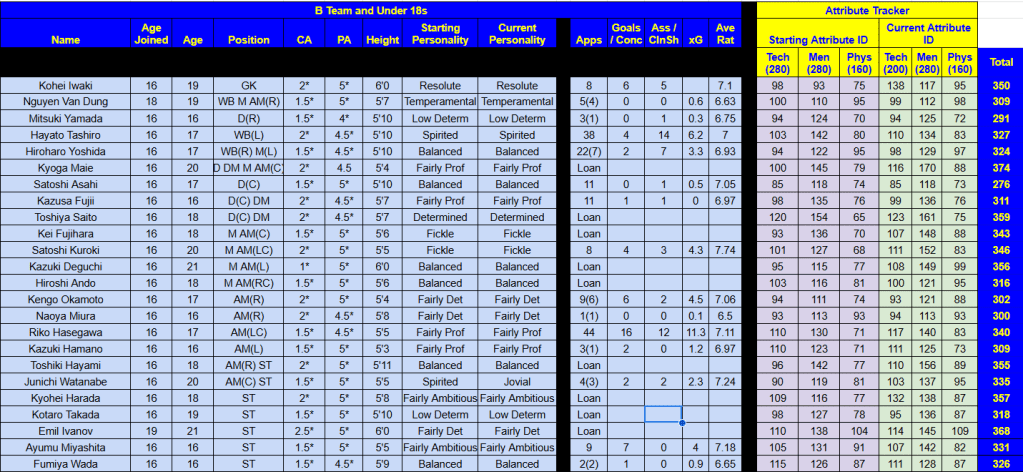
There are also a few youngsters to keep an eye on, including wingback Hayato Tashiro, who got 14 assists, and midfielder Toshiki Hayami, who impressed on loan at affiliate side Nara.
Mito finally earned his first Japan cap in March, while Shimizu became the first Gunma player to score for Japan in a 3-1 win in Bahrain. They were part of a 7-strong contingent in the Japan squad, along with surprise call-up Okamoto, who scored on his debut a few days later in a 1-0 win over Venezuela, Honda, Yuya Sugiyama, Shimizu and Yoshida.
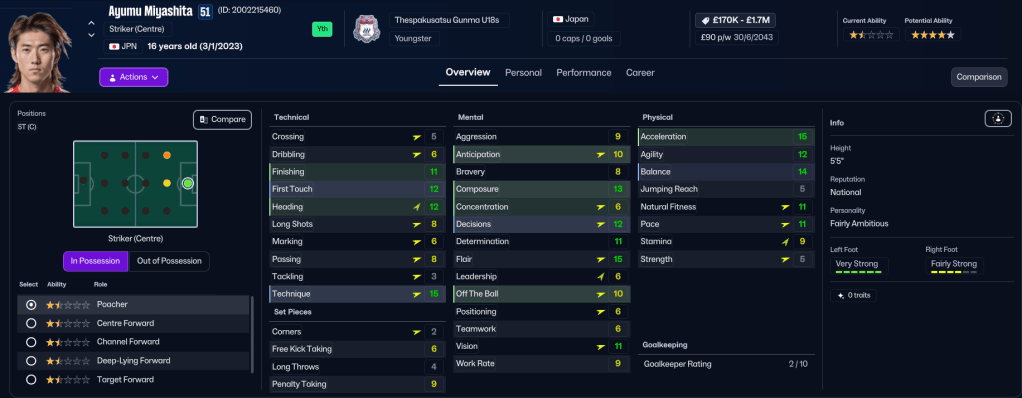
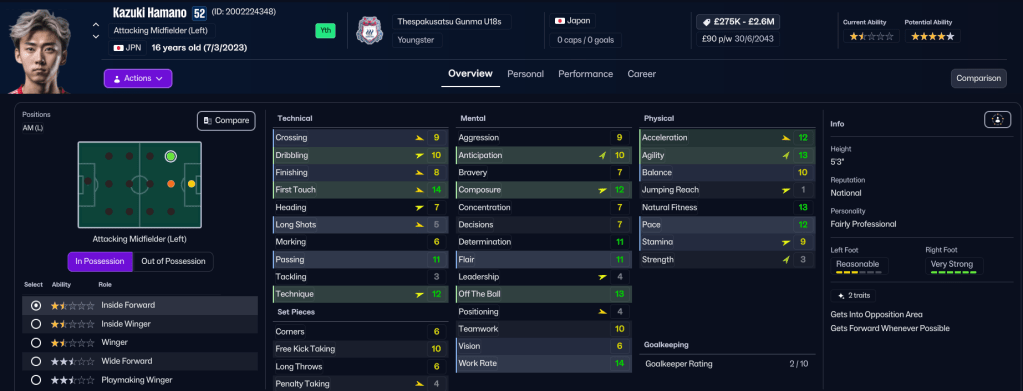
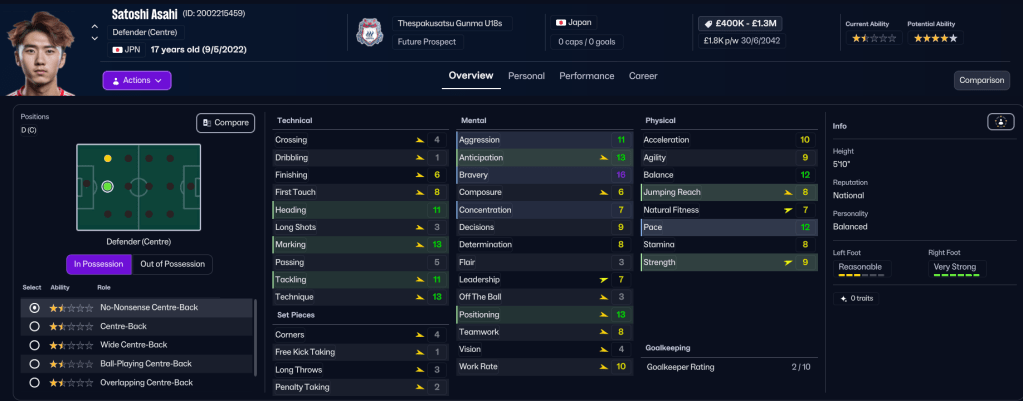
Gunma got another good youth intake, with six potential elite prospects. Thepick of the bunch was diminutive striker Ayuma Miyashita, along with wingers Kazuki Hamano and Naoya Miura, striker Fumiya Wada and centre backs Satoshi Asahi and Kazusa Fujii.
Things hadn’t quite gone to plan in Gunma’s maiden title defence, and the Okamoto project wasn’t quite working to plan. So Rasamu was aware he may need to shake things up in the summer break, with a view to competing at the top of J1 again next season.
Could Gunma improve in Rasamu’s 14th season at the club? Join us next Friday to find out!


 Football Manager Addict
Leave a comment