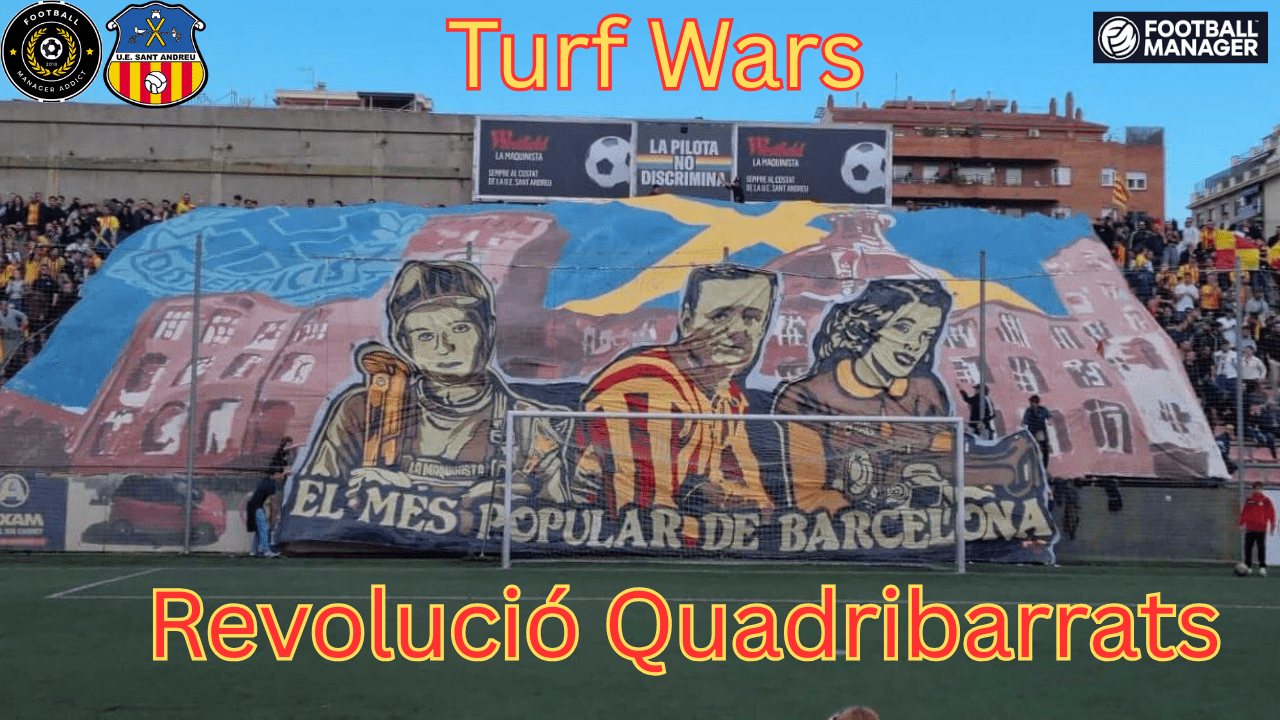
This blog kicks off a brand new series on FM Addict, which will hopefully become a long-running concept. The idea was mainly borne out of the struggles doing journeyman series on FM26 as, frankly, my computer doesn’t like running the game with large databases and multiple nations. With that in mind, we’re going to be sticking to one club adventures for now.
Thousands of people descended on Camp Municipal Narcís Sala ahead of one of the most highly anticipated nights in recent Catalan history. The football culture in Barcelona had been shifting rapidly, as club memberships had increased 600% over the last five years, passionate fans created electrifying stadium atmospheres, and local vendors were completely sold out of replica kits. But this wasn’t due to a surge in support for the club you might be thinking of.
Long-time supporters of FC Barcelona were actively switching allegiances in favour of a local side that fully embodied their Catalan culture. In so doing, they were giving up on a club that had won 97 major honours, including 28 Spanish titles, and employed some of the greatest footballers of all time, to switch allegiances to one that had never gone beyond Spain’s third tier and had won zero trophies.
FC Barcelona#s success was the primary catalyst for locals’ loss of faith. They saw modern football as a theme park, only existing to make money through tourism and gentrification. And FC Barcelona embodied that trend, whereby success was only possible by taking on the most lucrative sponsors by any means. Indeed, one of the most iconic football stadiums in the world had its name changed due to sponsorship from a company that many perceive to have destroyed the music industry.
As a result, millions of Catalan people decided to return to their roots, turning to little Unió Esportiva Sant Andreu to embody their romantic concept of what “real football” should be. Founded in 1909, UE Sant Andreu was one of the first clubs to be formed in Cataluña, and is about as Catalan as it gets.
Artist Salvador Dalí agreed to rescue Sant Andreu from financial turmoil by, at the request of the club’s president, painting Gol and selling it for €4m, because the club represents the “four bars” of the Catalan flag. Furthermore, Sant Andreu’s home kit is decked in the historic yellow and red stripes on a kit created by Catalan manufacturer Meyba, previously the FC Barcelona manufacturer – before the club got too big and turned to Kappa and Nike. And finally, Sant Andreu’s nickname is Quadribarrats, referring to the four red stripes of the Senyera, the Catalan flag.
In short, Sant Andreu is the historic club of Cataluña, and the club’s rise in popularity amongst locals reflects that. In 2019, the club only had 700 season ticket holders; now it has around 6,000. However, that rise in popularity hasn’t quite been reflected on the pitch. Last season, Sant Andreu lost 2-1 in the playoffs to miss out on promotion and stay in Spain’s fourth tier. So the club needed a manager who could embrace that passion and take them to the next level.
A New Era in Catalan Football
Fast forward to 1 June 2025, and an extraordinary meeting of the Sant Andreu supporters’ club saw thousands of people gather to elect a manager worthy of their support. The public process saw one man come to the fore, the leader of the prominent Sant Andreu Ultras group, Oriol Ribas.
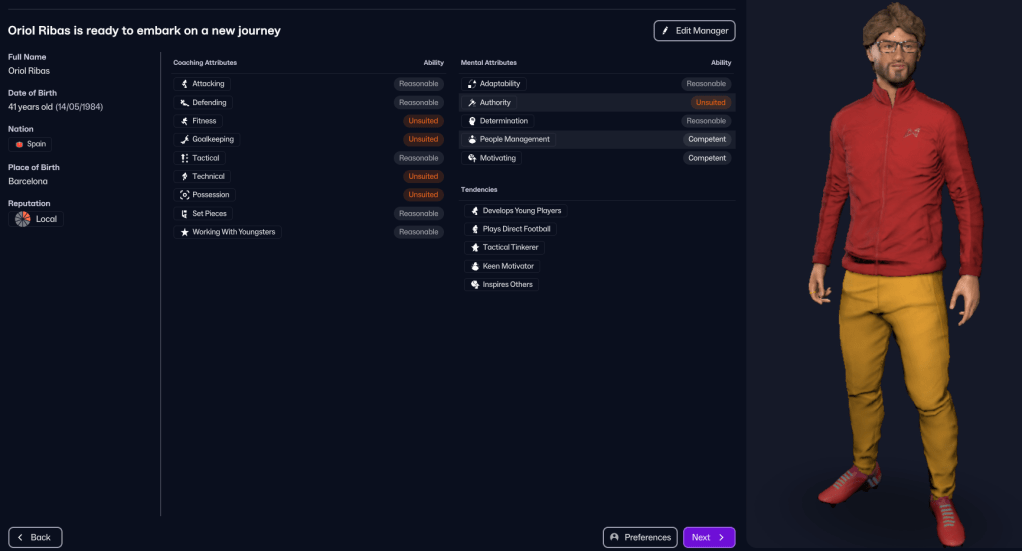
Ribas had long campaigned for fans to be given a say in how the club was run. He’d created a lengthy manifesto that detailed the importance of “reclaiming space” with a view to retaking control of the historic city of Barcelona. Ribas’ manifesto detailed that success would be defined not through trophies but moments that eat into the dominance of FC Barcelona. In short: “Revolutions take time, but so do stories worth telling. There will be seasons where nothing is won and where progress looks slow, but those are the years that matter, where our identity is shaped.” In addition, Ribas was keen to point out that the manager was not the hero, and neither were the players – rather, the club and the community were all that mattered.
Ribas was introduced onto the hallowed turf of Camp Municipal Narcís Sala amid scenes akin to those of a multi-million Euro new signing being unveiled to tourists at the nearby Camp Nou. He was officially announced as the new manager of Sant Andreu and handed a microphone.
“Senyores i senyors, aquest és el començament d’alguna cosa especial a Barcelona. Today, we begin taking back control of our city. I officially unveil Revolució Quadribarrats, our mission to establish UE Sant Andreu at the heart of Catalan culture. This revolution exists because football isn’t fair, but it is about belonging. If we can claim this corner of our city and the club demonstrates the feelings of our supporters and members, then the turf is already shifting. And for me, that’s enough to get started.
“We have to dream. We have to aim high. We’ve seen what money and ego do to a club, a club that most of us previously referred to as ‘our club.’ And I vow that this club will remain strong in the face of modern football. We will focus on developing young local talent and maintaining our Catalan roots while chasing glory on the football pitch. This is our new beginning.”
Ribas was greeted with rapturous applause and Catalan chants as he raised his hands and soaked in the adulation of the expectant Sant Andreu supporters. And with that, Ribas’ revolution began.
Revolució Quadribarrats Begins
Ribas’ Revolució Quadribarrats mission is to reclaim the city of Barcelona as truly Catalan. His first task will be to lead the club out of Spain’s fourth-tier Segunda Federación – which, just for a bit of early rivalry stoking, also includes FC Barcelona’s B team, Barcelona Atlétic. He’ll then aim for the second tier for the first time in club history, before setting his sights on reaching La Liga. The overarching objective is to usurp FC Barcelona, finish above them in the league, and claim Sant Andreu’s first Spanish title. But the save will only be completed when Sant Andreu has a higher world reputation than FC Barcelona.
Ribas won’t have any strict regulations in place, but he will be targeting Catalan players – both the club’s homegrown youth players and those coming through at other Barcelona-based clubs. And we’ll be tracking Sant Andreu’s progress against that of FC Barcelona at the end of every season. But how tough a task is facing Ribas as he steps up from leader of an Ultras group to manager of Sant Andreu?
Ribas’ managerial journey kicks off at 2pm today, after which we’ll be publishing new blog updates every Monday.


 Football Manager Addict
Leave a comment