
The unfancied youthful side of Thespa Gunma were the surprise package of Japan’s J3 League as they snuck into the playoffs and put in two huge performances to seal promotion to the second tier.
Taxable profits of £1.28m in the last 12 months sent Gunma into Rasamu’s third season with £4m in the bank. For some reason, they also had a transfer budget of £4.2m and were only spending £27k of a £44k wage budget. And that was boosted by 12 players being released at the end of their contracts.
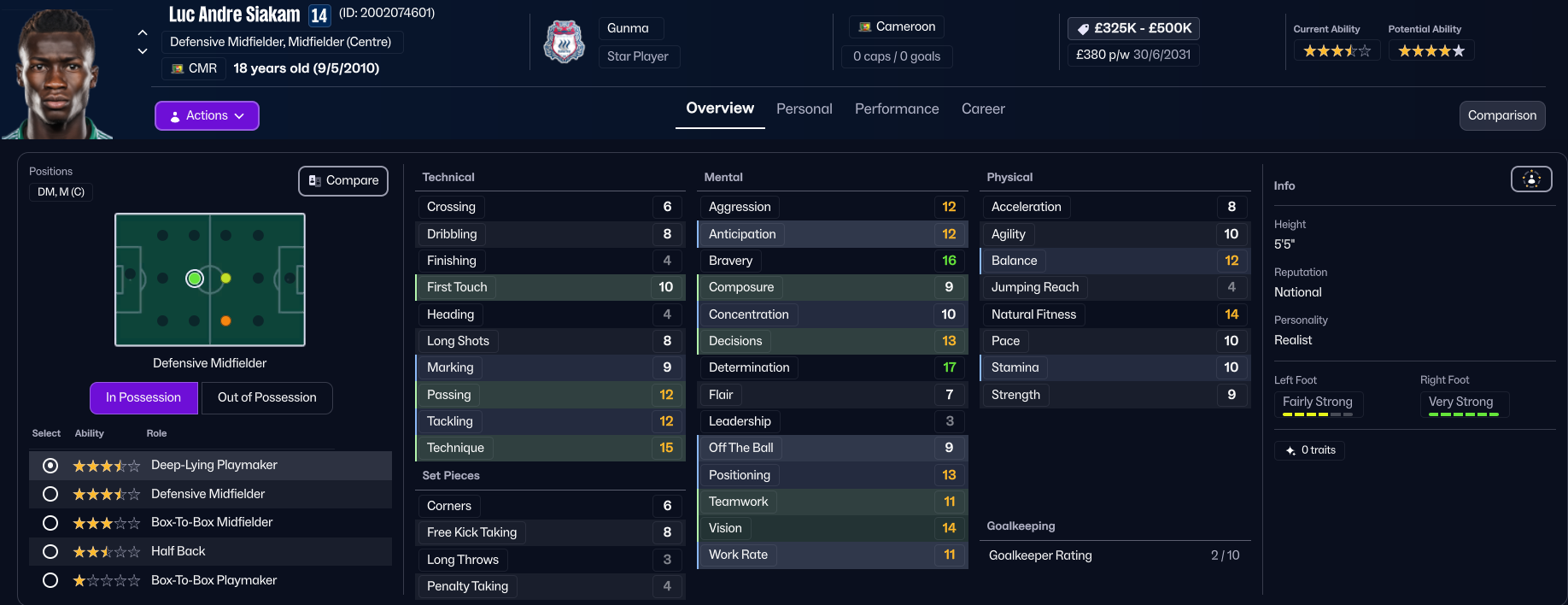
Given the club’s limited scouting capabilities, Rasamu decided to set up some TransferRoom requests for potential first-team quality players. He was inundated with suggestions of exciting Brazilians available for free who were willing to join as impact subs, and he may have got carried away. Some will join in December, as they’re only 17, but those that arrived in December included striker Matheus, midfielders Émerson, Cezinha and Erivaldo Leal, full backs Fábio Carioca and Giovani Fernandes, and centre back Raphael. They were joined by Rasamu’s first cash signing, 18-year-old Cameroonian midfielder Luc Andre Siakam for £18k from Union Douala who, according to Rasamu’s Attribute ID system, arrived as by far the best player at the club.
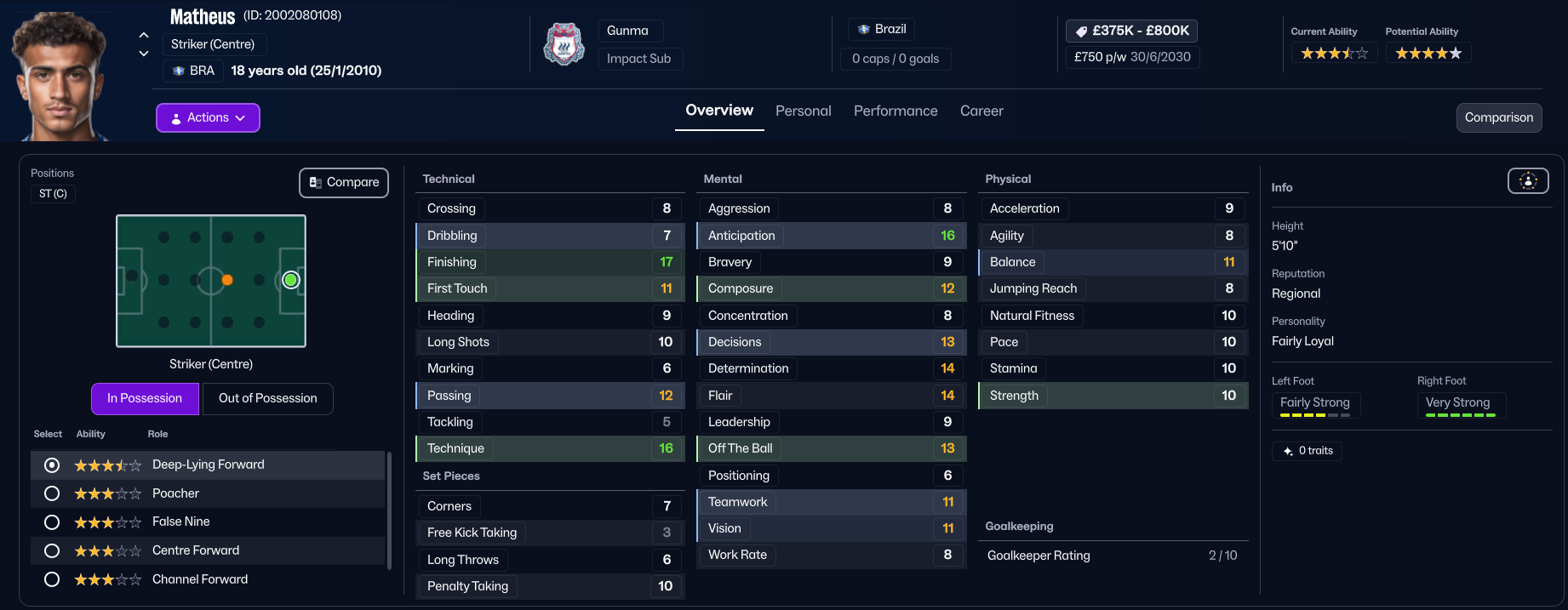
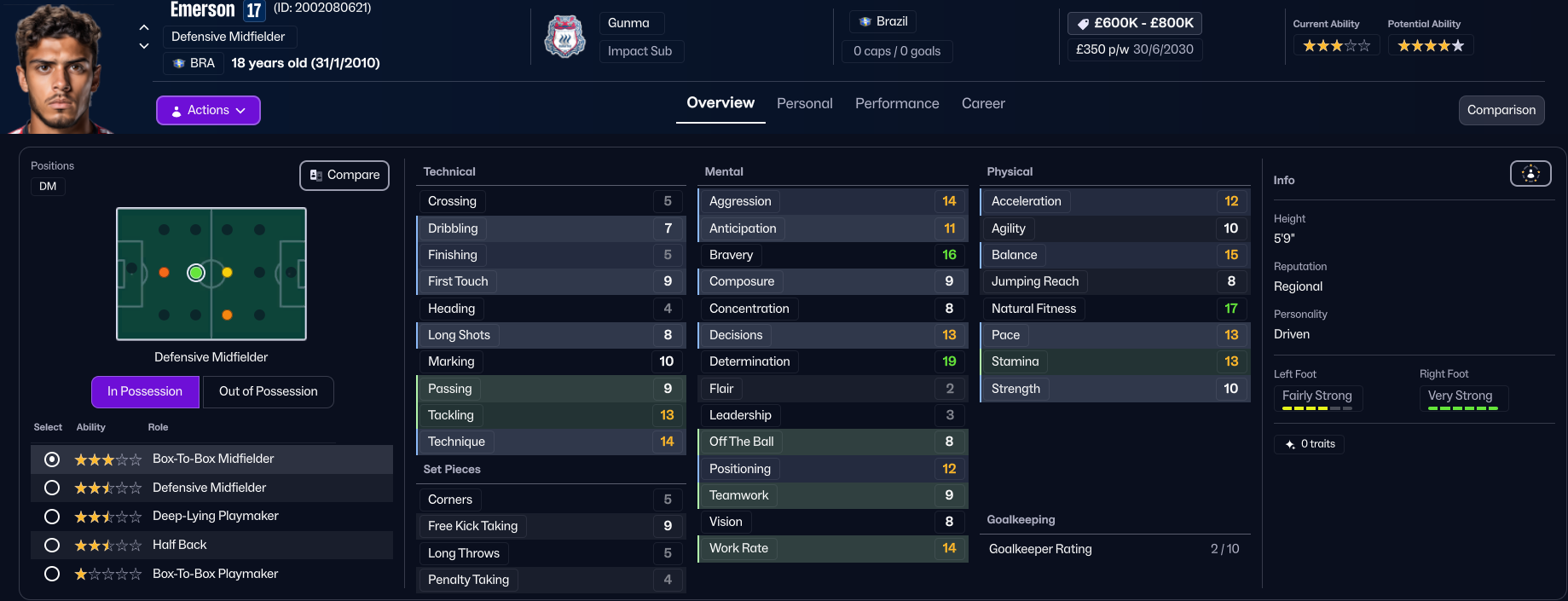
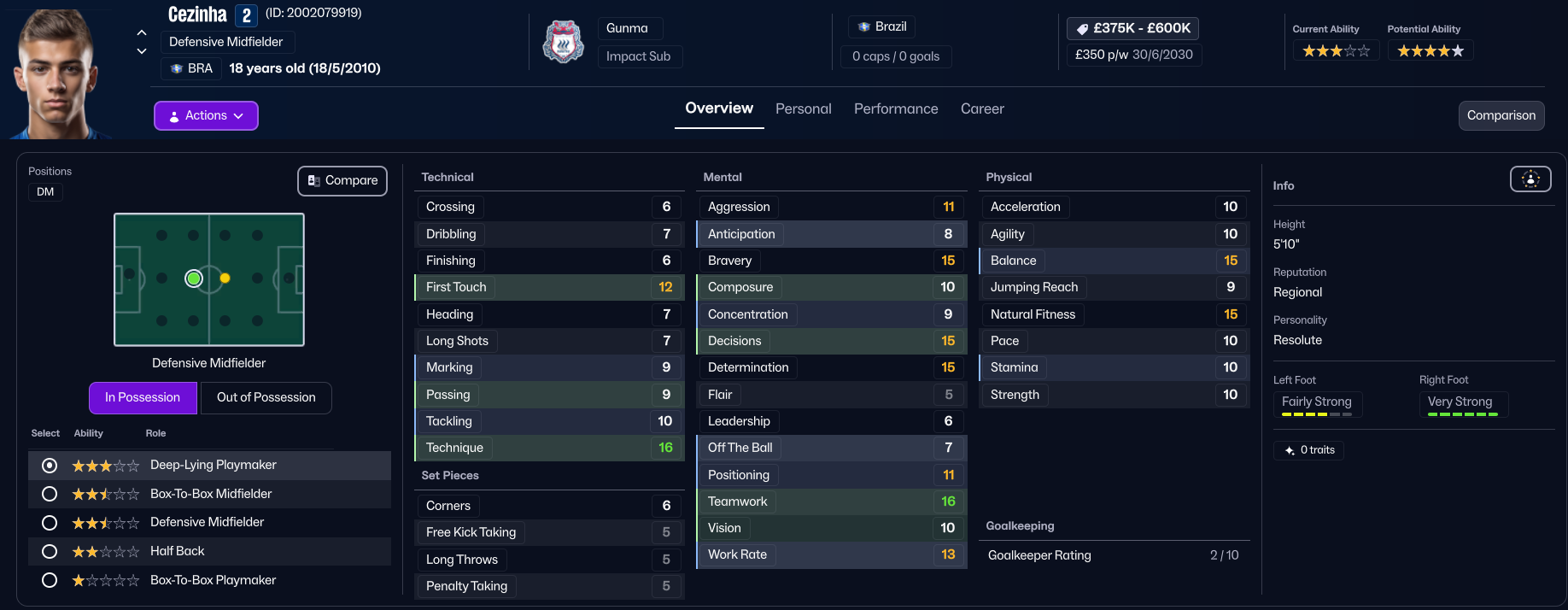
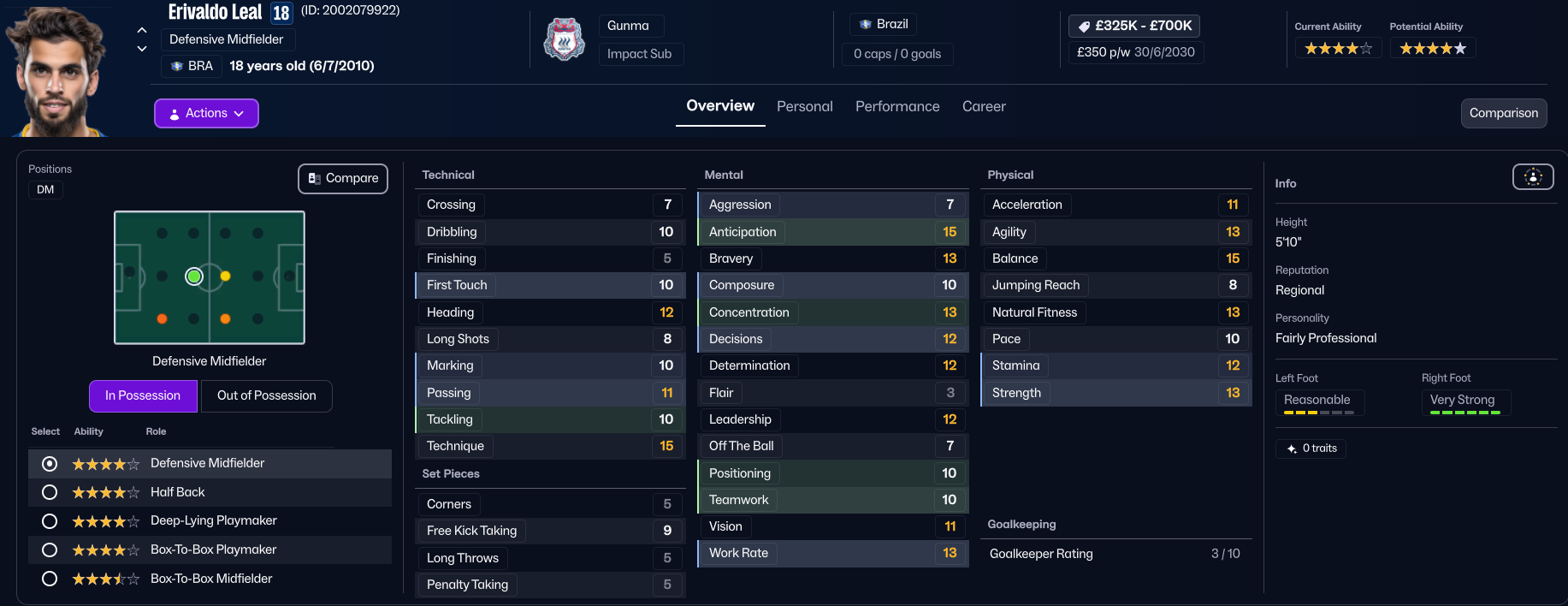
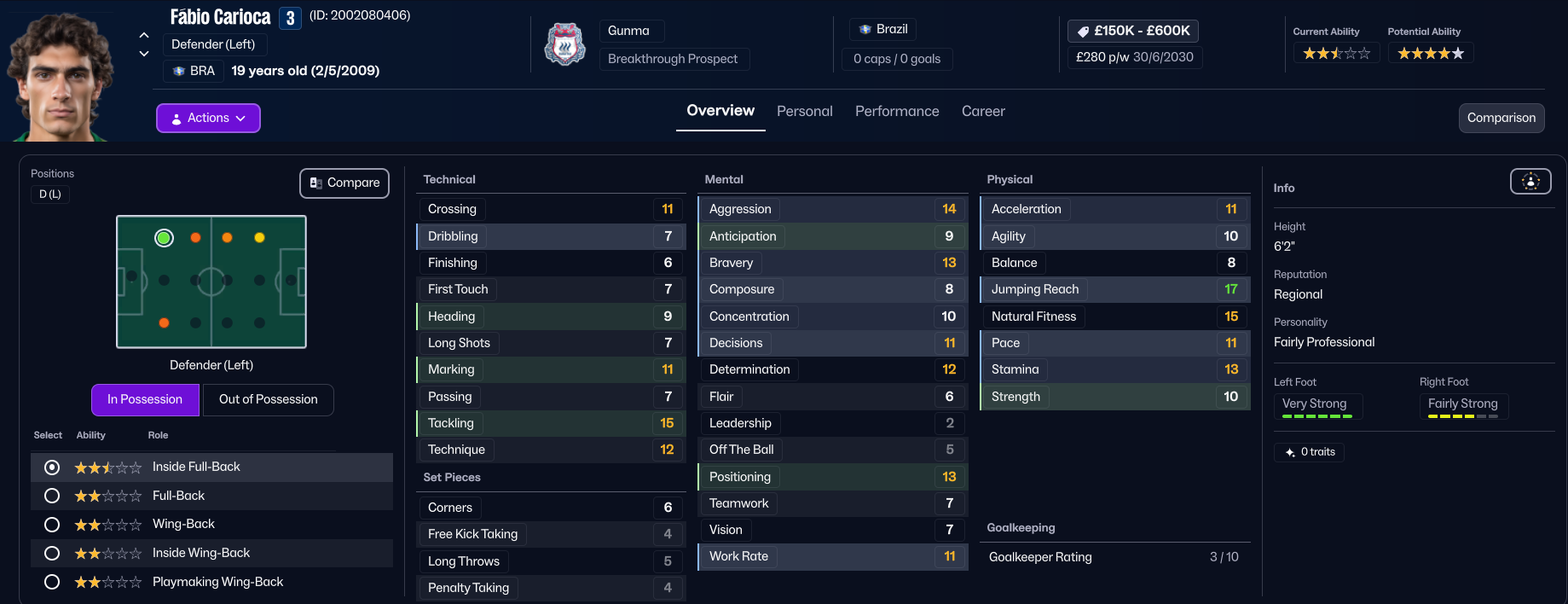
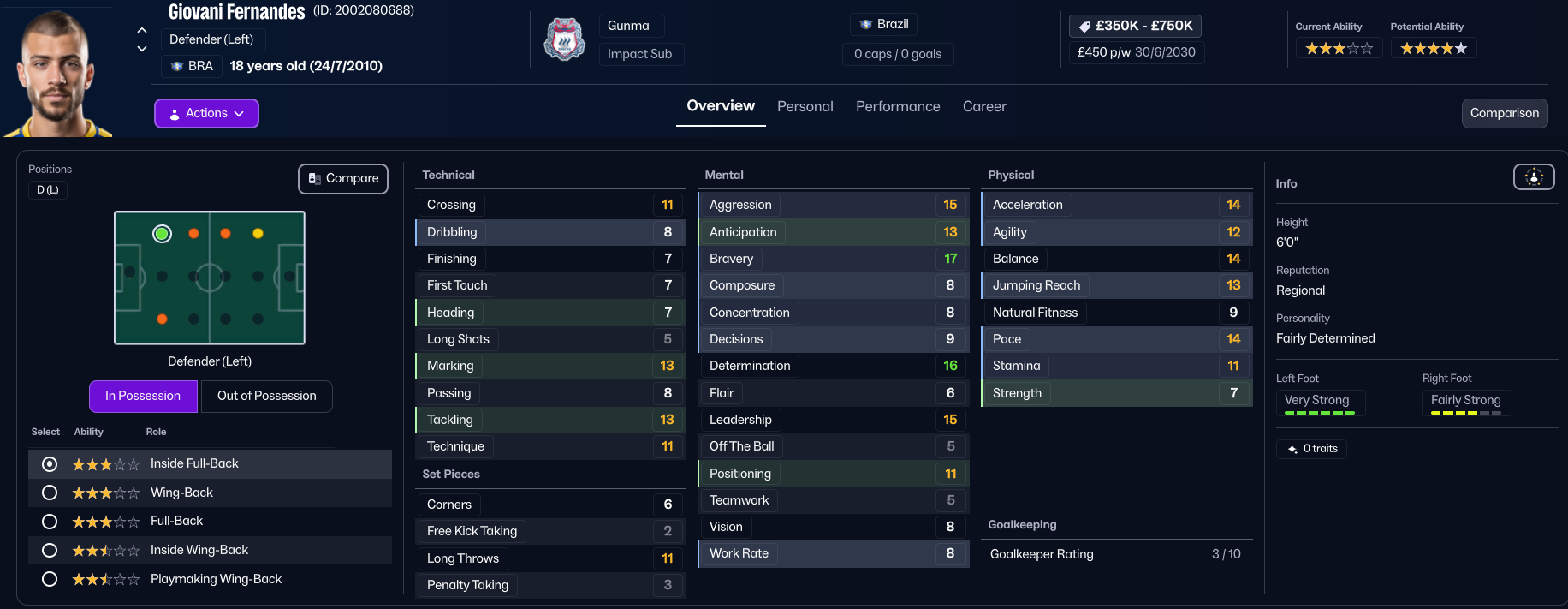
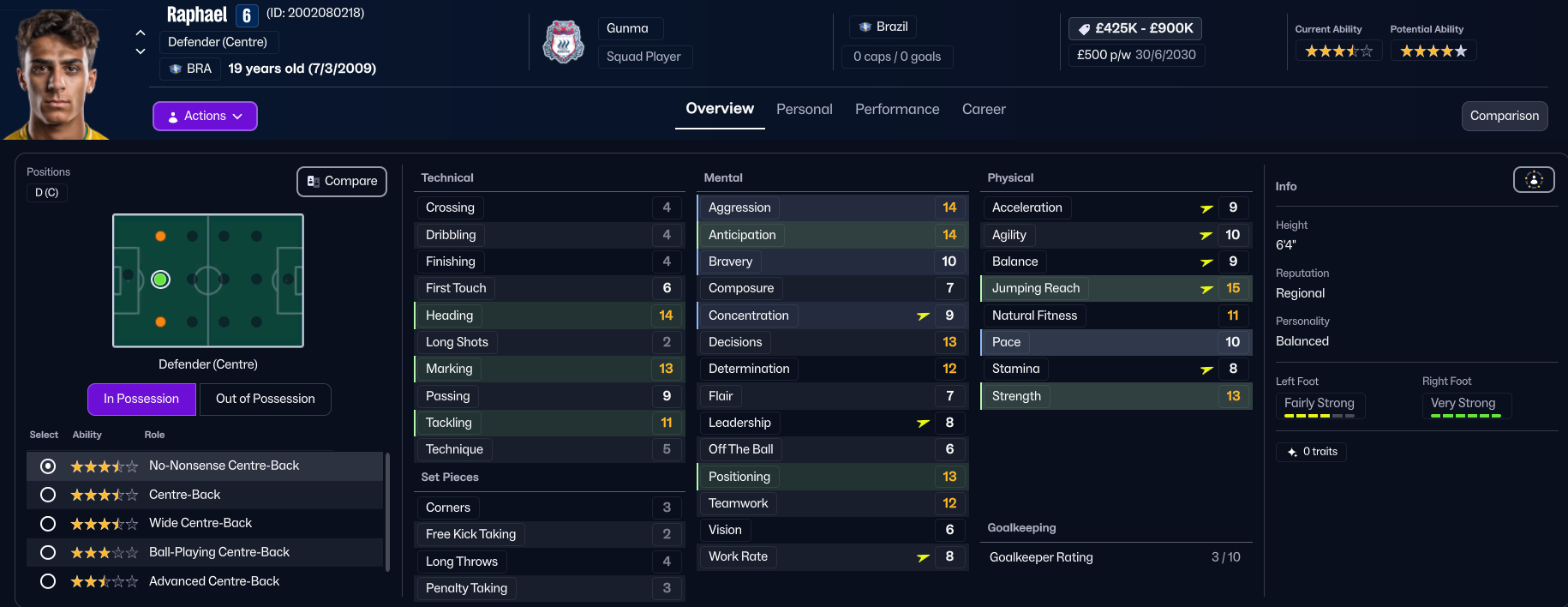
However, despite having rigorously checked the league rules prior to the season, he then realised the J2 League only allowed four foreign players in a matchday squad. So he had to loan list most of the new arrivals to limit the damage, and drafted in some top-tier Japanese side loanees in their place. With those players through the door, Rasamu initially decided to move to more of a 4-3-3. But, having had to scrap his Brazilian revolution, he reverted back to last season’s successful 4-4-2.
Stepping up to J2 League
The bookies rated Rasamu’s transfer business and backed Gunma to have a decent chance at survival, predicting them to finish 16th with title odds of 50/1 – the same as least season, interestingly. Relegated Nagoya are 1/5 title favourites, along with Niigata (2/1), Shonan (3/1), Iwata (15/2), Omiya (9/1), Kofu and Sendai (11/1) and Tosu (12/1).
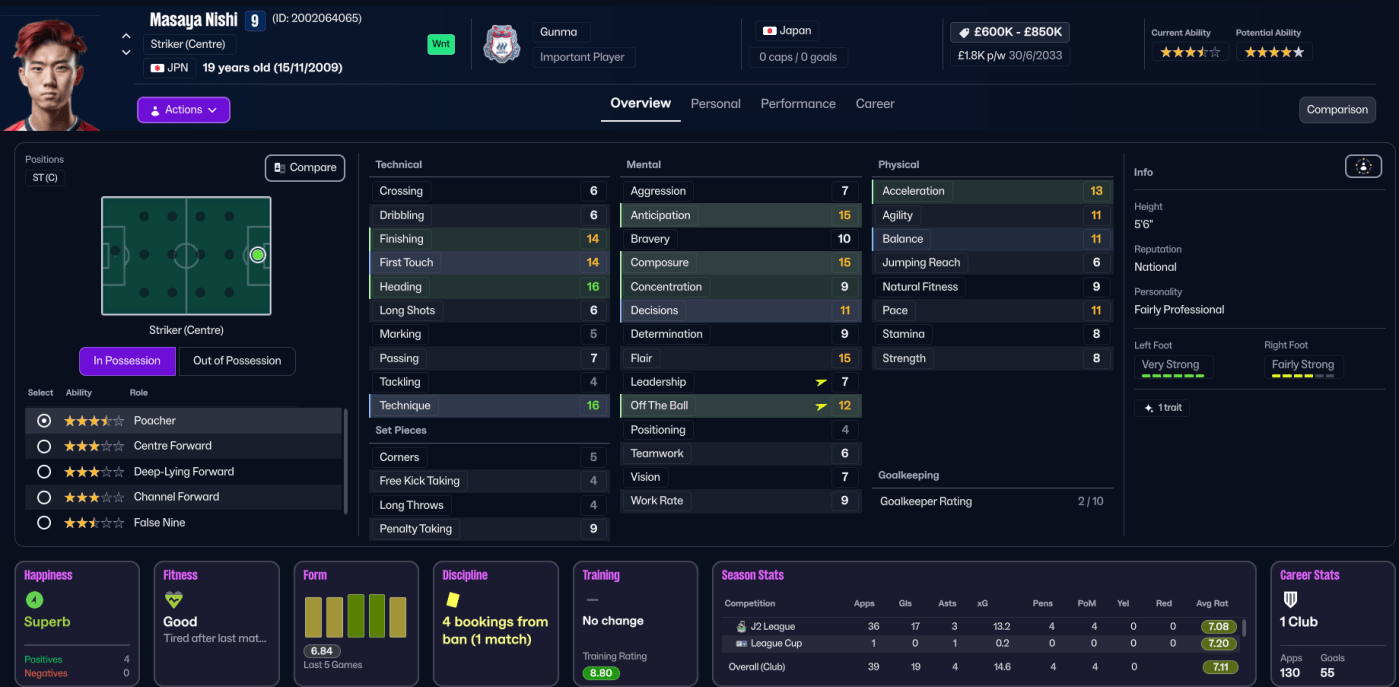
Gunma started well as Siakam arrived late in the box to score 40 seconds into his debut, earning a point at Omiya. They lost 2-1 at home to Ehime but earned a solid 0-0 at Akita and got a first win on the board as goalscoring centre back Rikiru Nakano’s penalty ended Iwata’s winning start. Striker Masaya Nishi earned a third successive away draw before his strike partner Rassoul Ba bagged twice in a superb 3-0 win at home to Niigata. A trickier spell followed, but winger Shota Asada’s late winner at home to Fujieda kept them firmly in mid-table after 10 games.
Gunma continued to perform well, including wins at Chiba, Mito and 3rd-place Sendai but, oddly, struggled to win games at home. Despite that, they hit the halfway point of the season in 10th place on 30 points, only 3 points back from the playoffs and a huge 14 points clear of any relegation concerns. Gunma’s continuing overachievement led the Gunma board to hand Rasamu a new three-year deal until 2031 in November. They also agreed to further improve the youth recruitment to “well established,” having improved the youth facilities in the summer.
Another Takeover… and Back-to-Back Playoffs?
Just over a year since the previous takeover, Rasamu received a message that chairperson Kaito Niinuma was also planning to retire in early March. Another transfer embargo was enforced with news that talks were ongoing with a local investor. And a few days later, Gunma had new owners again, this time in the form of local man Takanori Yamazaki, who injected £525k into the club.
After a loan spell back in Brazil, the exciting Matheus had to come into the first team. And he showed why as he scored on debut in a 4-0 thumping of Tokushima in February and again before laying on both Nishi goals in a 4-2 victory at Niigata. And a 1-0 North Kanto Derby win at home to Mito lifted Gunma into 7th, just one point outside the playoff places.
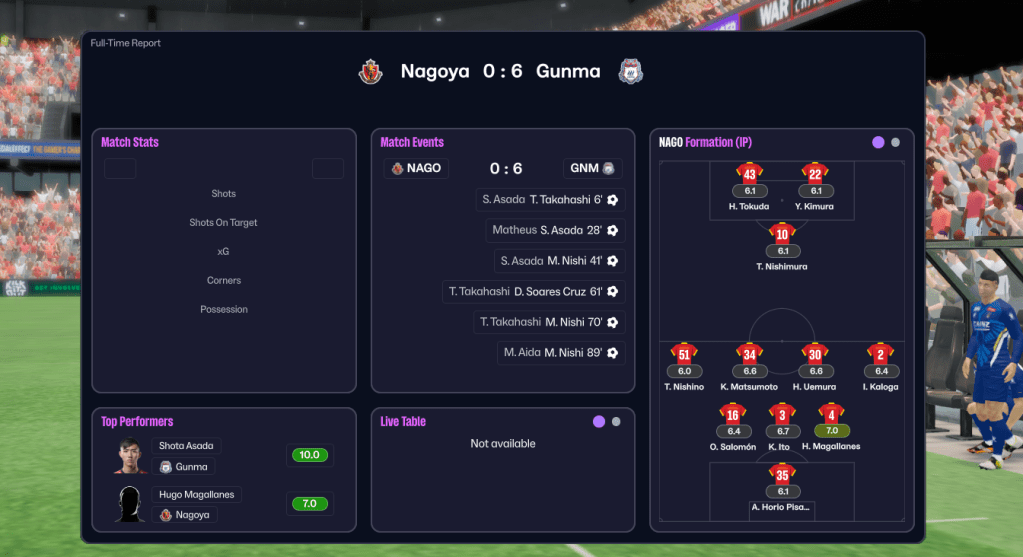
However, after signing a new deal, Matheus tore his groin in early March. That saw Gunma’s form fall off a cliff, only for Matheus to score 6 minutes into his return to inspire a 2-0 win over ten-man Sendai. That gave them confidence as they ran rampant at Nagoya, who’ve gone from being title favourites to sitting just outside the relegation zone, with Nishi’s hat trick leading a 6-0 thumping!
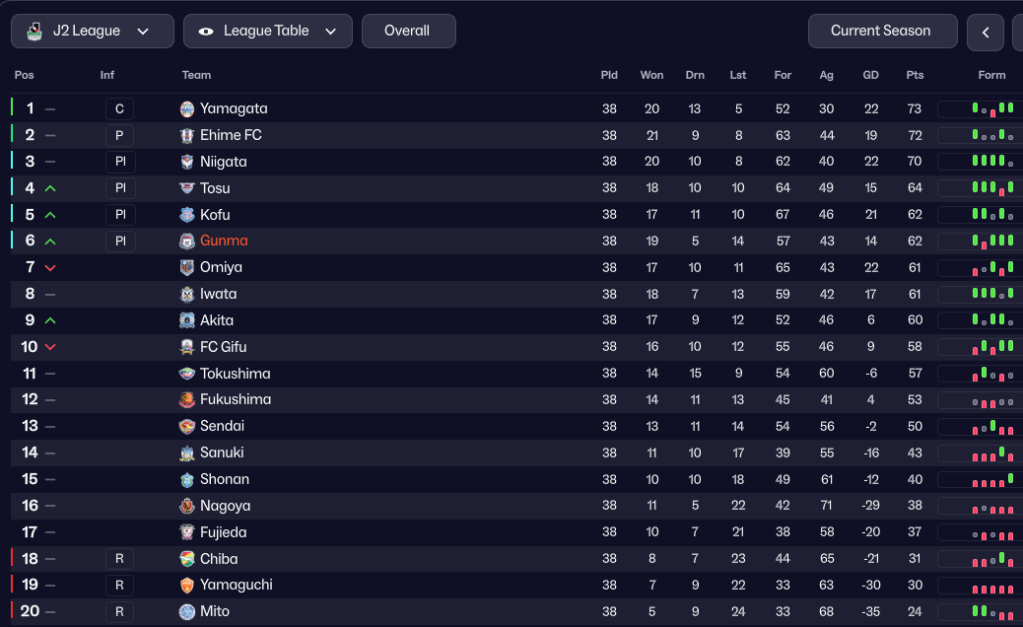
Winger Tatsuhiro Takahashi scored both in a 2-0 win at home to Gifu, and suddenly Gunma jumped all the way from 8th to 5th going into the final two games. Indeed, 4th place down to 10th were separated by just 6 points. Gunma’s hopes took a hit with a 2-0 loss at Tosu, who leapfrogged them into 5th. But Nishi and Asada strikes at Shonan saw Gunma sneak into the playoffs!
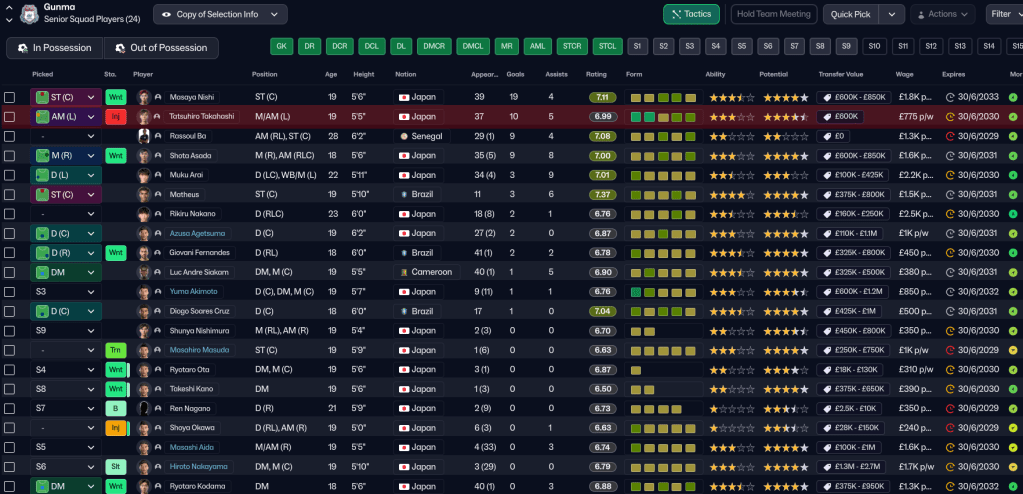
Gunma finished in 6th place on 62 points after 19 wins, a league-low 5 draws and 14 defeats, which was the most in the top half, scoring 57 and conceding 43. They had the most shots in the league (619), made the most dribbles (724), scored the 2nd-most goals from corners (7) and completed the 3rd-most crosses (171). The impressive Nishi was the 3rd-top scorer (17 in 37), left back Muku Arai got the 8th-most assists (8) and Takahashi made the most key passes (95).
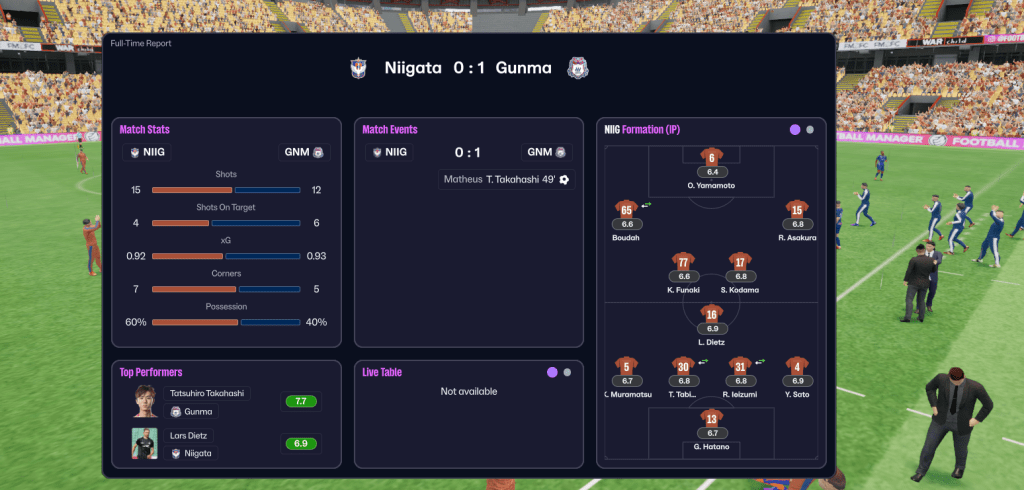
That set up a playoff semifinal clash at Niigata. Gunma went close to the opener as Matheus headed a freekick just over the bar before halftime. But they went in front just after it as Matheus’ wonderful lofted pass picked out Takahashi to coolly chip the keeper from 20 yards. Niigata mounted late pressure but never really threatened and Gunma were into successive playoff finals!
Gunma lost semifinal hero Takahashi to a hamstring strain before the final against Tosu. They started brightly and should have been in front inside 6 minutes, but Siakam, who hadn’t scored since his debut, shot straight at the keeper. They went close again when Fernandes’ 25-yarder cannoned out off the post, before Nishi’s post was pushed wide by the keeper. But the little striker soon struck in style, picking the ball up on the halfway line and beating two men before smashing into the far corner. However, that lead only lasted for 12 minutes and it finished 1-1. But, just as Rasamu was expecting to go to extra time… the match ended. Because Tosu were promoted due to being the higher seed, which is a terrible rule!
Minutes From A Massive Double Promotion
Gunma came so close to a shock double promotion into J1 League but, in reality, Rasamu was a little relieved they had at least another season in the second tier. They were definitely making good progress, but there was no way his young players were ready to compete with Japan’s best teams.
Nishi again topped the club’s goalscoring chart with 19 in 39, followed by Takahashi (10) and Ba and Asada (9). Arai impressed with 9 assists from left back followed by Asada (8), Matheus (6 in 11) and Takahashi and Siakam (5).
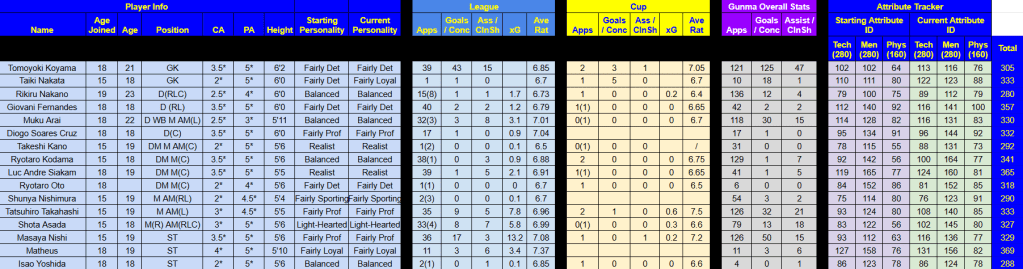
Below is an overview of Gunma’s homegrown stars, led by star attackers Matheus, Nishi and Takahashi, Siakam and, surprisingly, backup goalkeeper Taiki Nakata.
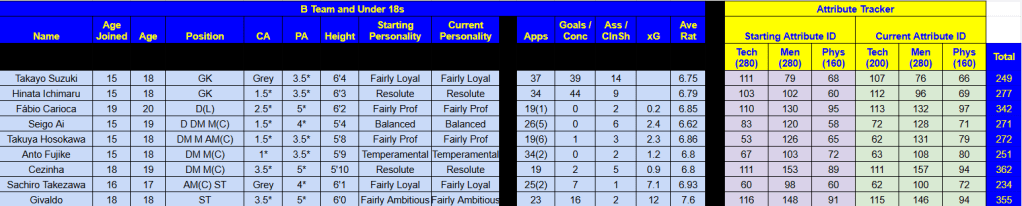
And here’s an overview of some selected youngsters after another pretty disappointing youth intake. The youth sides are led by a few of Rasamu’s Brazilian errors, who he may need to sell off in the next transfer window.
Rasamu was delighted with the club’s progress over the last few years. They’d gone from lower league J3 also-rans to recording the highest league finish in club history and going mighty close to reaching the top tier for the first time.
Could Rasamu’s young stars continue to flourish in his fourth season at the club? Join us on Wednesday to find out!


 Football Manager Addict
Leave a comment