
Valencia CF had established themselves as the best of the rest in Spain after six seasons under Roberto Lazaró. However, the dominance of Real Madrid and Barcelona and the lack of a goalscorer left the manager concerned about how he could take the club to the next level.
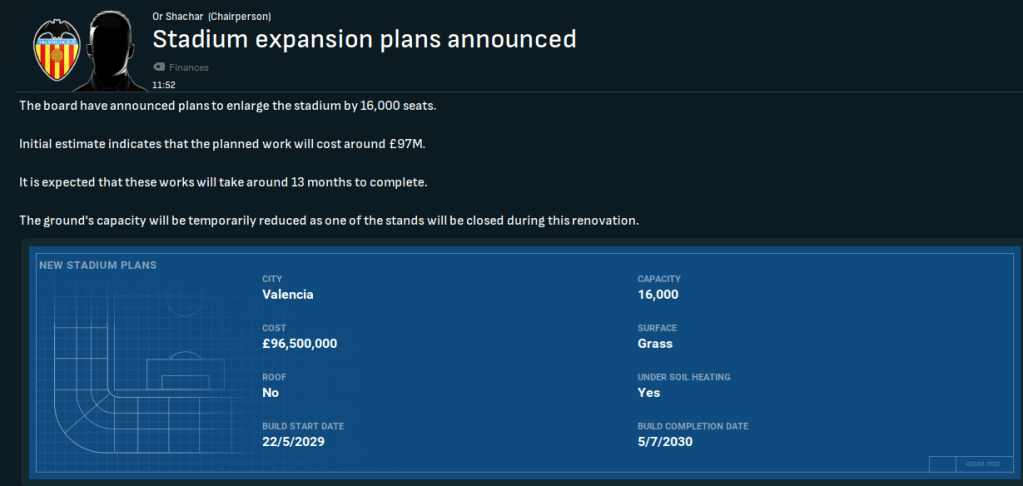
The summer of 2029 began with the Valencia board expanding its planned stadium extension, paying £96.5m to add 16,000 seats to La Mestalla, upgrading the previously announced 6,000. And the work will take 13 months to complete. The board also used the club’s favourable financial position – fully thanks to Lazaró’s tactical nous – to finally clear all of its debts, which saw Lazaró come into the new season with £290m in the bank and a £191m transfer budget he couldn’t dream of spending.
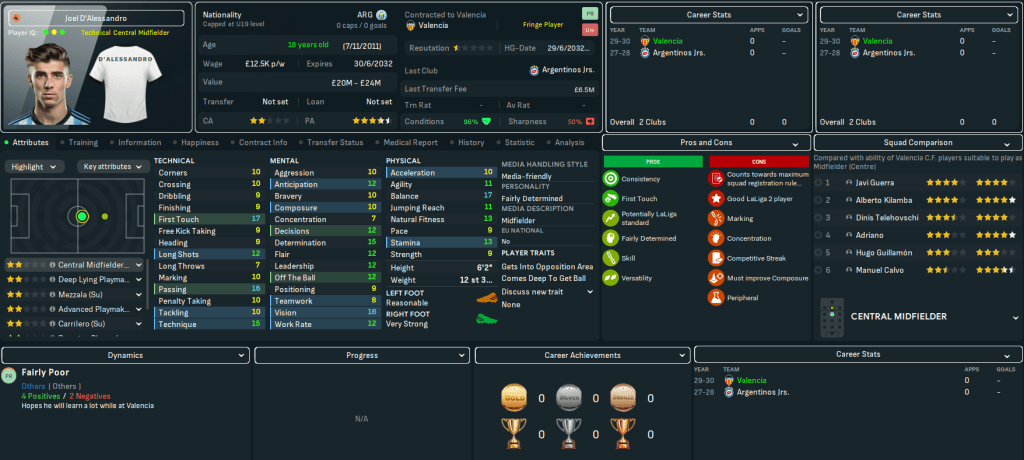
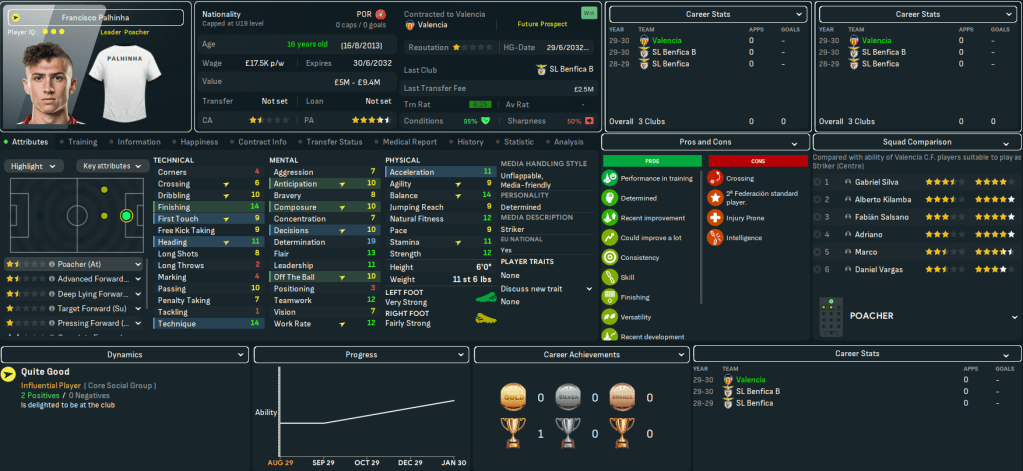
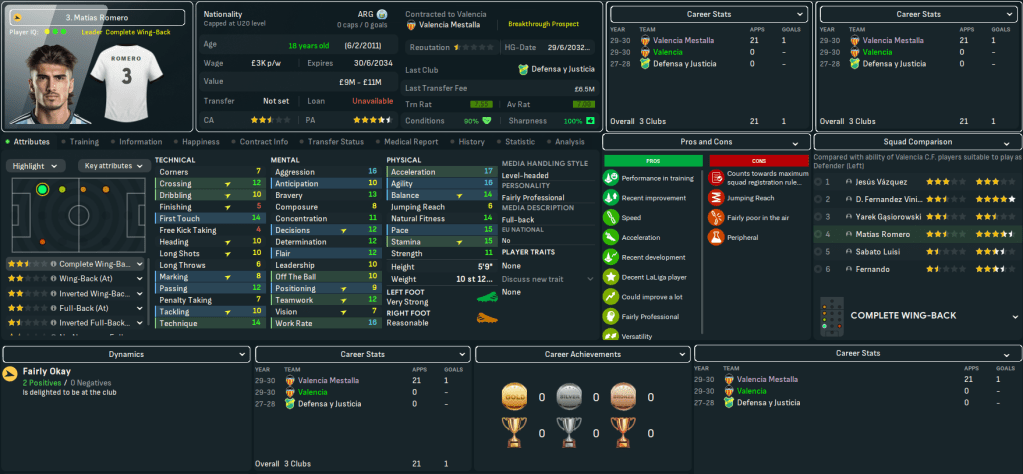
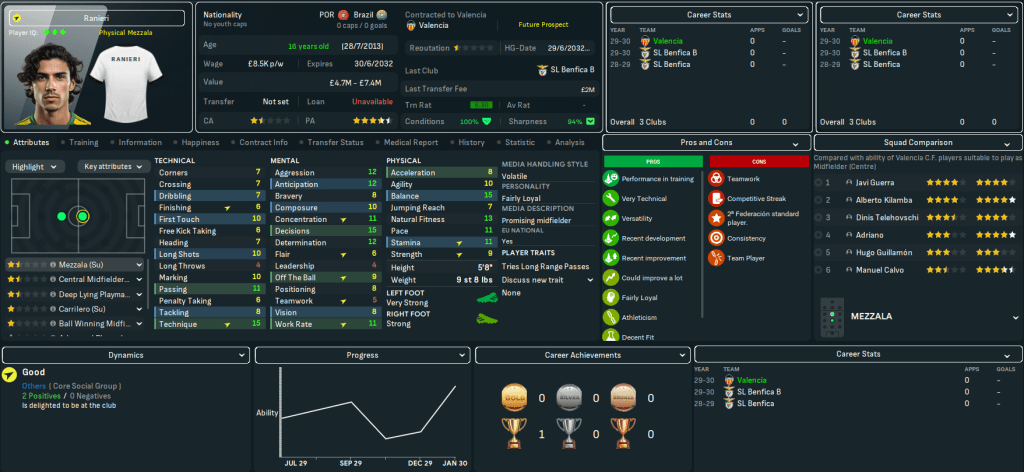
Lazaró continued his focus on Ibero-American youngsters, mostly players who could help Valencia Mestalla in their step up to LaLiga 2. The pick of them were midfielders Joel D’Alessandro and Fabrizio Bello for £6.5m from Argentinos Jrs and £5.5m from San Lorenzo, striker Francisco Palhinha for £2.5m from Benfica, left back Matías Romero and midfielder Ranieri. In other news, as expected, Franco Mastantuono had already requested to leave Man City after starting twice since his £36m move in January! And he joined Napoli for £28m.

Strikers Begin To Deliver
Valencia began the season with two superb 6-0 home wins as wonderkid striker Fabián Salsano scored 4 in a 6-0 hammering of rivals Villarreal then assisted 4, which equalled his entire assist tally last season, as star man Javi Guerra scored twice against Alavés. However, the gap to the big two showed as those wins were sandwiched by getting dominated 3-1 at Barca. That began a solid start to the campaign, but it was nothing compared to the big two as Real and Barca both won their first 16 matches before the first El Clásico clash in mid-December, which they drew 0-0.

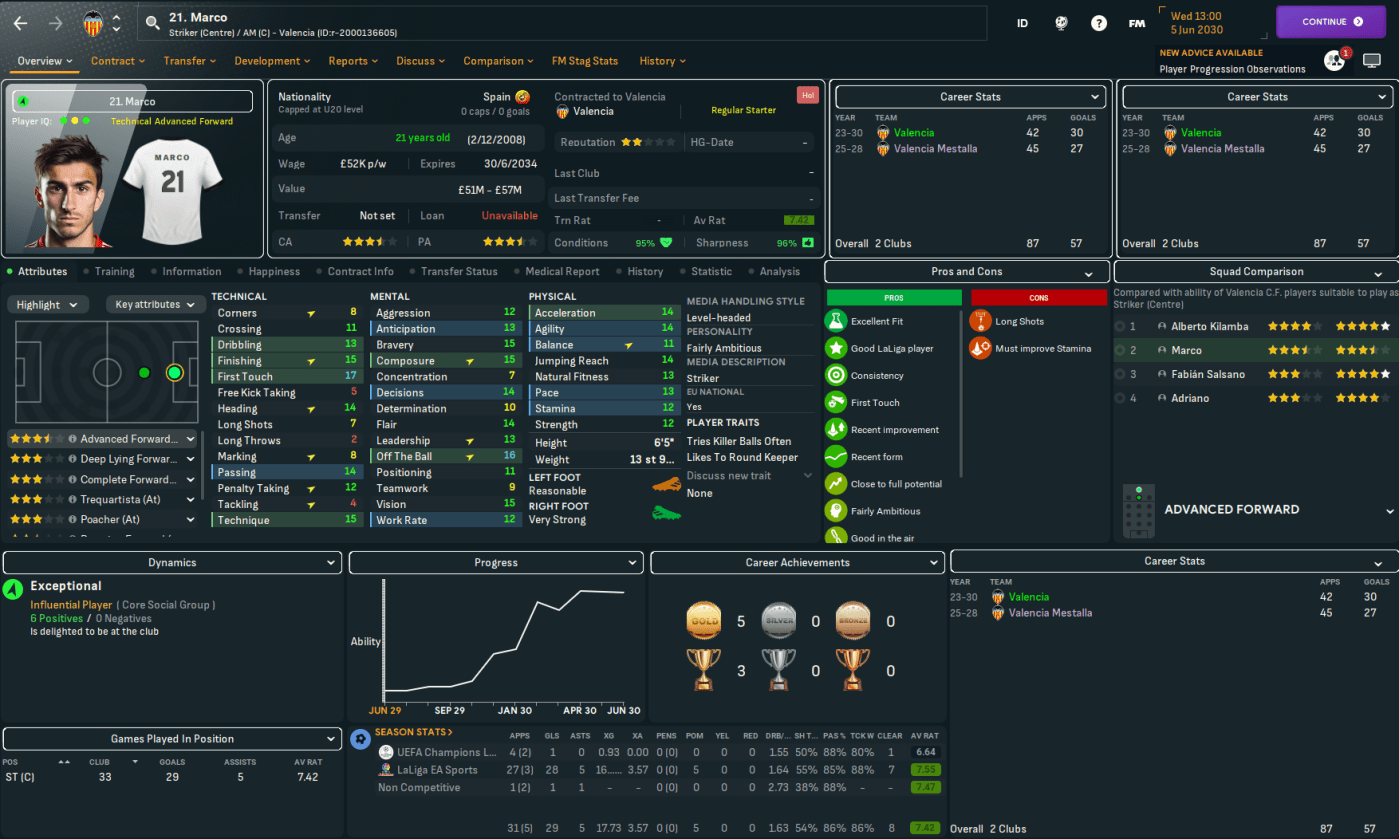
The big positive of the first half of the season was academy product Marco finally delivering on his potential. The 6ft 5in striker scored in wins over Girona and Leganés then 5 successive games in December, then hit new heights by starting 2030 by bagging 4 in a 5-3 thriller at home to Valladolid. His improvement convinced Lazaró to sell underperforming Gabriel Silva to Leverkusen for £30m, while they also lost centre back Yasir Gasiorowski, who refused to sign a new contract, to Saudi for £8.5m.
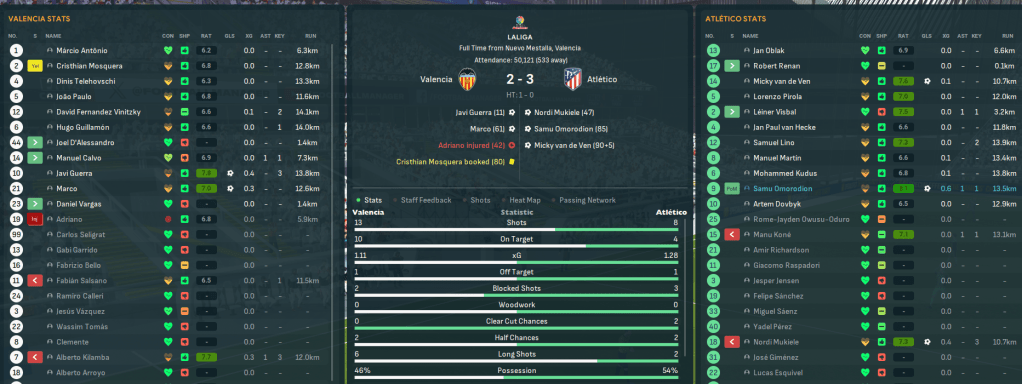
Marco continued his fine form, scoring twice in a 4-1 win at home to Sociedad, which took him to the top of the league goalscoring table in early March. He also scored a brace in a 3-0 win over Girona and a hat trick to down bottom side Leganés 4-0, which again saw Valencia in a fight for 3rd with Atlético. That went hinged on a big game as Valencia hosted Atlético in early May, in which Guerra typically gave them a great start. Atlético equalised straight after the break before Marco’s smart finish restored the lead, only for Atlético to score 2 late goals for an undeserved victory to seal 3rd place.
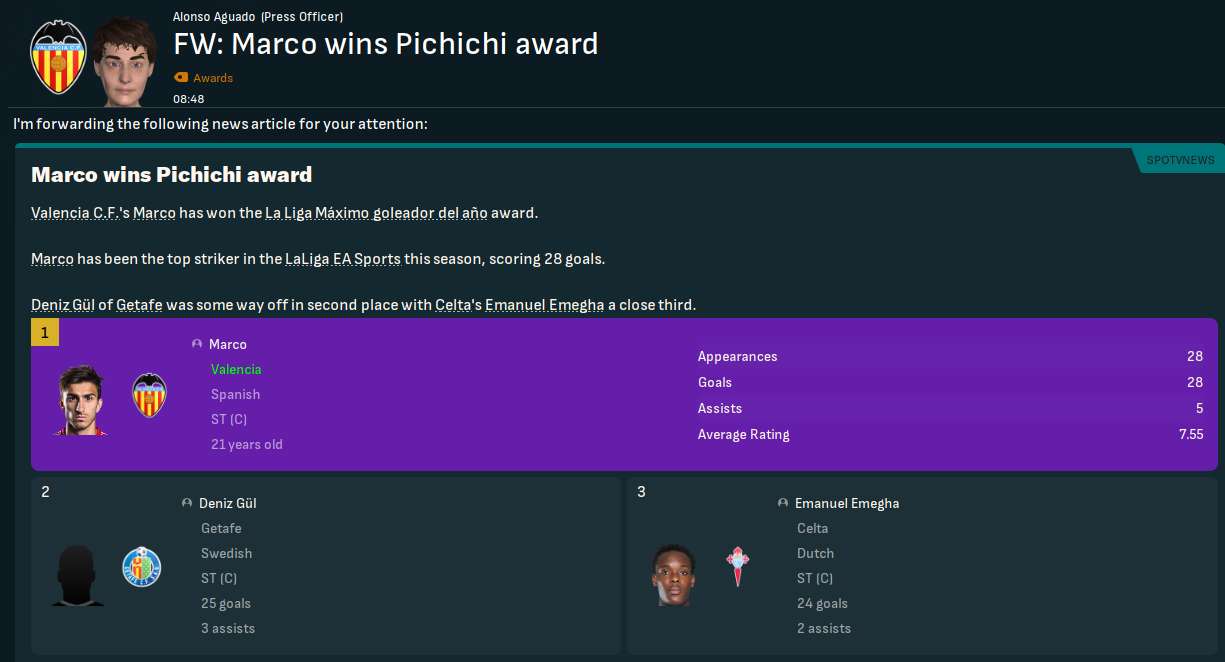
Valencia finished 4th with 78 points after 24 wins, 6 draws and 8 defeats, scoring a new club record 94 and conceding 43, which was the most they’d conceded in Lazaró’s reign. However, Marco was not only the top goalscorer with 28 in 30, which equalled Mundo’s club record tally set back in 1944, but also the best player with a 7.55 average rating. Guerra was level with him on 7.55 and topped the league assists with 13. That saw Marco win Premio Don Balón Jugador del año (best player), with Guerra in 2nd, and Mejor Jugador joven del año (best young player) as week as the Pichichi awarded for Máximo goldador del año.


More Champions League Disappointment
Valencia started the league phase with 4 wins from their first 5 games before finishing with defeats to PSG and Nice and a 0-0 at Bologna to finish 17th. A tough playoff round followed against Newcastle, and they drew 0-0 at home before a 2-0 defeat in England, which meant they’d not gone past the round of 16 in 5 attempts.
Valencia Homegrown Players Update
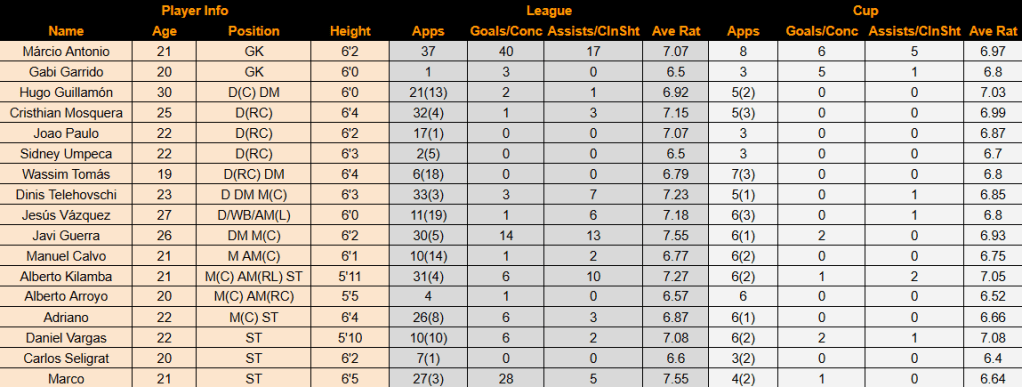
Marco was undoubtedly Valencia’s star man this season, answering his manager’s need for a goalscorer by bagging 29 in 34 with 5 assists. Guerra was again superb with 16 goals and 13 assists, making it 4 consecutive seasons he’s racked up double figures for goals and assists. Salsano, who became the first Valencia player to win European Golden Boy, stepped up a level with 15 goals and 10 assists, as did Alberrto Kilamba with 7 goals and 11 assistsm Daniel Vargas with 8 goals and 3 assists and left back David Fernandez Vinitzky, who made his Argentina debut in March, with 9 assists.

Valencia had 17 homegrown players play a combined 375 games with 69 goals and 101 cup games with just 6 goals. See all the homegrown players’ stats by clicking the table here:
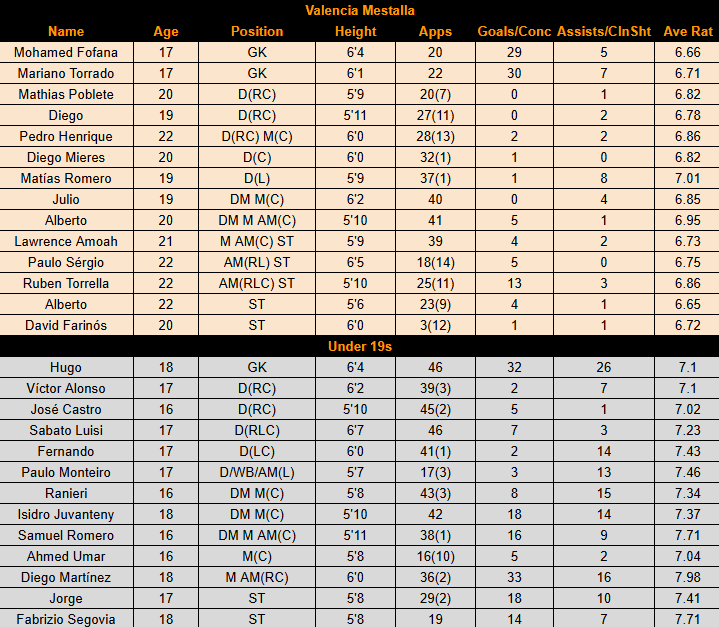
Valencia Mestalla survived in LaLiga 2, finishing 14th with 50 points led by Ruben Torrella’s 13 goals. The U19s won their league group undefeated but lost to Girona in the semis, with standout performers including midfielders Diego Martínez’s 33 goals and 16 assists and Isidro Juvantemy’s 18 goals and 14 assists, Ranieri’s 15 assists and left backs Fernando and Paulo Monteiro sharing 27 assists. See all the youth players’ stats by clicking the table below.
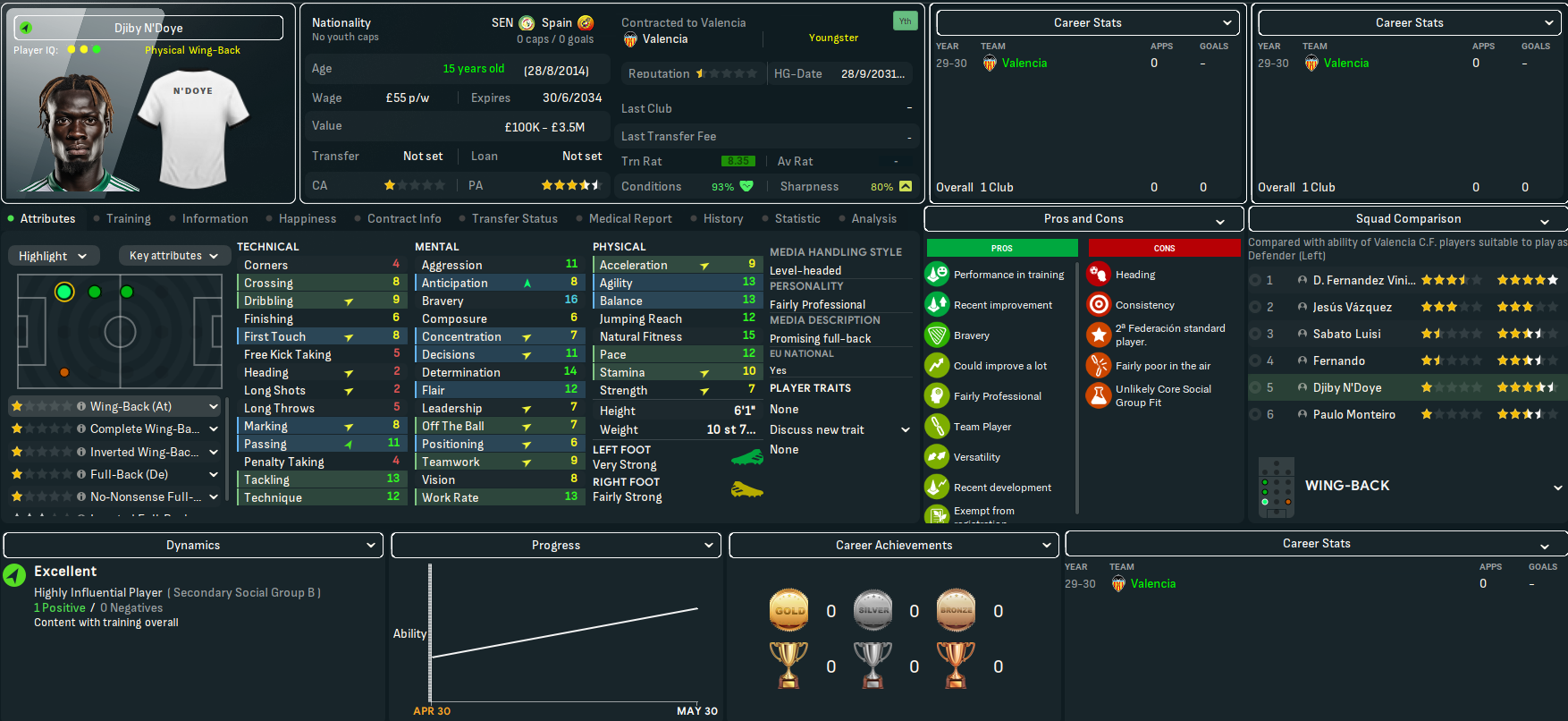
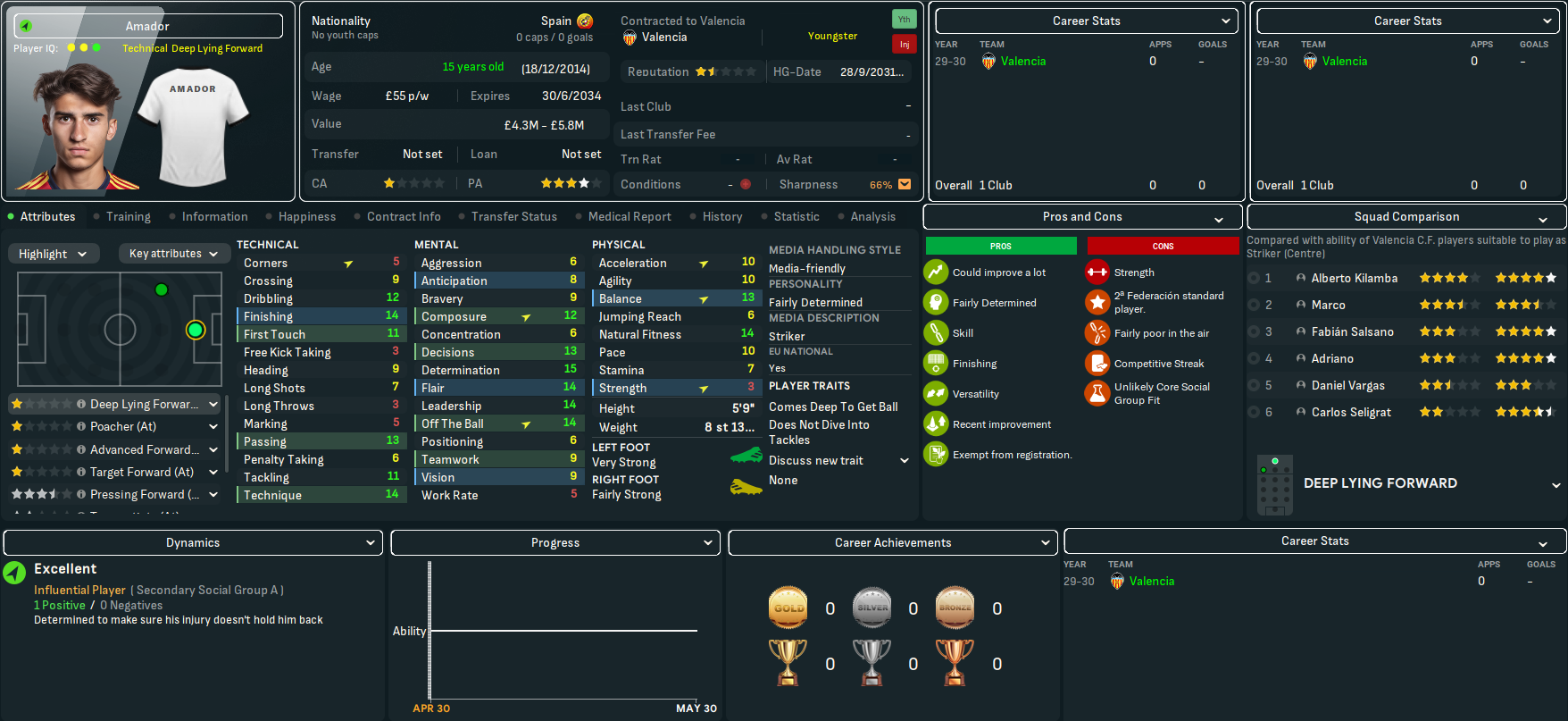
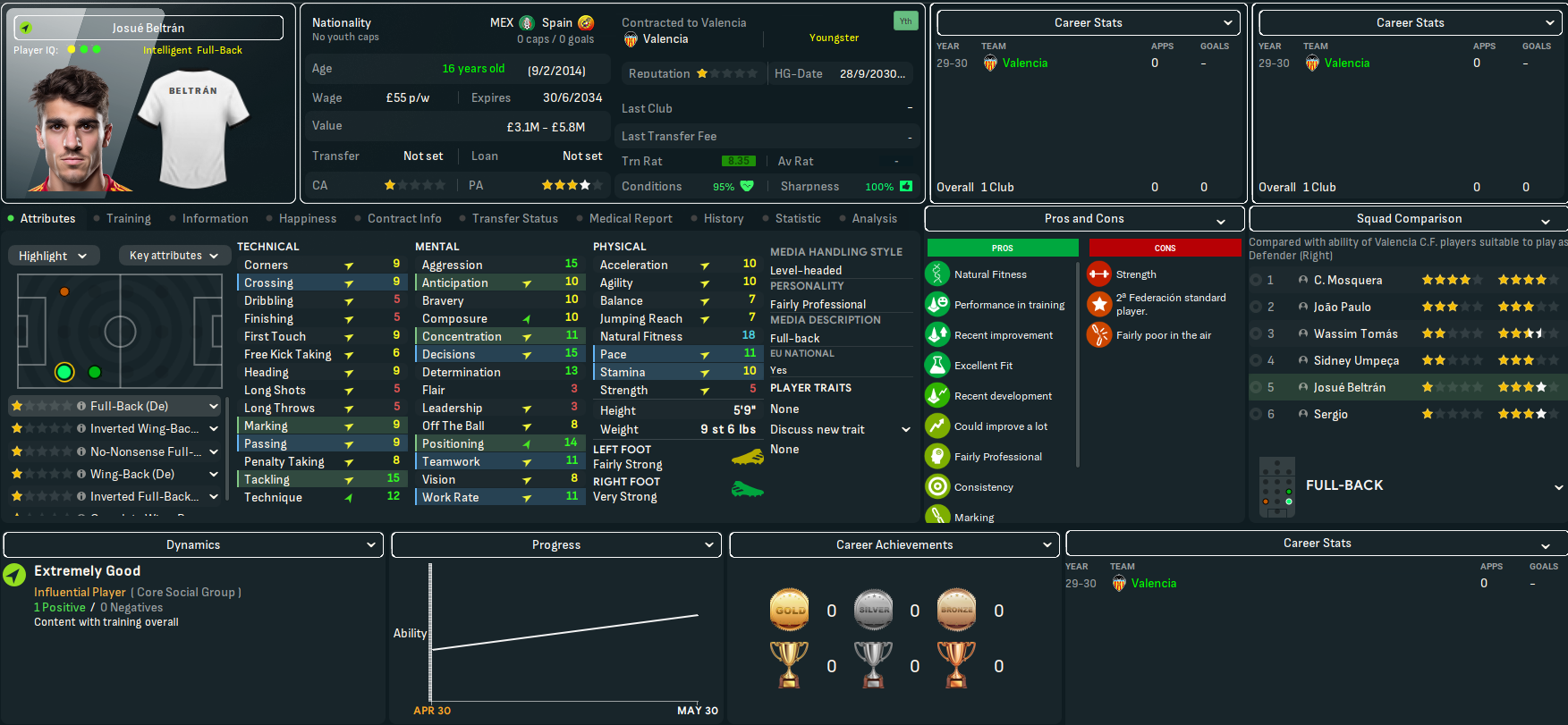
However, they had by far the worst youth intake of Lazaró’s time at the club, which delivered 4,5-star potential left back Djiby N’Doye and 4-star potential striker Amador and right back Josué Beltrán.

Lazaró was delighted with Marco’s sudden emergence as a key player. There was no doubting that, despite another Champions League qualification, Valencia had slipped a little, but Lazaró was still really pleased with the progress they were making. However, the big two in Spain look absolutely miles ahead of everyone else.
Could Lazaró and Valencia reel them in next season? Join us next Friday to find out!


 Football Manager Addict
Leave a comment