
One of my main Football Manager 2025 saves was going to be another wonderkid factory challenge trying to deliver success using a club’s youth production. However, unlike our previous saves with Envigado and AZ Alkmaar, which relied solely on the clubs’ academies, this iteration was going to allow us to sign players from within the city the club was based in.
So, with FM25 being delayed, I thought we’d bring a similar concept to a new FM24 series to run alongside our ongoing EuroTrip adventure. The aim is to rely on youth development and a 100-mile catchment area to snap up local youngsters, and build a team of fully homegrown players to win LaLiga and a European trophy.
To achieve this, I had a think about clubs that have a history of youth development but haven’t had much success of late. And this takes us to Spain. Like the AZ save, we won’t focus too much on the ins and outs of every result, but we will track the progress of our homegrown players.
Bienvenido A España Con Valencia C.F.
As a young Valencia native, Roberto Lazaró grew up watching the likes of Rubén Baraja, Joaquín, Juan Mata, David Silva, David Albelda, Raúl Albiol and Carlos Marchena at his beloved Valencia Club de Fútbol. The football-mad youngster knew he didn’t have the ability to follow in their footsteps so, straight of university, he gained his coaching badges and got experience working with a few youth teams.
But his big break saw Lazaró appointed as a coach for the Valencia youth academy, which led to him eventually managing the club’s under-16s. He did a good job developing the club’s youngsters and working with the academy manager and club icon Miguel Ángel Angulo. So when manager Baraja stood down, a pretty renegade move saw owner Peter Lim hand the reigns to Lazaró.
That move was largely due to Lazaró’s knowledge of the club’s youngsters and propensity to rely on homegrown players. In addition to the board’s requirements to sign players to sell for a profit, Lazaró self-imposed the following rules of players who count as homegrown:
- Players developed through the Valencia academy
- Ibero-American players that can become homegrown at the club before the age of 21 and gain Spanish nationality within 730 days (Latin American and Portuguese)
- Players born within 100 miles of Valencia. That includes towns like Aguas Blancas, Albacete, Algemesí, Alicante (just about) Amante, Benirras, Casablanca, Cuenca, Gandia, Ibiza, Rafaelbuñol, Sa Trinxa and Ushuaia. He would be allowed to use players starting at the club but, from then on, rely on players coming through the youth academy and youngsters signed from within the 100-mile catchment area.
- Players developed through affiliate club academies – at the start of the game: Alboraya, Alzira, Bruinese, Catarroja, Cracks, Gandía, Kauno Zalgiris, Kelme, Orihuela, Ribarroja, Torrent (because otherwise, what’s the point of affiliates in FM24?
The new manager’s mission will be to lead homegrown Valencia to win LaLiga for the first time since 2004, which was its sixth title is the last time one of the Spanish big three didn’t win the league. He’ll also aim to win Valencia’s first continental trophy since it won the UEFA Cup for the third time in 2004.
A significant challenge hindering Lazaró’s mission was the club’s £267m of debt, in the form of three bank loans, a loan from the chairperson, and a state loan. However, the club had a solid infrastructure of 17 youth recruitment and junior coaching and 16 training and youth facilities. Valencia currently plays at the 49,430-capacity Mestalla, which was built 100 years ago in 1923 and is named after the historic Mestalla irrigation canal that was developed during the Arab dynasty in the 10th and 11th centuries. In the early days of the stadium, fans had to jump over the canal outside the south stand to get to games. However, the club is due to move into the 55,000-capacity Nuevo Mestalla in July 2026 (which won’t be happening any time soon in real life, read here to find out why).

Meet The Valencia Squad of 2023
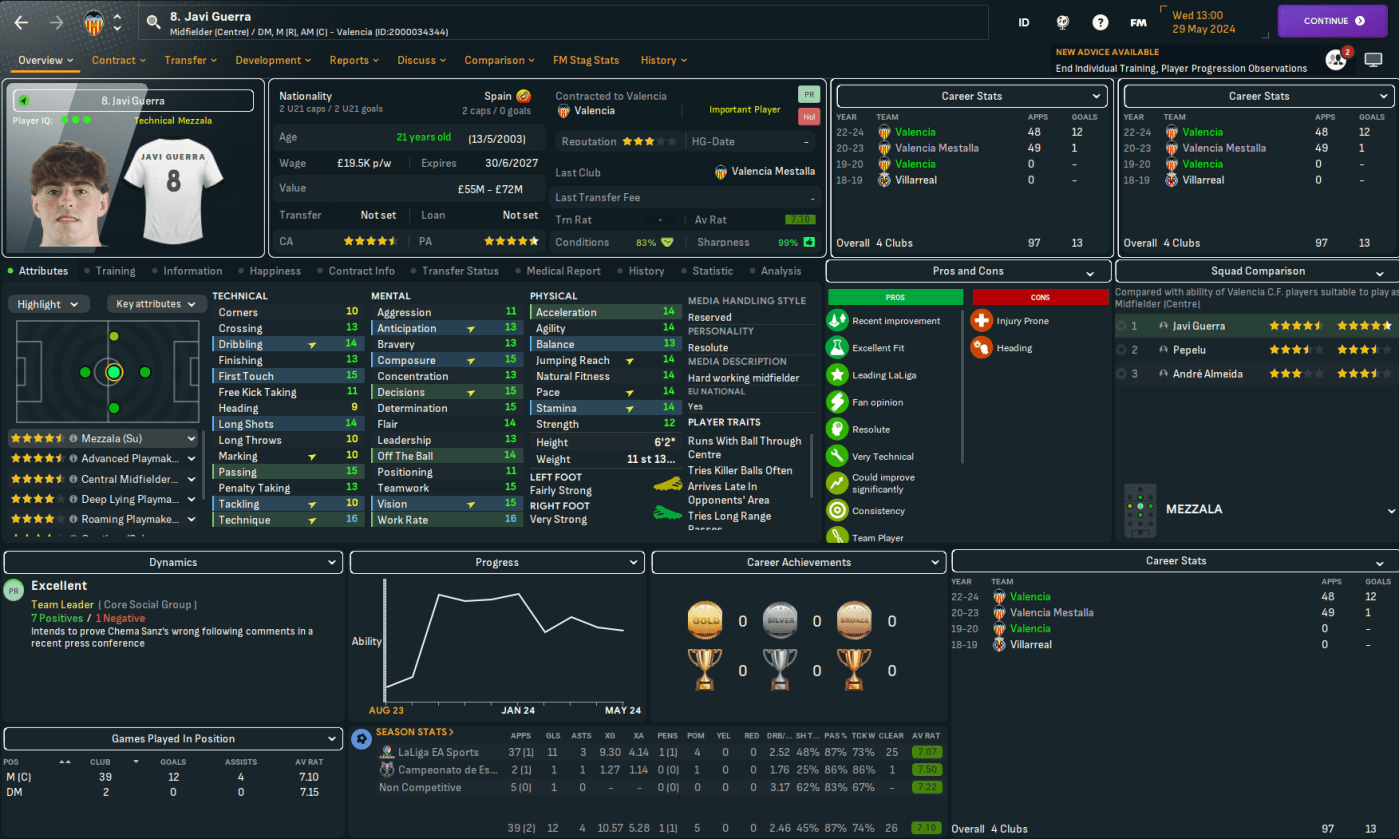
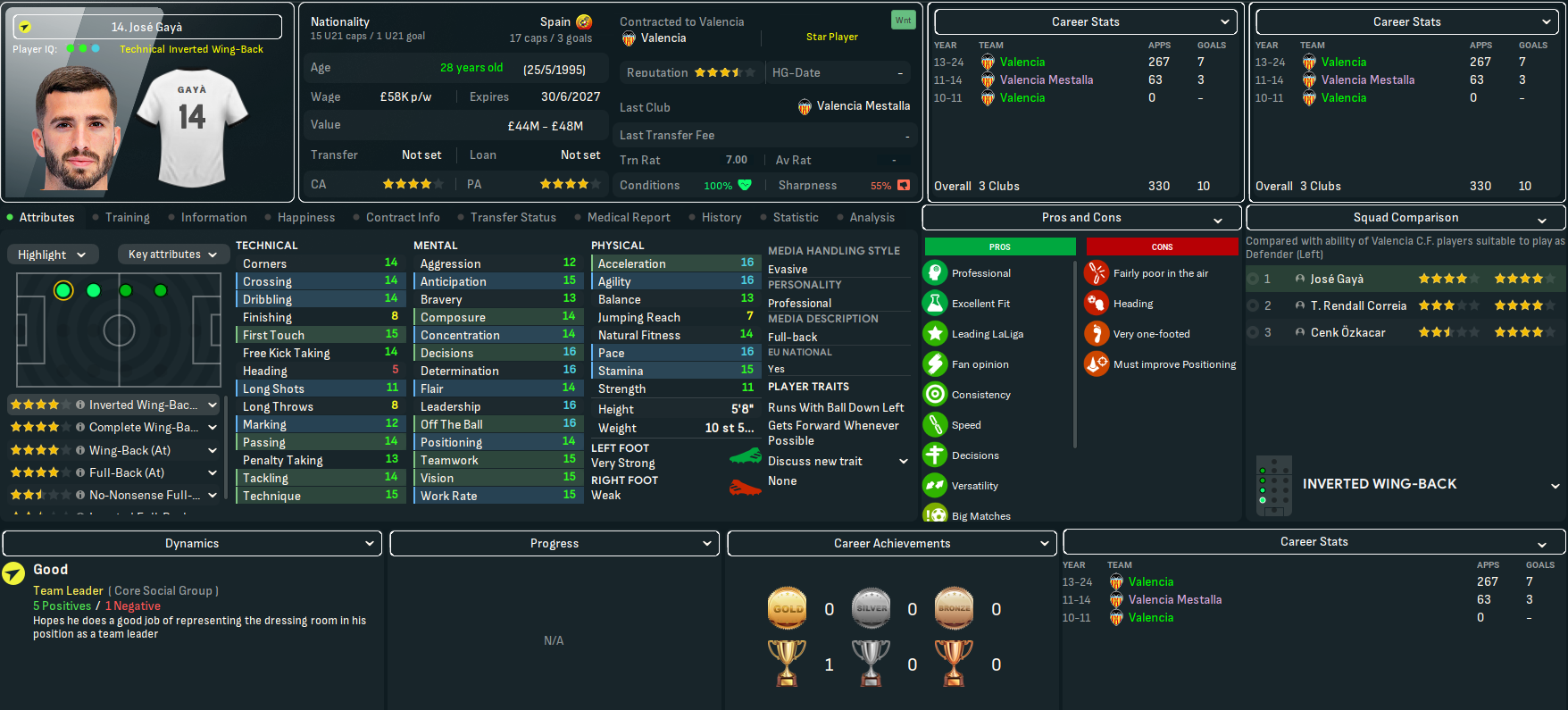
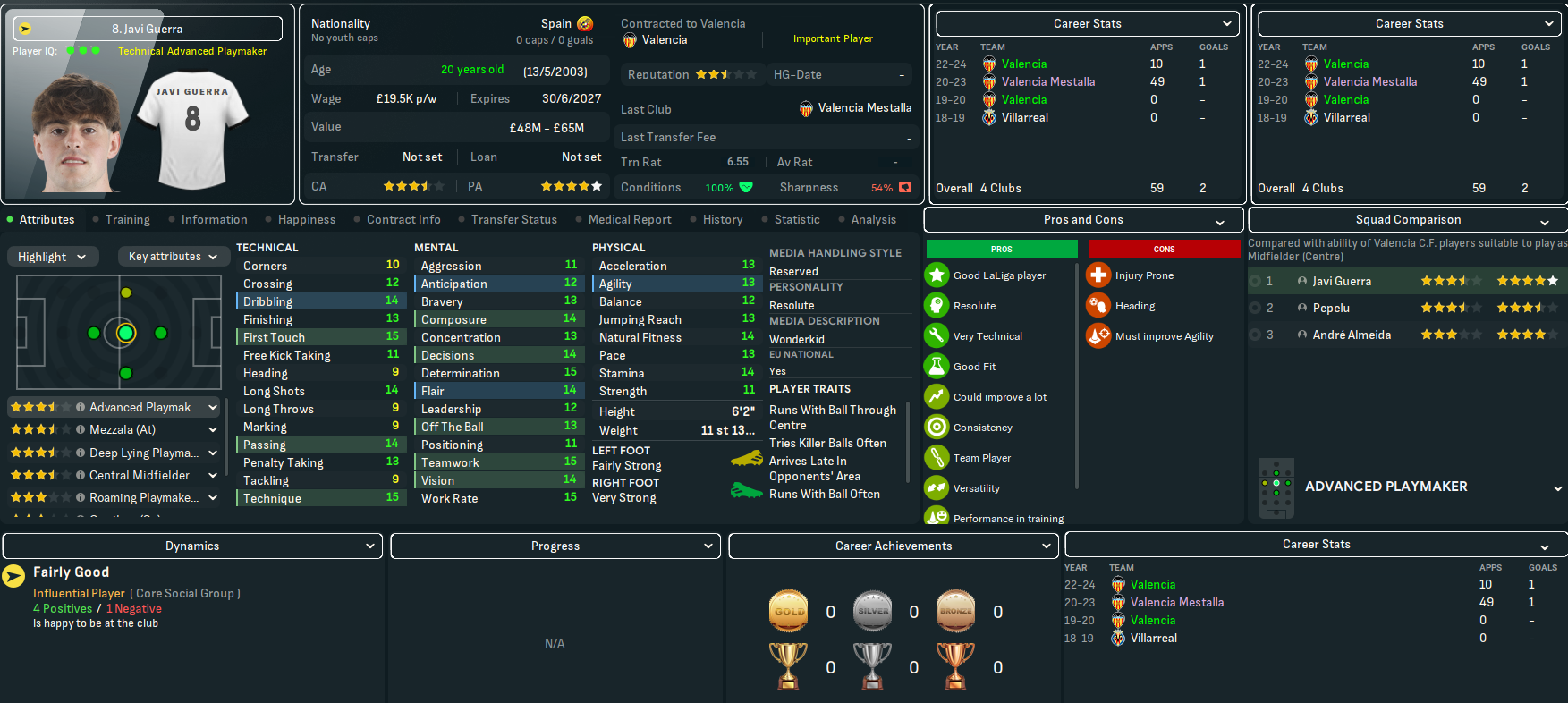
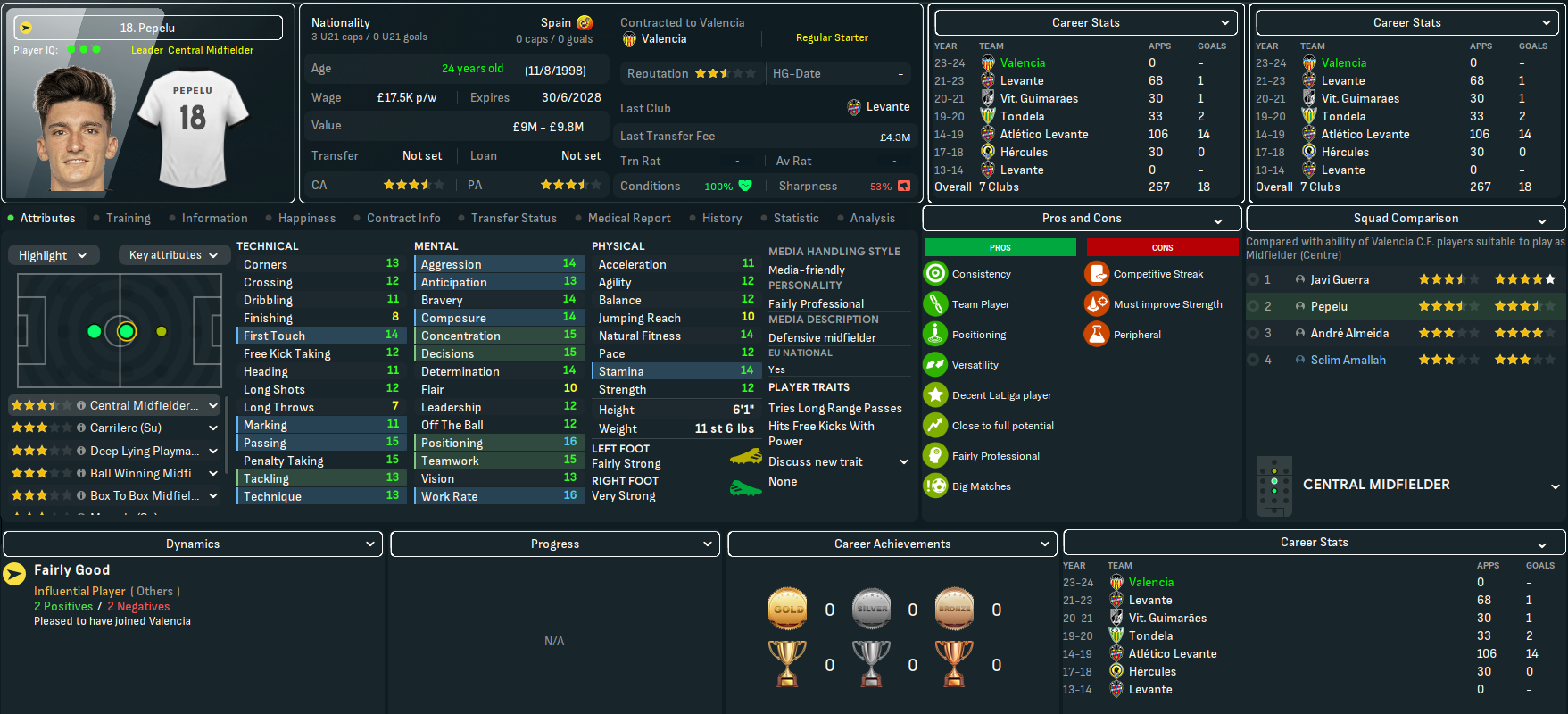
Valencia begin with nine players homegrown at the club in the first-team squad. The key man to their success will likely be a homegrown captain and left back, Alicante-born José Gayá. Homegrown midfielder Javi Guerra is the second-best player at the club, followed by Denía-born midfielder Pepelu, who’s just signed from local rivals Levante, Georgian goalkeeper Giorgi Mamardashvili, centre back Mouctar Diakhaby, homegrown attacker Diego López, 19-year-old Alicante-born centre back Cristhian Mosquera, Rafaelbuñol-born winger Fran Pérez, Portuguese midfielder André Almeida and full back Thierry Rendall Correia, centre back Cenk Özkacar, striker Hugo Duro and holding midfielder Hugo Guillamón. There was also decent potential at the club led by Algemesí-born centre back Yarek Gasiorowski and left back Jesús Vázquez.

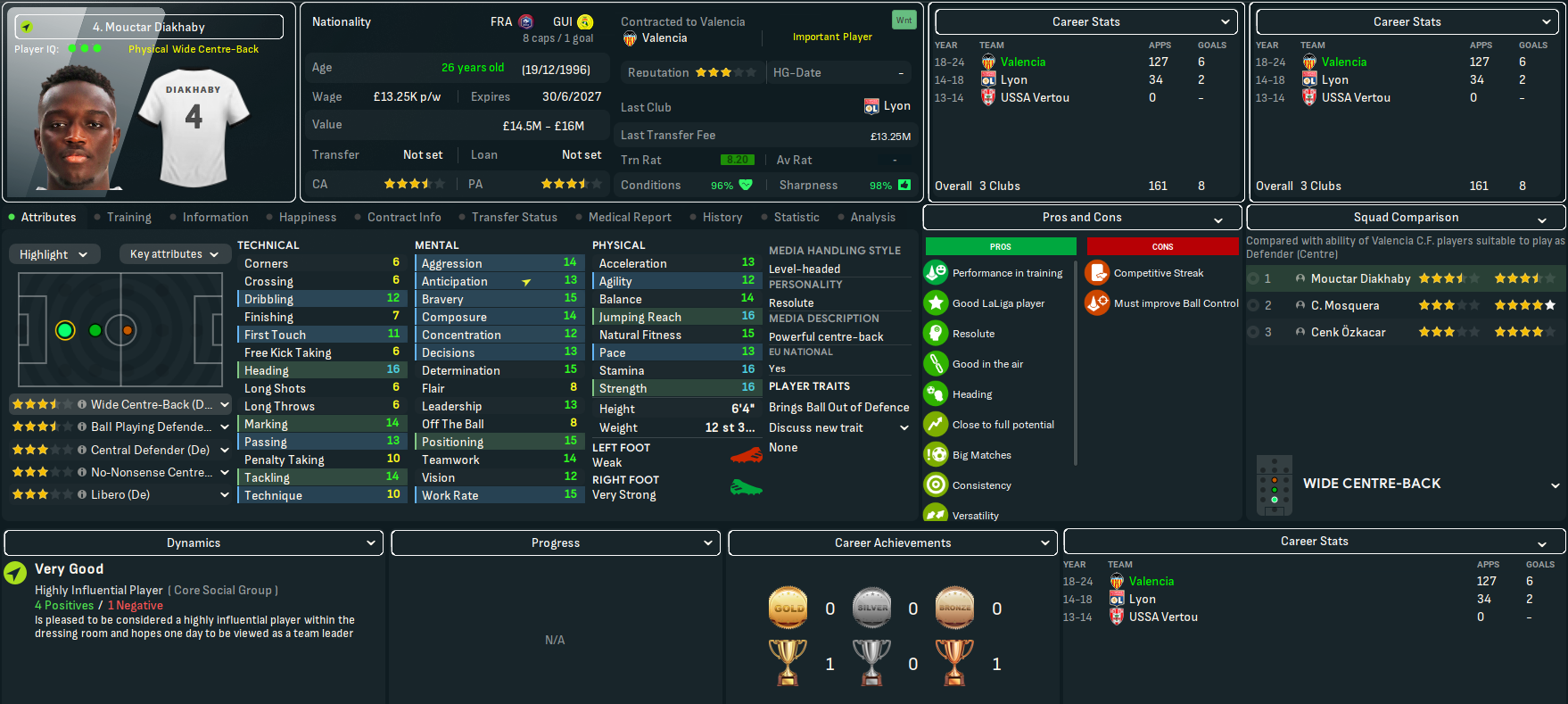

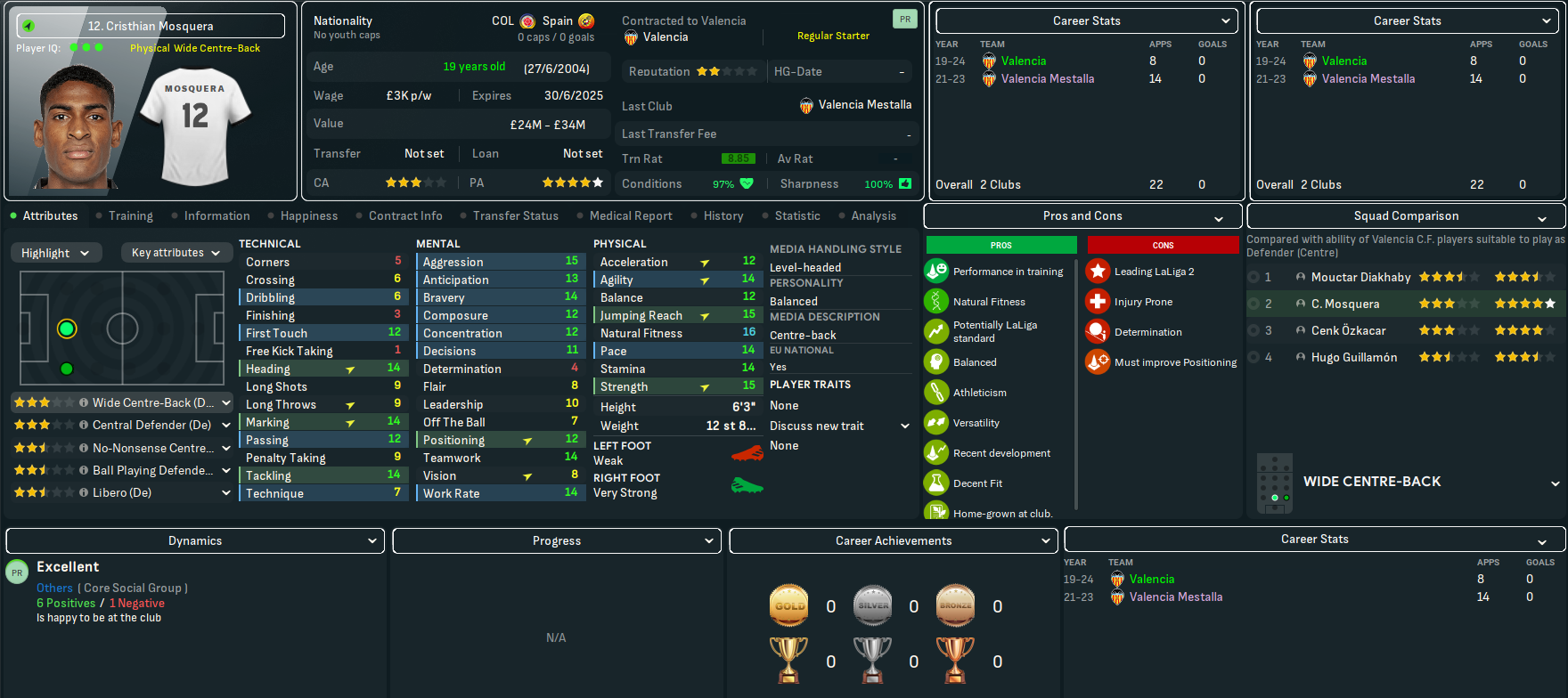

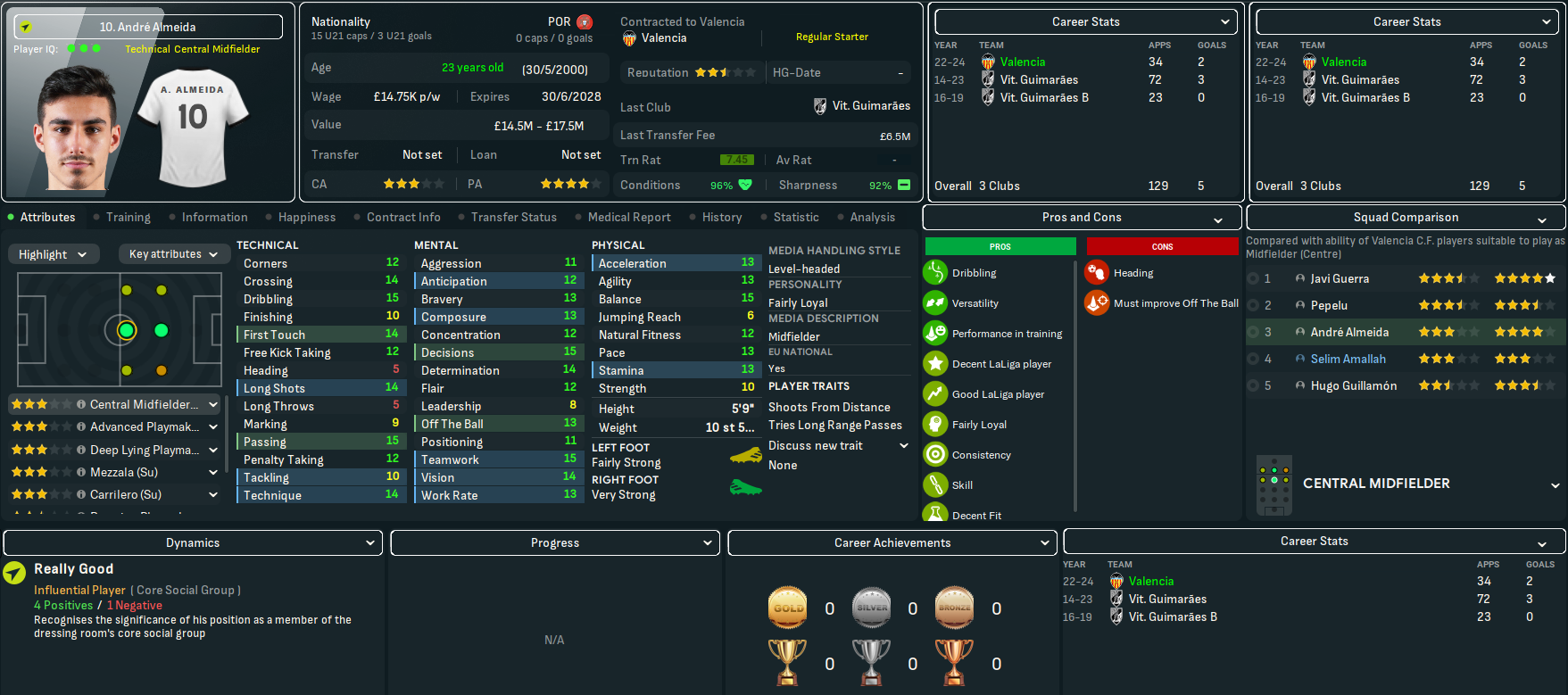

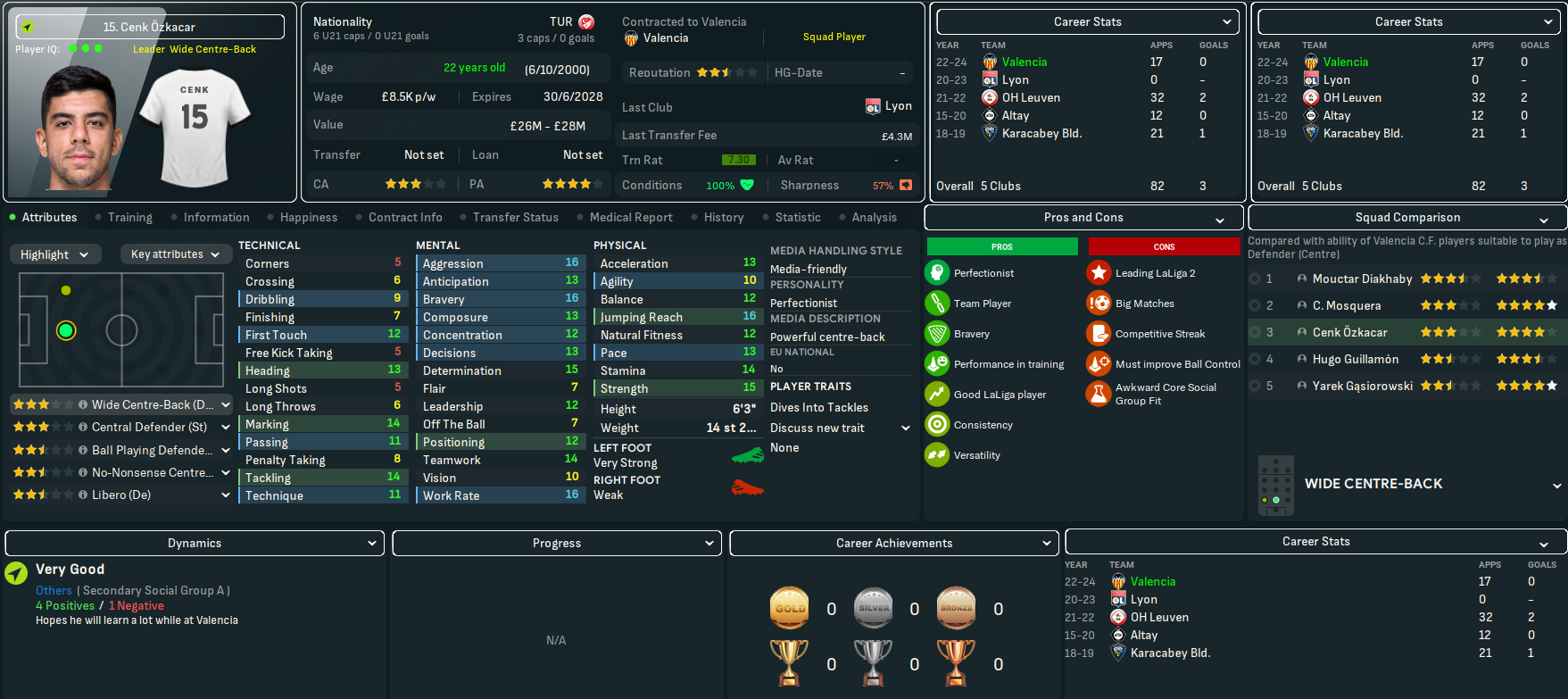
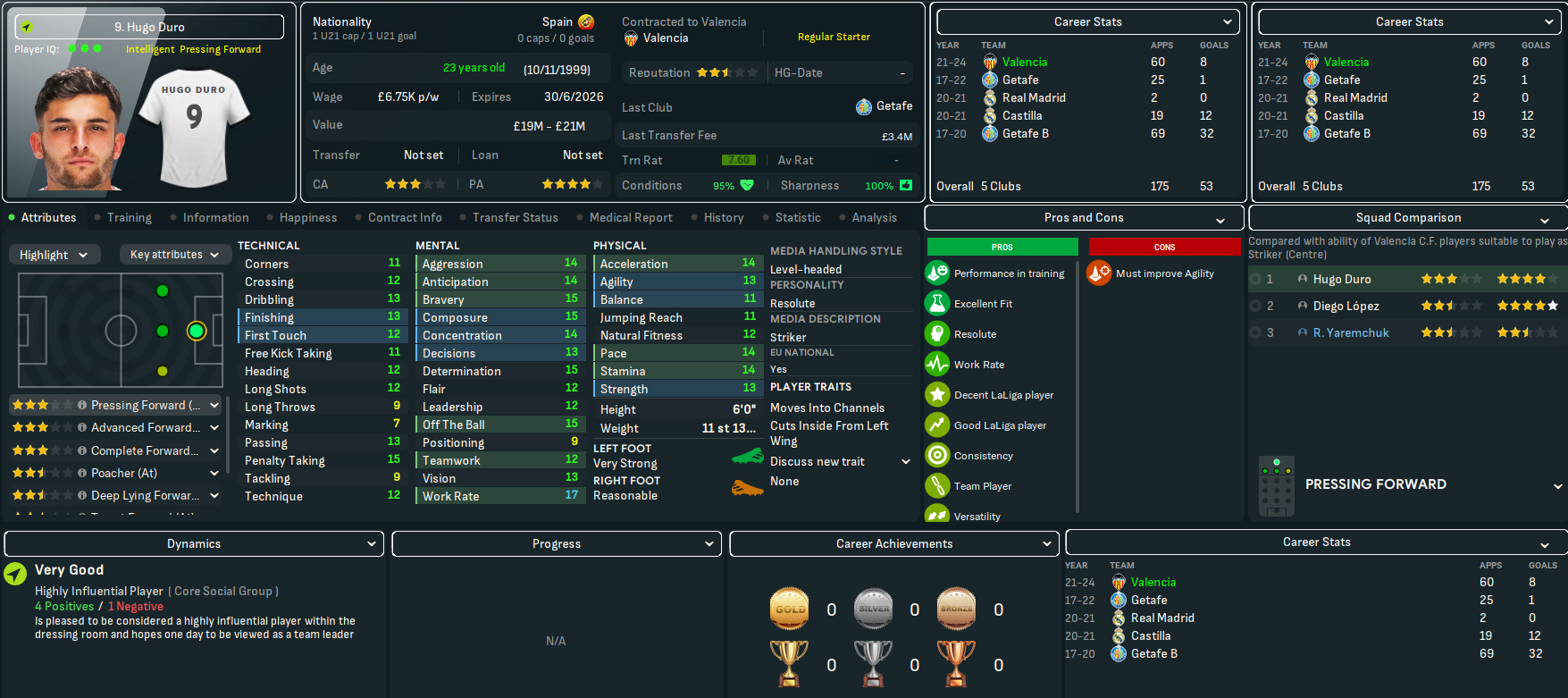
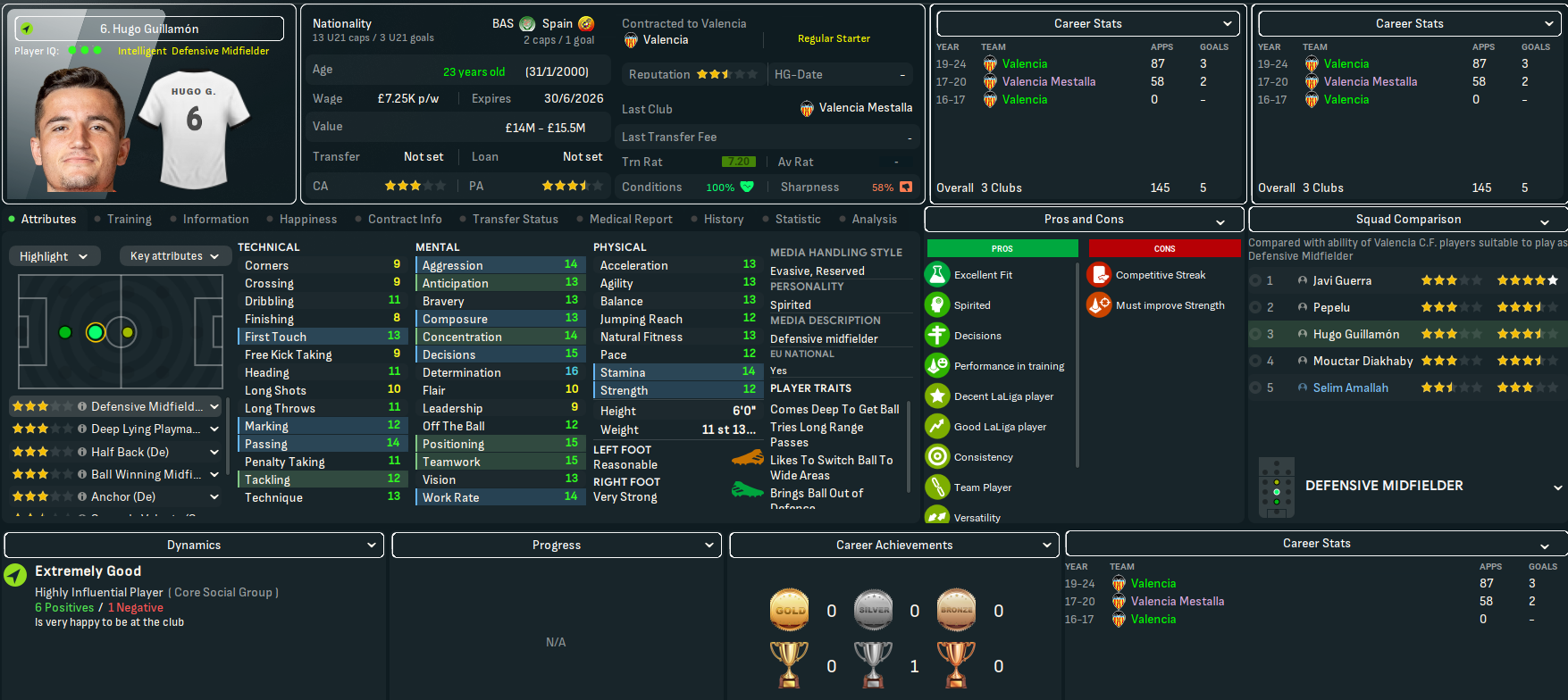

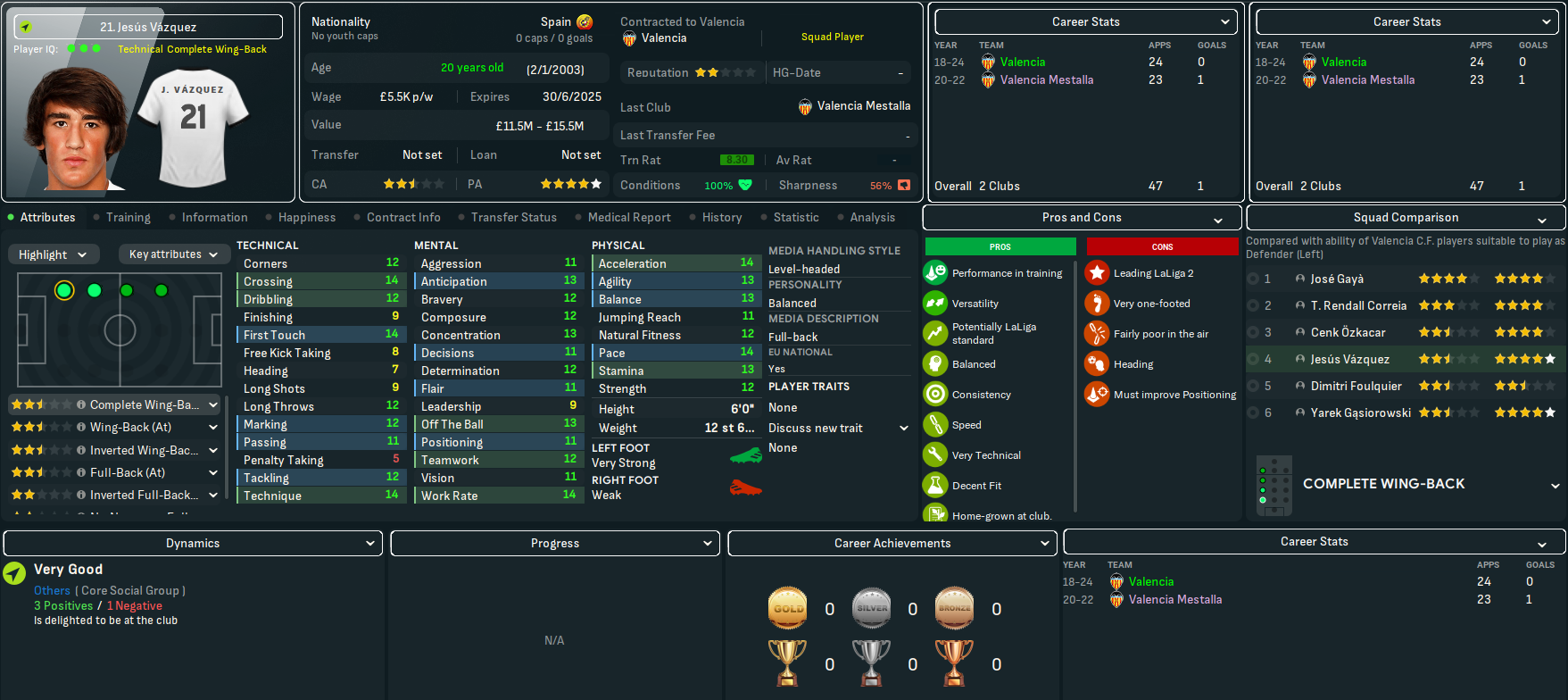
The players best suited a pretty standard 4-3-3 approach, which Lazaró would stick with for the first season. But he wasn’t a huge lover of that formation, so expect it to evolve over time.
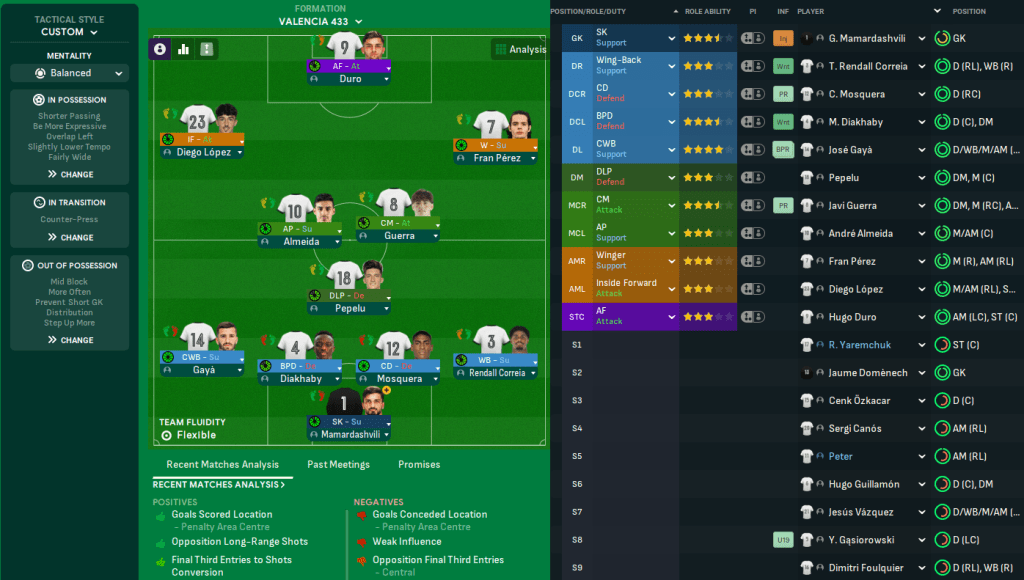
Lazaró’s Valencia Reign Begins
Valencia had no continental football in season one, so full focus went on LaLiga EA Sports. The Spanish media don’t love their chances of improving on that, predicting a 9th-place finish with title odds of 100/1, ahead of Girona, who secured Champions League football in real life, at 150/1. Real Madrid are 5/6 favourites followed by Barcelona and Atlético (9/4 and 9/1).
The Lazaró reign began with a tricky challenge at home to Atlético, but Almeida’s second-half strike earned a deserved 2-2 as Duro was ruled out for 2 months. The same result followed as Gayá and former Brentford winger Sergi Canós earned a draw at Mallorca, before Lazaró got his first win in a 4-0 thumping of Getafe led by a Guerra brace. That crowned a decent start, for which newly monikered wonderkid Guerra was honoured with Jugador del mes (player of the month).
The good start continued with 3 wins out of 4 in September, which earned Lazaró Mánager del mes, and with a surprise 3-2 win at home to Real Madrid, which sent Valencia top of LaLiga in mid-October! Unsurprisingly, they played Barcelona next, but a Roman Yeremchuk header nicked a thoroughly undeserved point. Then a clash of the surprise top two saw Lazaró finally taste defeat with a 2-0 loss to Real Sociedad.

Non-Homegrown Sales Begin In Earnest
Another loss followed at Cádiz, but Valencia continued to impress, heading into 2024 sitting 3rd in LaLiga. Lazaró used the January transfer window to start selling off non-homegrown players to bring in much-needed money. Useless centre back Diakhaby joined Newcastle for £15m, and was joined through the exit door by the ineffective Duro, who had more injuries than goals, to West Ham for £7m, even worse striker Alberto Marí, who had the gall to demand a contract after missing 5 months with a hamstring tear, to Zaragoza for £800k and veteran goalie Jaume Doménech to Saudi for £400k.
January started with a 2-0 loss at impressive leaders Atlético before Canos’ late goal nicked a 2-2 at Sevilla. Gasiorowski and Pérez secured an important 2-1 win at home to 5th-place Girona in early February, which moved Valencia 7 points clear of their opponents. 2-0 losses at Real and Sociedad threatened to disrupt their flying form. But they bounced back to beat Barca 2-0, thanks to Yeremchuk, now their only striker, ending his 13-hour goal drought.
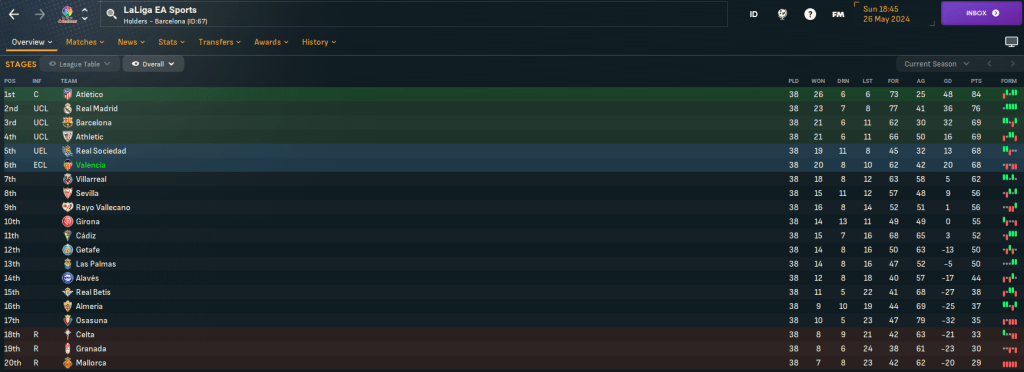
A defensive injury crisis hit at the end of the season and Valencia failed to win any of their final 6 games, dropping them from 2nd to 6th – which realistically, was probably a blessing in disguise. They eventually finished with 68 points, only 1 point off Barca in 3rd, after 20 wins, 8 draws and 10 defeats, scoring 62 and conceding 42.
Valencia Homegrown Players Update
Yaremchuk topped the scoring chart for Valencia with 16 in 39 but was terrible at the end of the season. Also impressive were Guerra with 12 goals and 4 assists, Correia with 7 goals and 3 assists, Pérez with 5 goals and 7 assists, Almeida with 3 goals and 10 assists and Gayá with a goal and 9 assists.
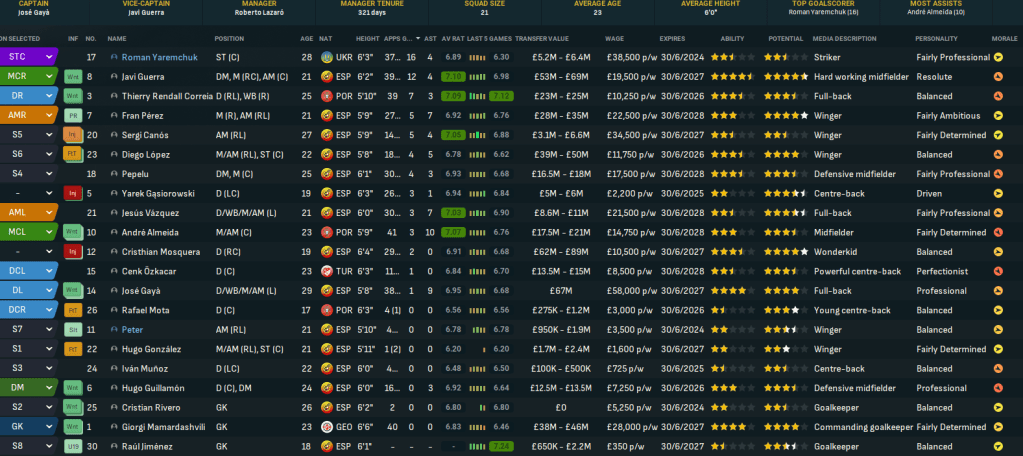
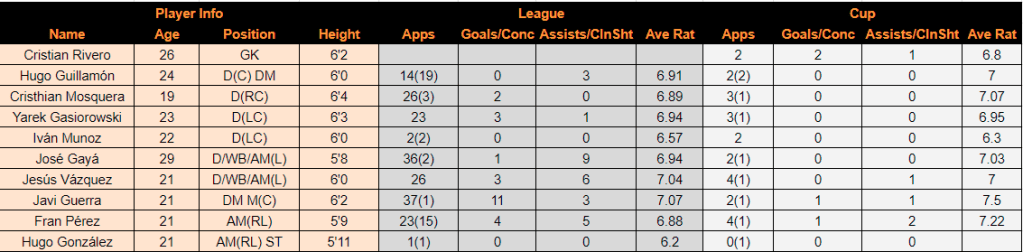
Valencia’s form this season far surpassed Lazaró’s expectations for his first season. It also saw wonderkids Guerra and Mosquera, who broke his ankle in training in late April, earn their first caps for Spain in a friendly against Paraguay in March. They were two of the stars of the season and part of the 10 homegrown players to get gametime this season, who played a combined 231 league games with 24 goals and 33 cup games with 4 goals.
Reserve side Valencia Mestalla had an excellent season, winning Segunda Federácion Grupo III at a canter with 77 points from 34 games, winning the league by 17 points. Hugo De Mateo was the competition’s top scorer with 22 and Marco Camus and Borja Calvo topped the assists with 16 and 12. The under 19s also performed excellently, winning División de Honor Juvenil Grupo VII before a 1-0 defeat to Barcelona in the Final. Winger Marc Jurado was the star of the season with a league-high 8.18 average rating after 23 goals, 32 assists and 11 MOTM awards in 37 games. The pick of the homegrown players in the youth sides include:

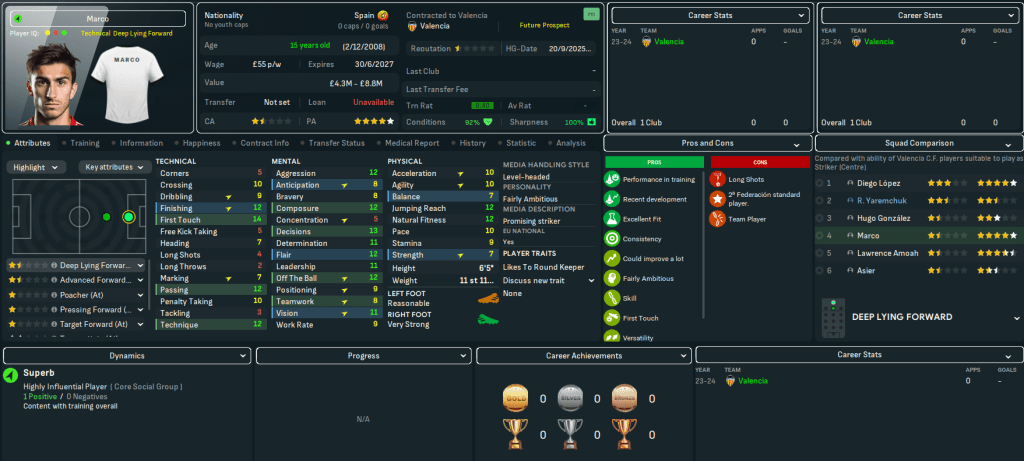
The potential at the club was bolstered by an excellent first youth intake led by Gandía-born 6ft 5in striker Marco, Valencia-born winger Rubén Torrella and attacking midfielder Lawrence Amoah.
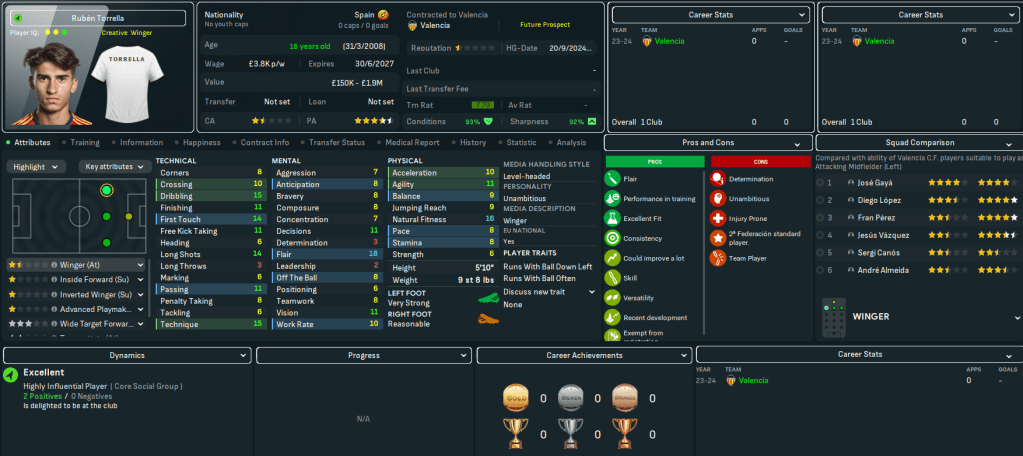
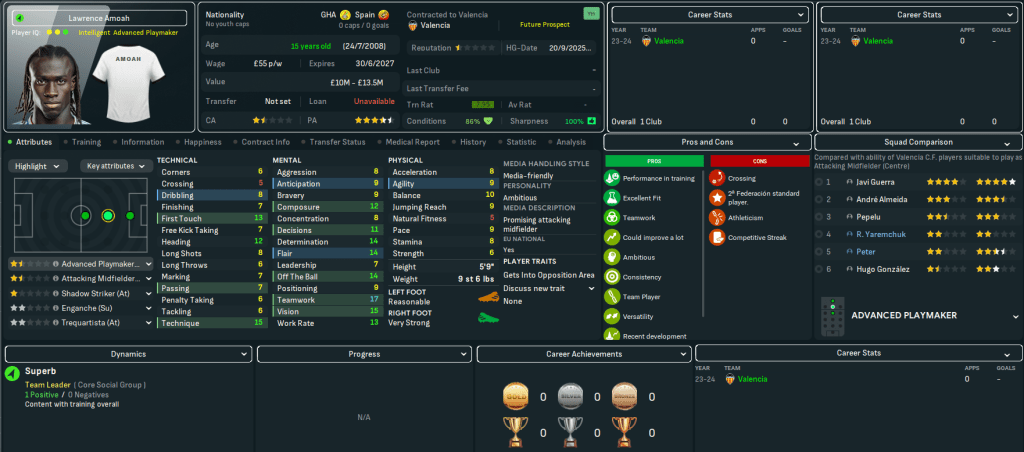
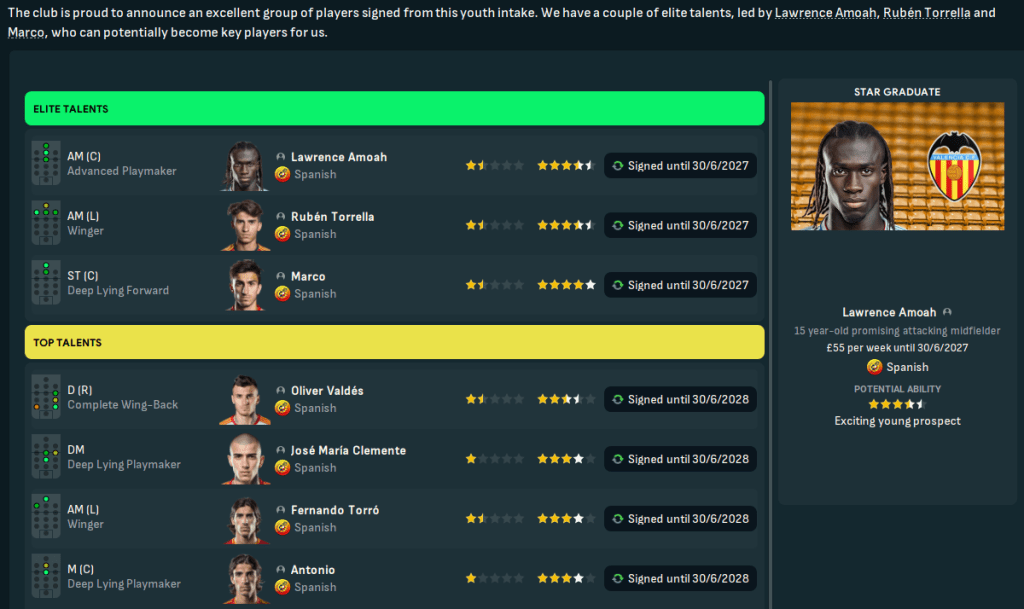
Lazaró had been busy scouting the Americas for potential youngsters to bring into the club. But was impressed by the club’s overperformance and the form of some of the talent in the Valencia youth sides. But next season would be tough with more players likely to move on and having to balance European football with domestic matters.
Could more homegrown talents star at Valencia in season 2? Join us next Wednesday to find out!


 Football Manager Addict
Leave a comment