
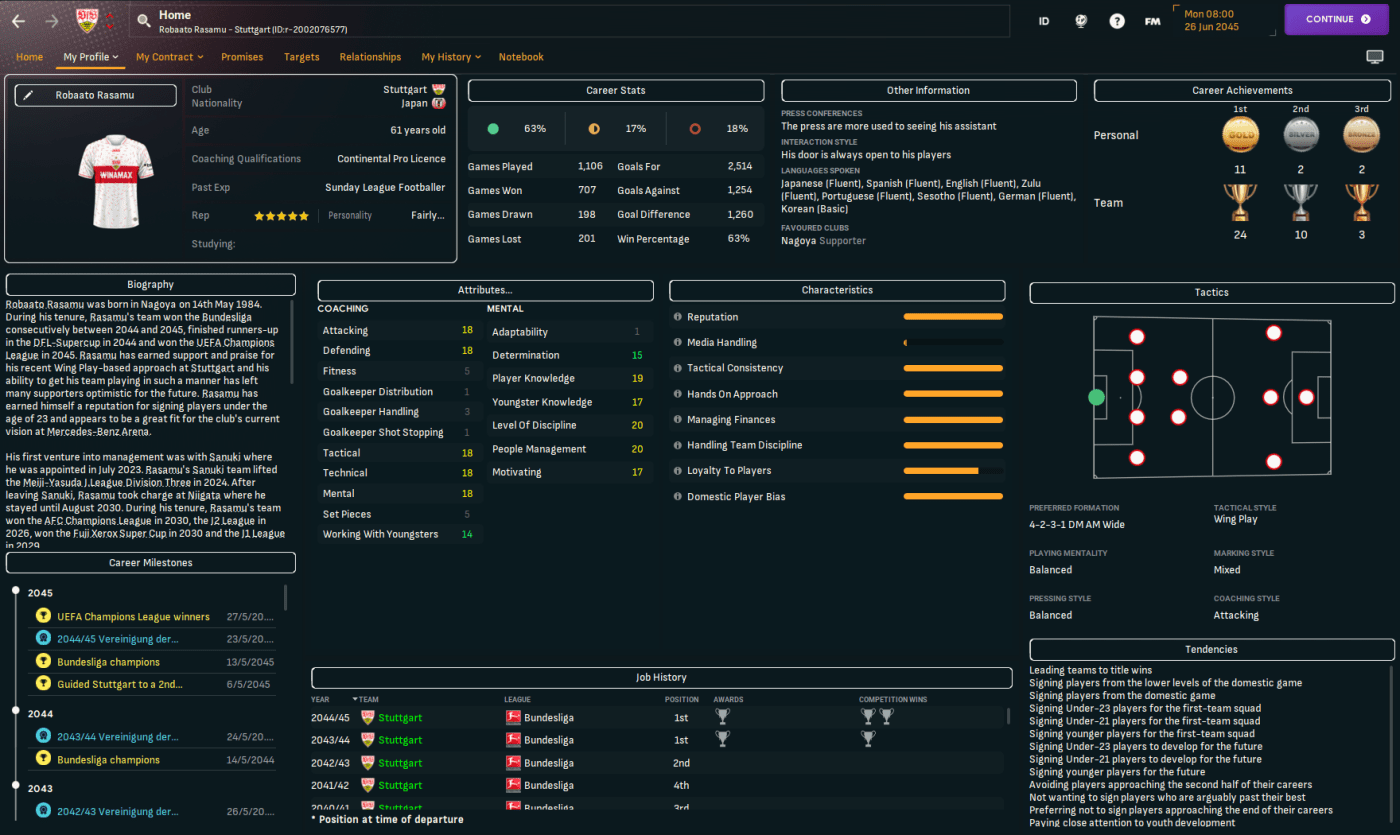
Robaato Rasamu had achieved a task that seemed almost impossible 23 years ago. The Japanese manager had gone from total obscurity to lifting all five major continental trophies in Europe, South America, North America, Asia and Africa.
After a few weeks of rest and, of course, many nights of partying with his adoring Stuttgart fans, Rasamu began to reflect on what he’d achieved over the last 23 years.
Rasamu finished his career after 1,106 games in football management. Of those, he won 707, lost 201 and drew 198 with a 63% win percentage. His sides scored 2,514 goals and only conceded 1,254 and he won a total of 24 major honours. As a result, he became by far the most successful Japanese manager of all time, winning eight domestic titles, three domestic cups, the five top-tier continental titles and three additional continental trophies.
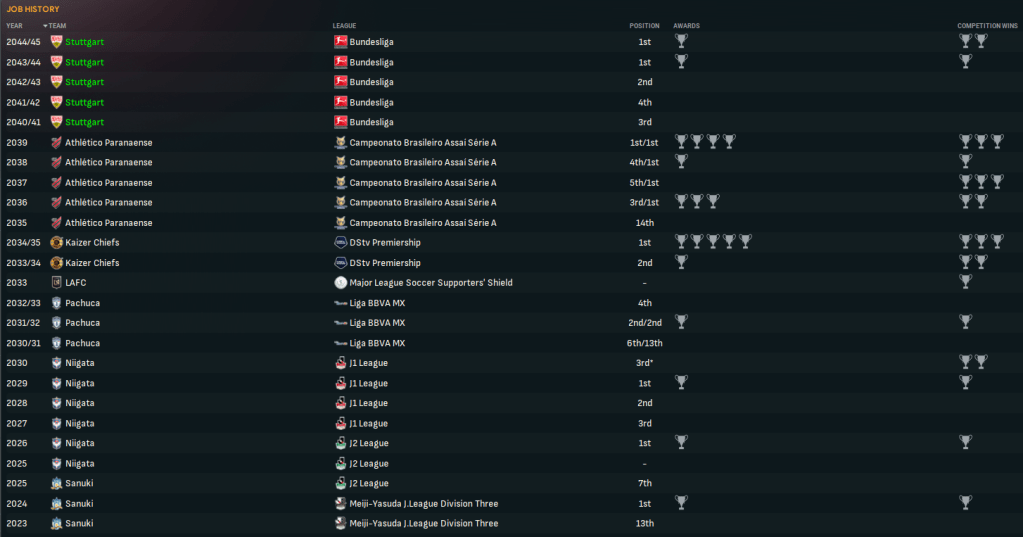
Rasamu’s Career Overview
Robaato Rasamu began his career as an unemployed wannabe Football Manager with no coaching badges and only Sunday League playing experience. But he landed on his feet somewhat as Japanese third-tier side Kamatamare Sanuki took a gamble on him.
He consolidated Sanuki in 13th place in his first season then led them to the J.League Division Three title in his second season. They performed well in Rasamu’s first season in J2 League, finishing in 7th place and that earned Rasamu a huge opportunity at Albirex Niigata, who’d just been relegated from J1 League. A significant step up in quality saw Rasamu lead Niigata to the J2 League title then hit the ground running in the top tier, finishing third and second before winning the title in his third season. They dropped to third in 2030 but reached the Asian Champions League Final for the second season in a row, this time coming out on top as they defeated Saudi side Al-Ahli over two legs.
With a somewhat heavy heart, Rasamu resigned from Niigata and earned a move to México with Pachuca. Working with a mass of exciting young talents, he led Pachuca to the Liga MX Apertura title in his second full season. However, that success attracted the riches of US side LAFC. And, after just six months, Rasamu led LAFC to the North American Champions League, defeating former side Pachuca in the Final.
He was quickly on the move again, swapping Los Angeles for Soweto and South African side Kaizer Chiefs. They finished second in 2033/24 but went one better in Rasamu’s second season and also lifted the African Champions League, defeating rivals AmaTuks in the Final.
That left Rasamu with two titles remaining. First up, he headed for South America and Brazil with Athlético Paranaense. He gradually strengthened a side with unbelievable youth recruitment, winning Copa Sudamericana in his second season. Copa Libertadores proved more of a challenge as they lost the Final in dramatic circumstances in 2038 but reached the Final again a year later and defeated Atlético Mineiro 4-1.
That was four out of five, with just Europe remaining. So Rasamu took a few months out of the game before earning an opportunity with Bundesliga side Stuttgart, whose manager had left to become Germany manager. He inherited a strong side but focused on youth to develop the best young team in Germany. They finished third, fourth and second as Bayern won 31 consecutive titles before finally overcoming them to win back-to-back Bundesliga titles. And in Rasamu’s second season, in 2044/45, he completed the full set by defeating Milan 1-0 in the worst Champions League Final ever.
Rasamu’s All-Time Best XI
Rasamu had worked with some great players during his 23 years in football so picking his favourite 11 would be challenging. But, in a very attacking 4-4-2 formation, here goes…
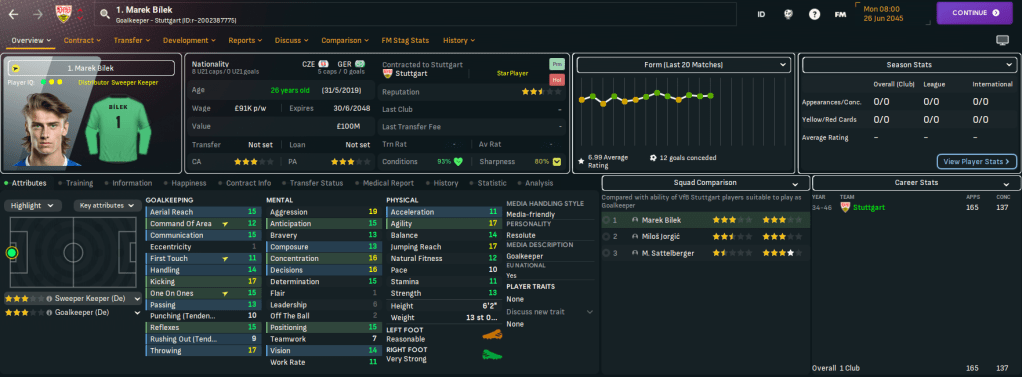
GK – Marek Bílek: The obvious choice between the sticks is Bílek, who inspired a Cjampions League win for Stuttgart and is now considered the second-best goalkeeper in the world.
RB – Fernandinho: Rasamu’s wild formation at Pachuca but massive responsibility on his attacking right back Fernandinho. But the Brazilian more than lived up to it, offering huge attacking threat while delivering on his defensive duty. He moved back to Brazil with Vasco after four years in México and he played 225 games for Vasco and Paranaense’s local rivals Coritiba before retiring aged 35 in 2041.

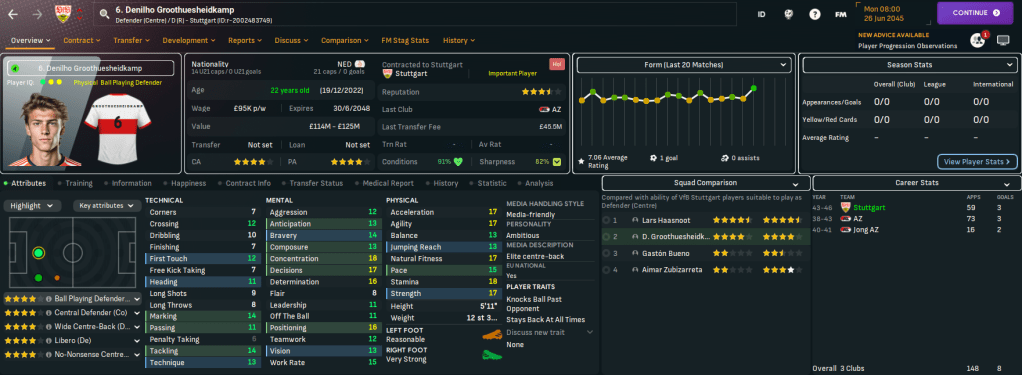
CB – Denilho Grootheusheidkamp: The centre back options shouldn’t be any surprise to anyone. Groot was an absolute rock at the heart of Rasamu’s Stuttgart defence and scored the winning goal in the Champions League Final.
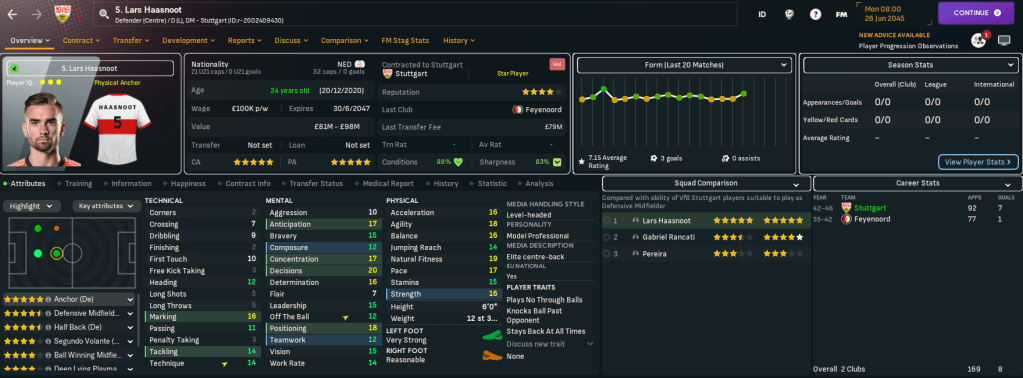
CB – Lars Haasnoot: There’s also only one option to support Groot, his fellow elite centre back Haasnoot. Neither of them are huge, at 5’11 and 6’0, but with them at the helm the Stuttgart defence only conceded 37 goals in two title-winning seasons.
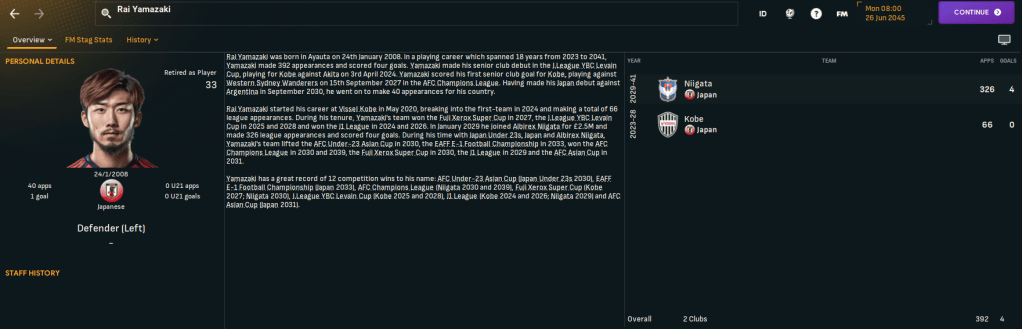
LB – Rai Yamazaki: Rasamu’s strongest full back options were probably at Niigata, where Yamazaki led a number of players who could play on both the right and left. But Yamazaki gets the nod as he scored goals en route to their Asian Champions League success. He went on to finish his career at Niigata, playing 326 league games for the club before retiring aged 33 in 2041.
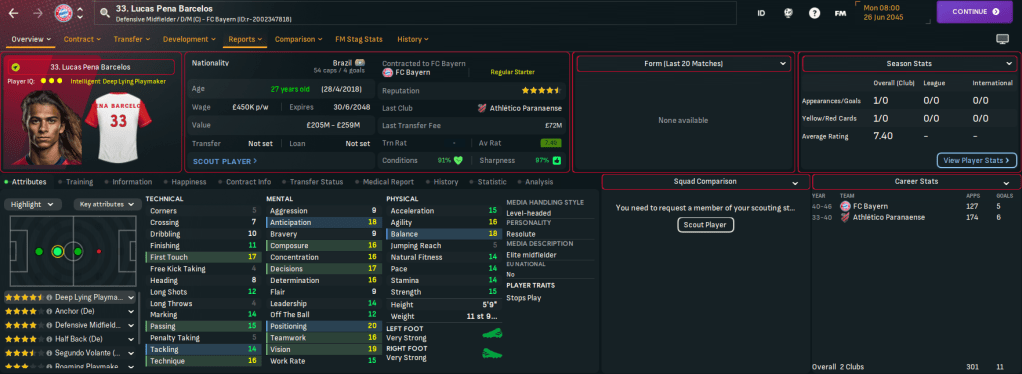
CM – Lucas Pena Barcelos: Barcelos was the rock at the heart of Rasamu’s Paranaense midfield. He became the club captain at the age of 20 and popped up with some important goals en route to South American glory. He also made his Brazil debut at 19 and has racked up 54 caps since, becoming one of the best midfielders in the world at Bayern.
CM – Mduduzi Shabalala: Shabalala was a real favourite of Rasamu’s, providing bags of creativity for Kaizer Chief’s lethal strikers and scoring the third goal in their Champions League Final victory. But the first appeal, of course, was his amazing name. Unfortunately, he’s the only player in this team no longer available in the game.
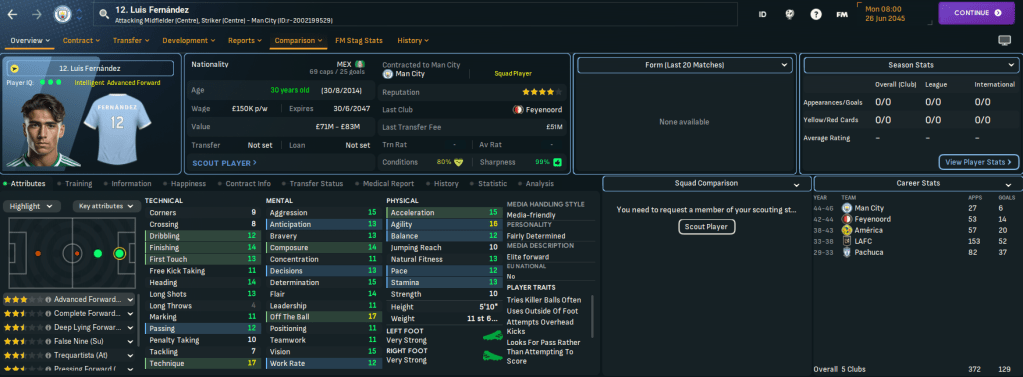
AM – Luis Fernández: Pachuca’s homegrown star was absolutely exceptional for Rasamu, inspiring the Mexican title and leading LAFC to the North American Champions League. His career stalled slghtly after Rasamu departed, scoring 52 in 153 for LAFC then moving back to México with América, where he only played 47 league games in five years. However, he earned a move to Feyenoord in 2042, where 14 goals in 53 games got him a move to Man City in 2044. But, now 30, he’s unsurprisingly hardly played for them.
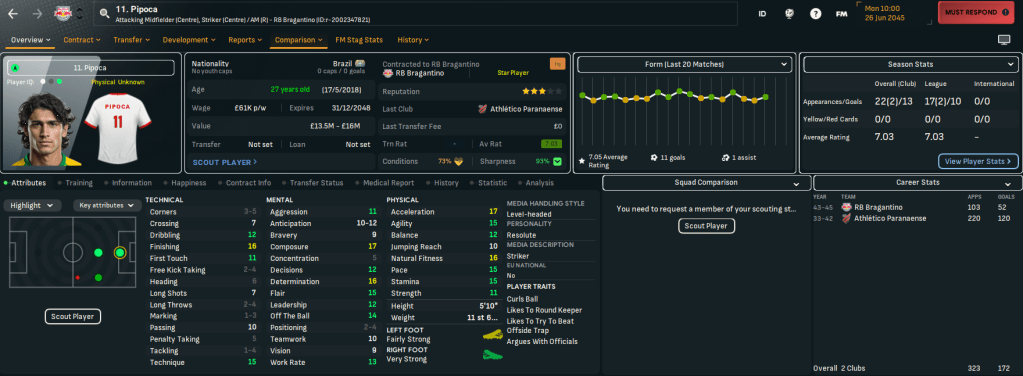
AM – Pipoca: Pipoca had to be shoehorned into this side as an AM as Rasamu couldn’t imagine not having a place for him. The homegrown striker epitomised Rasamu’s focus on young talent as he became Paranaense’s all-time record goalscorer during the Japanese’s reign. He scored 120 goals in 220 league games for the club before making a move to RB Bragantino, where he’s still banging in the goals at the age of 27.
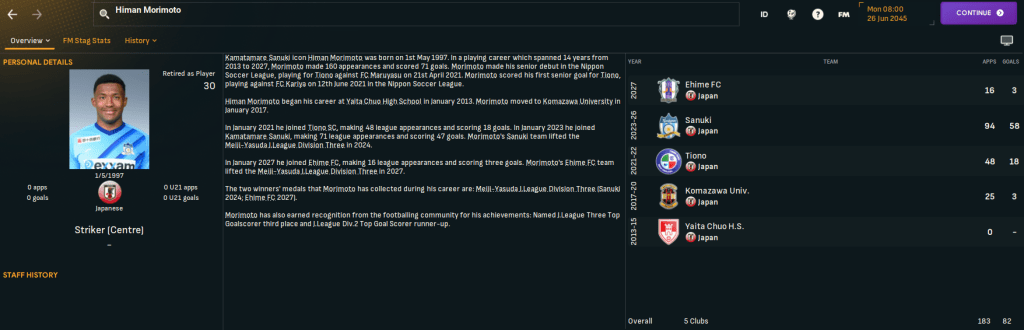
ST – Himan “He-Man” Morimoto: Who else would lead the line than Rasamu’s all-time favourite player? He-Man was instrumental in Sanuki winning the Japanese third tier and also impressed as they consolidated a strong position in J2. He-Man socred 58 in 94 for Sanuki before moving to Ehime for one season and retiring very early at the age of 30 in 2027.
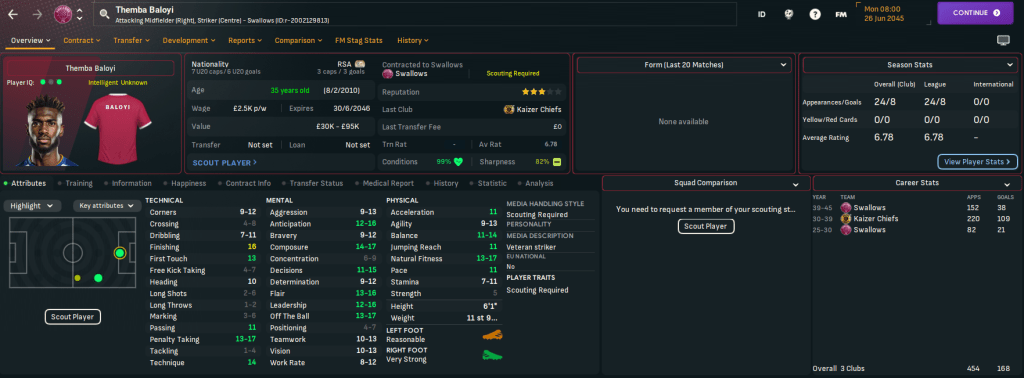
ST – Themba Baloyi: Baloyi simply had to be in the side given the sheer number of goals he scored for Rasamu at Kaizer Chiefs. He inspired the side to African glory with 53 goals in 49 league games and 81 in 77 in all competitions during Rasamu’s reign, which earned him three caps for South Africa. He scored 109 in 220 at Chiefs before moving back to his homegrown side Swallows in 2039, where he’s scored an additional 38 in 152.
There are several more options, including lethal strikers like Niigata’s Takahashi Wakabayashi, Paranaense wingers Paulo Roberto Aal, Carlos Eduardo and Claudio Saavedra, Pachuca midfielder Jason Gattini and Niigata midfielder Yuito Suzuki, Pachuca centre back Guillermo Barrera and Paranaense goalkeeper Guilherme de Moraes. But Rasamu believed the 11 above were probably the pick of the players he’d worked with.
Rasamu had enjoyed a fantastic career on all five continents, going on to win every top-tier trophy in all five over 23 years. He’d worked with some great players and fallen in love with some fantastic new clubs around the world. But, at the age of 61, it was time for him to bring his Football Manager career to an end.
Thank you for reading this Pentagon Pursuit FM story. I hope you enjoyed the journey and stay tuned for more FM career saves coming up very shortly on the FM Addict website!


 Football Manager Addict
Leave a comment