

Robaato Rasamu wasn’t usually one to let his hair down with a big night out on the town but, in the wake of winning the first major title of his career and in the history of Albirex Niigata, he made an exception for New Year’s Eve as the clock ticked over to 2030. Rasamu treated the Niigata players and staff to a delicious meal at Kaisenya Negibozu then let the lads take him on a bar crawl led by coach Robin van Persie handing out pints of Asahi and far too many shots of Sake and Shochu with jubilant supporters.
But Japan’s rising star of football management, who was also celebrating passing his Continental Pro Licence and entering the Japan Hall of Fame, didn’t let the frivolities last for too long. He was firmly focused on the major challenge of trying to win the AFC Champions League when it resumed in February.
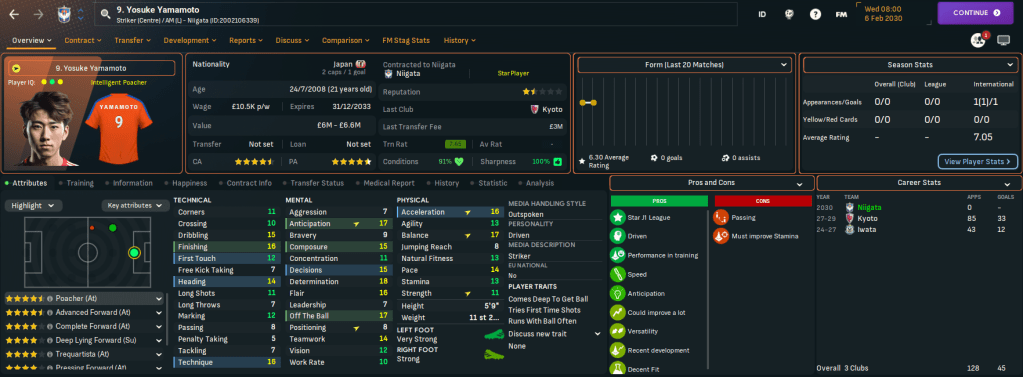
The Saudi interest – which was getting tedious now – renewed as the transfer window opened. And Niigata yet again broke the Japanese transfer record as the inconsistent Hideto Fukuyama joined Al-Fayha for £15m. They also sold midfielder Marko Sapuha, who ludricously wanted £70k a week to renew his contract, to Al-Duhail for £5m and unimpressive striker Henrique Quintaneiro back to Portugal with Sporting for £6.75m. That gave Rasamu a huge £70m transfer kitty to work with! His first move was a potential star as Japan international striker Yosuke Yamamoto signed for just £3m from Kyoto.
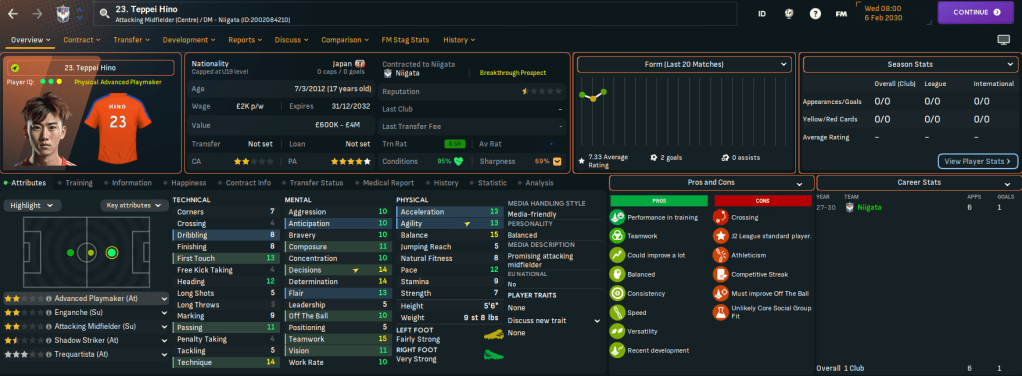
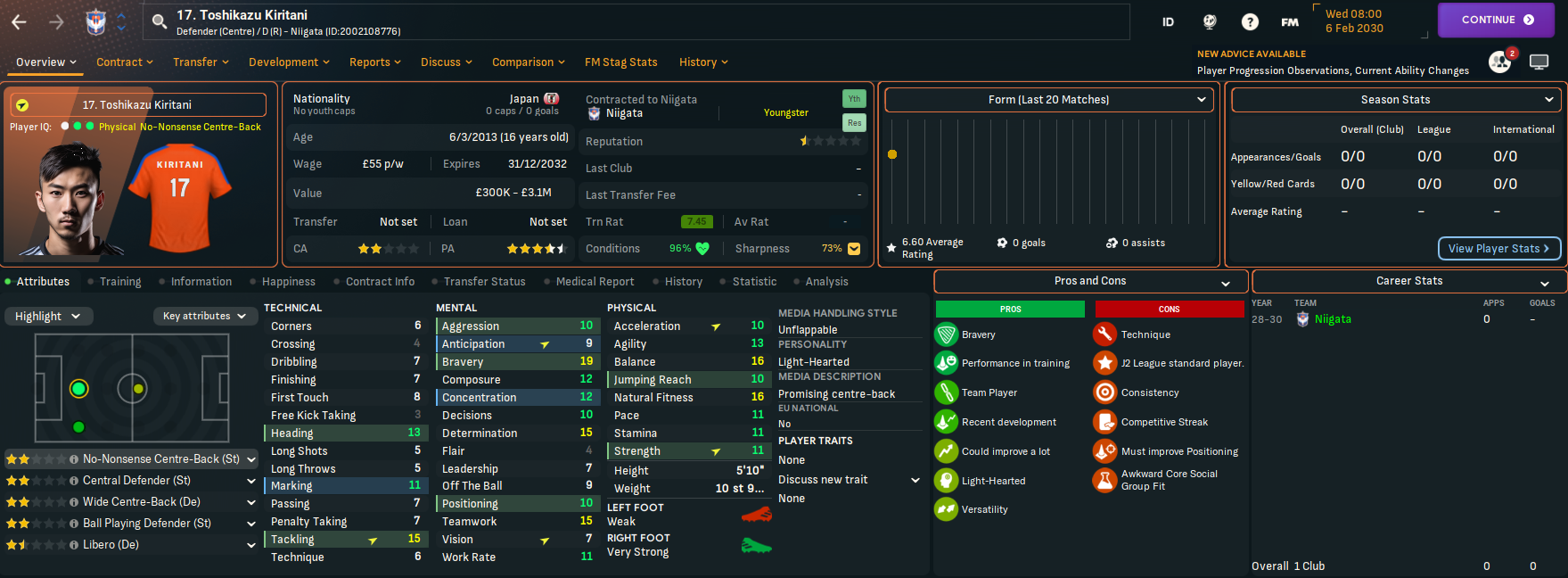
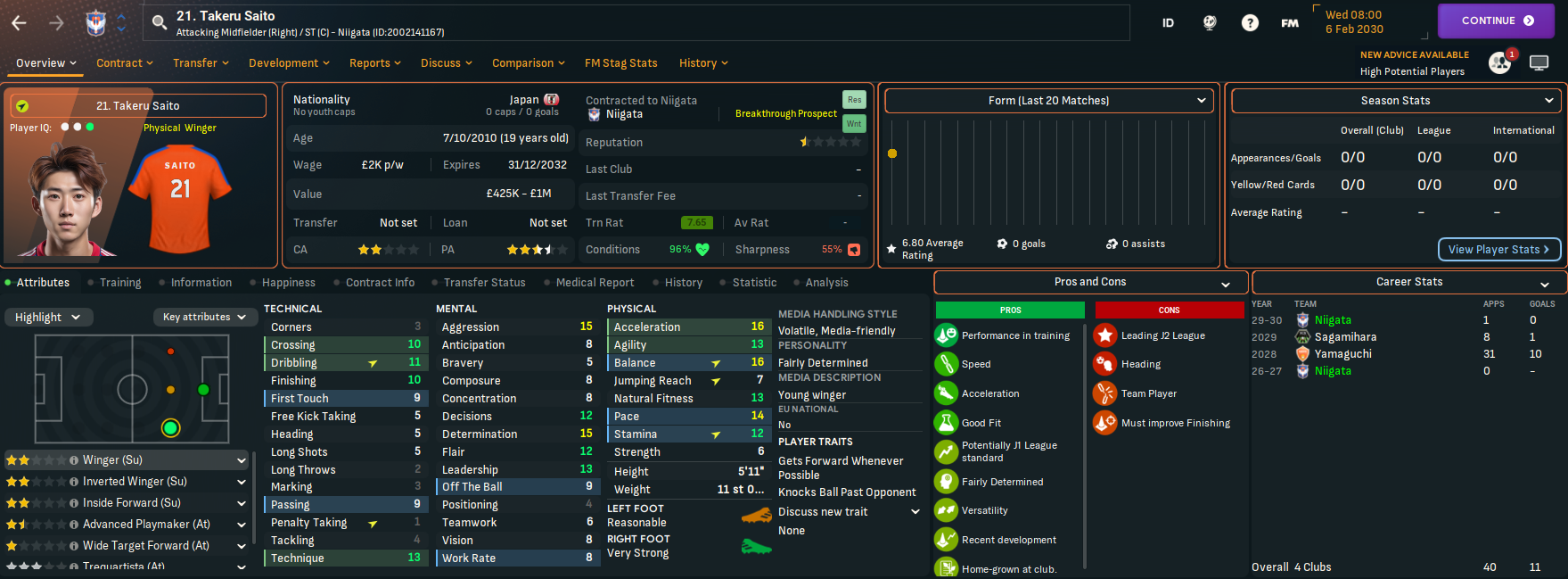
After that Rasamu struggled, as two of the big signings he’d identified signed new deals with their current clubs. So instead, he promoted homegrown prospects from Niigata’s supposed 10th-best in the world youth academy in attacking midfielder Teppei Hino, centre-backs Toshikazu Kiritani and Taisuke Nakano, attacking midfielder Takeru Saito, right-back Shingo Murakami, striker Taiyo Abe and left-back Masaya Takata to meet the five homegrown at club requirement in J1 League matchdays.

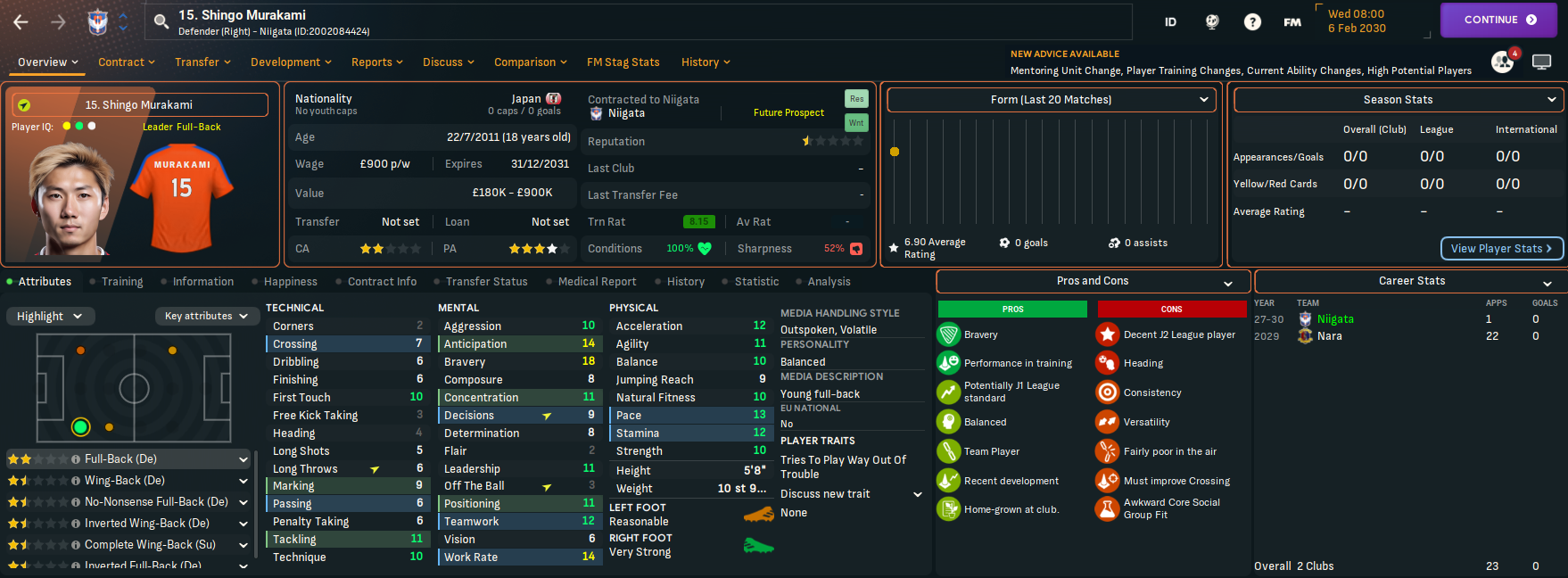
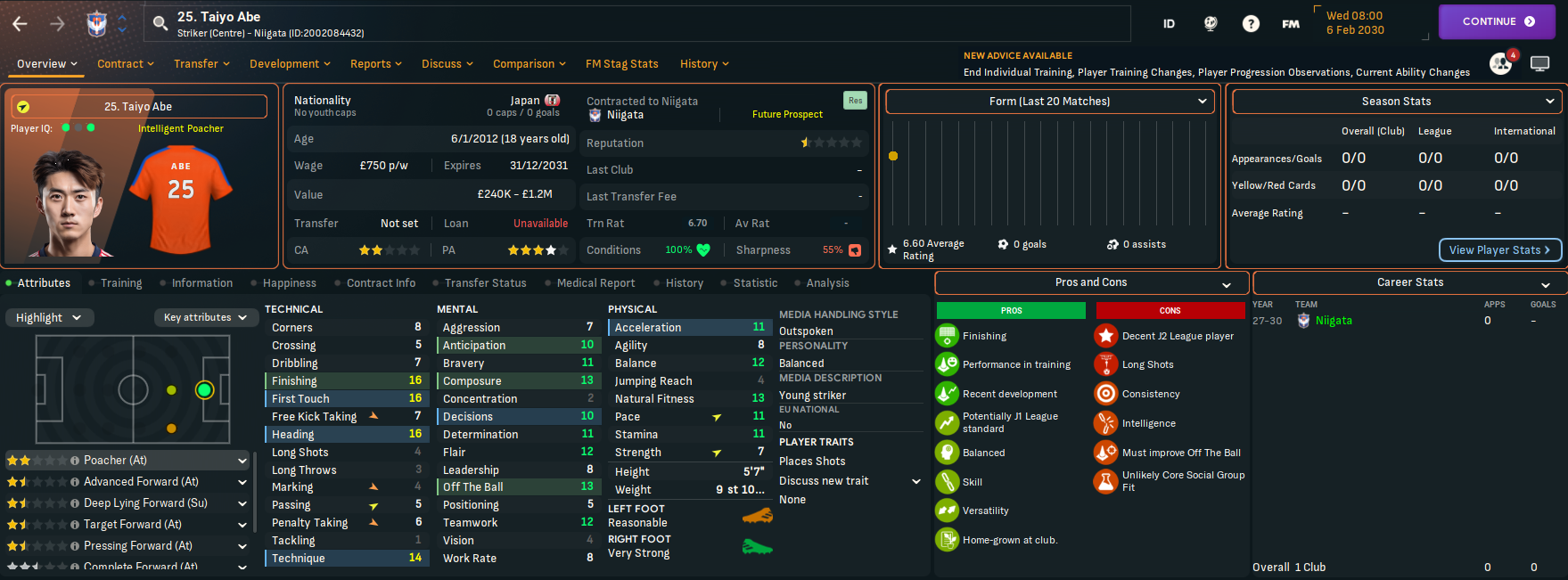
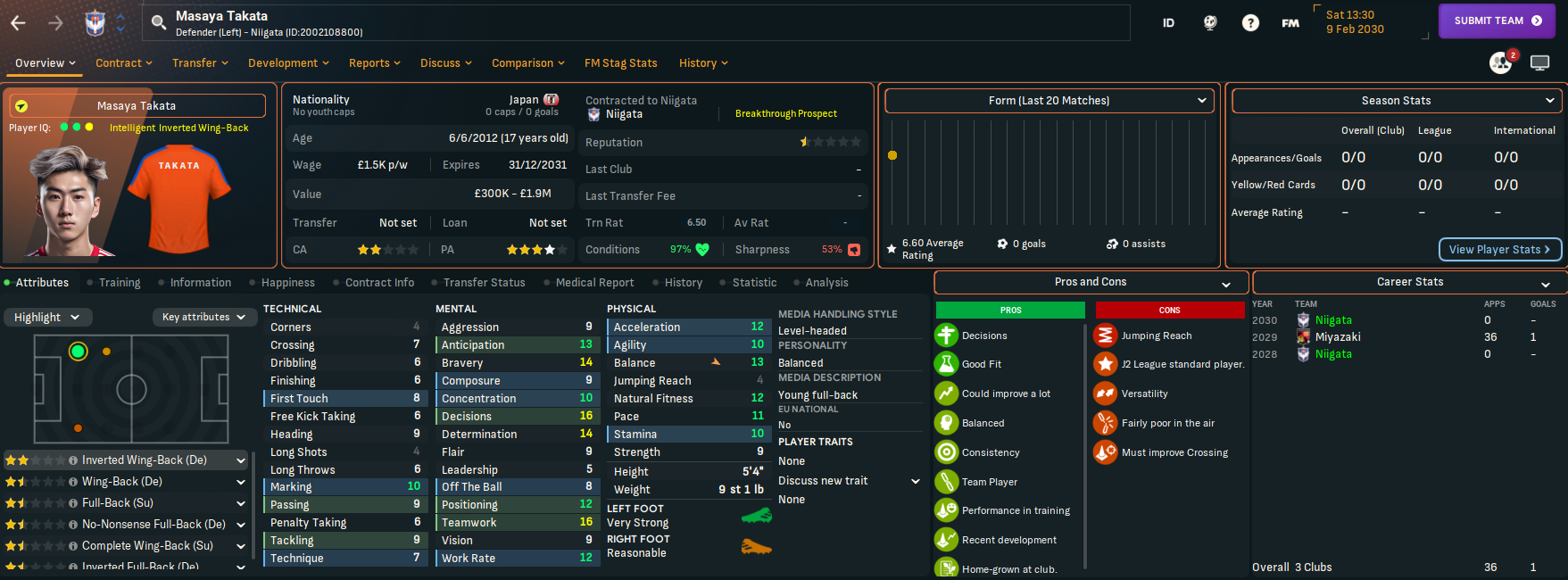
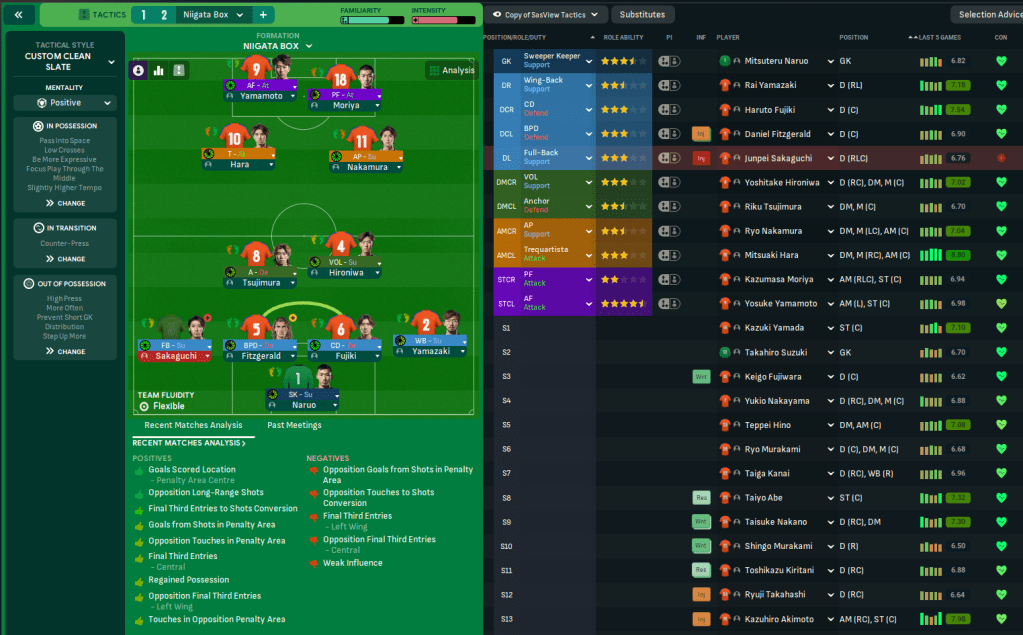
Rasamu had trialled a new tactical approach at the end of last season and it led him to the league title. So, despite losing his two best strikers, he decided to stick with the wingerless Niigata Box formation. That means Kazumasa Moriya will retrain to a striker alongside Yamamoto, Ryo Nakamura steps into attacking midfield, Riku Tsujimura comes into the Anchor role and Rei Yamazaki shifts over to right back with Junpei Sakaguchi coming in on the left.
An Early Chance For Silverware
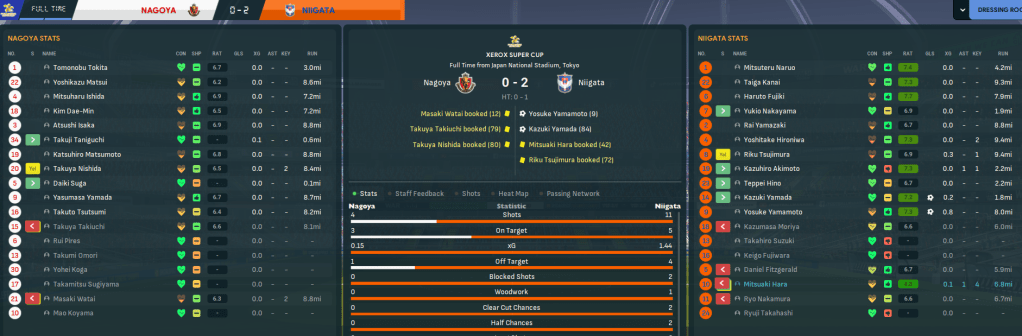
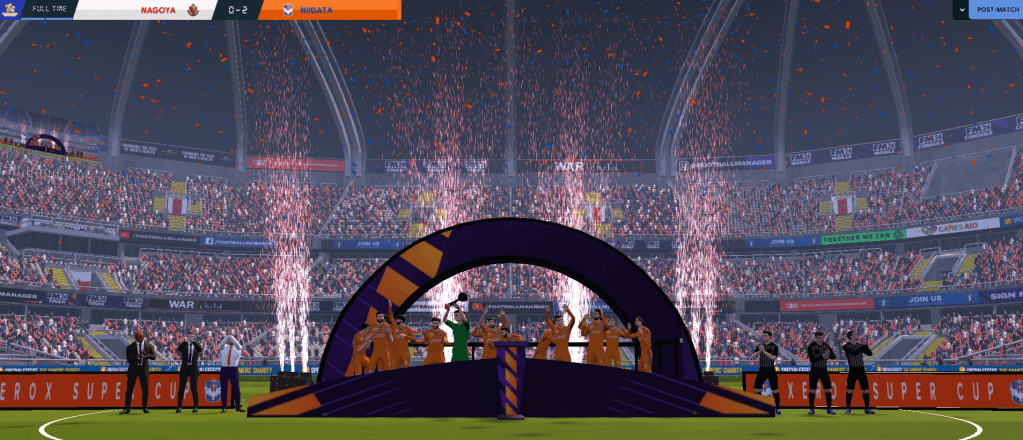
Niigata began the 2030 season by playing their first Xerox Super Cup against Nagoya in Rasamu’s 300th game in management. Yamamoto took nine minutes to score on his debut and fellow striker Kazuki Yamada came on to kill the game off and bag another piece of silverware.
Into The Champions League Knockouts
Rasamu’s big focus moving into 2030 was the AFC Champions League, in which they faced Melbourne City in the second round. The home leg was up first and they started well as Yamazaki drilled in a rare goal. Melbourne levelled but a Yamamoto brace earned a 3-1 win and it should have been more comfortable as Yamada missed a sitter in injury time. The strikeforce of Yamamoto and Moriya put them 2-0 up in Australia and eventually a 2-2 sent them through.

The quarter final saw a familiar foe in waiting as Niigata took on Kashima Antlers. This time the away leg was first and an entertaining game saw both sides have plenty of chances but fail to take them. Niigata started the home leg well as a short corner routine ended up with Yamazaki scoring again. Another short corner saw Yamamoto win a penalty that Mitsuaki Hara unusually missed. But Yamamoto soon doubled the lead, made it three just 18 seconds into the second half and wrapped up a superb hat trick with a delicious late chip. And, while Kashima scored from their first two shots, the hero was absolutely Nakamura, who ran the show with four assists (double his tally in 44 games last season).

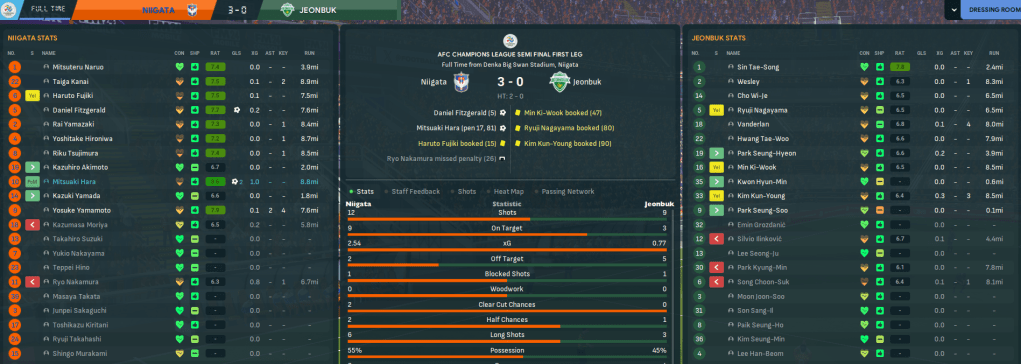
Niigata faced Korean opponents in the semis as they took on Jeonbuk while Shabab Al-Ahli took on Saudi side Al-Ahli in the other. Nigata were at home first and got a flyer as Fitzgerald neatly finished with the outside of his right foot after a corner. Hara won a penalty and cheekily panenka’d it down the middle before Moriya won another that Nakamura missed. Jeonbuk offered nothing and that man Hara seized control as he scored from 20 yards after a nice short free-kick routine.
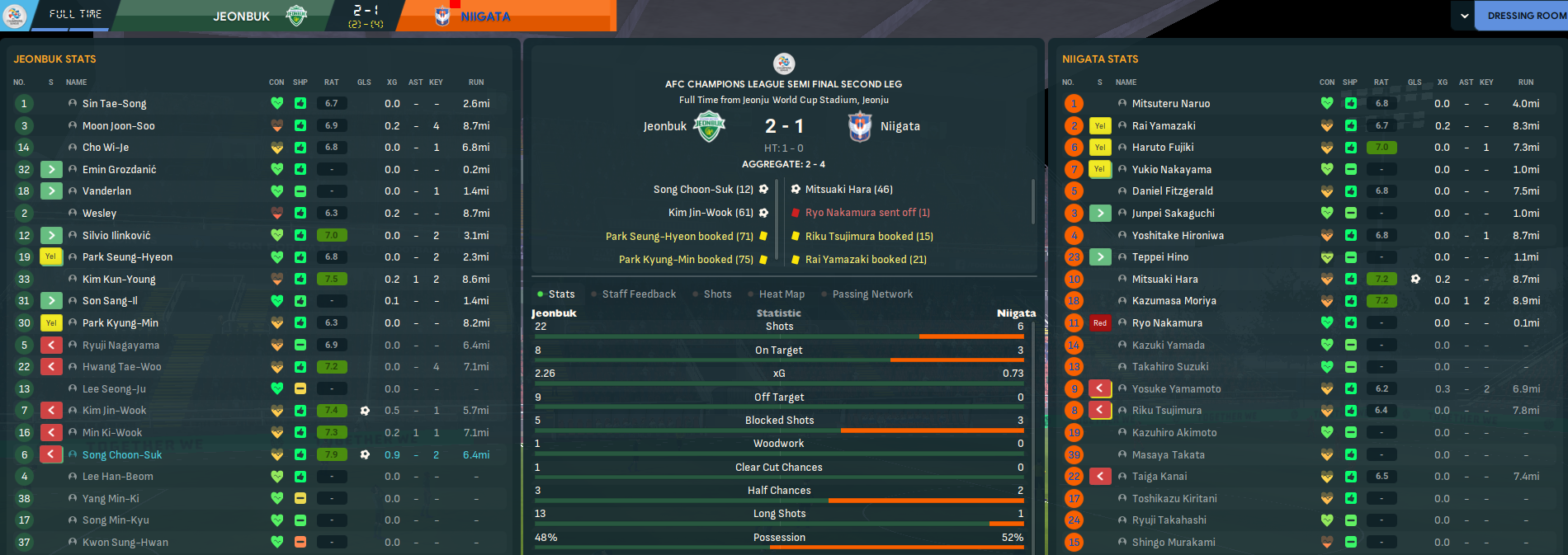
Niigata gave Jeonbuk a lifeline as Nakamura ludicrously got himself sent off for a two-footer 35 seconds into the second leg. Jeonbuk swiftly scored to make Rasamu nervous but they held out until half time and Hara scored again 30 seconds into the second half. Jeonbuk scored on an hour but Niigata still owned possession and a more defensive approach saw out a 2-1 defeat. So Niigata were heading to back-to-back Asian Champions League Finals!
Another Champions League Final Saudi Clash
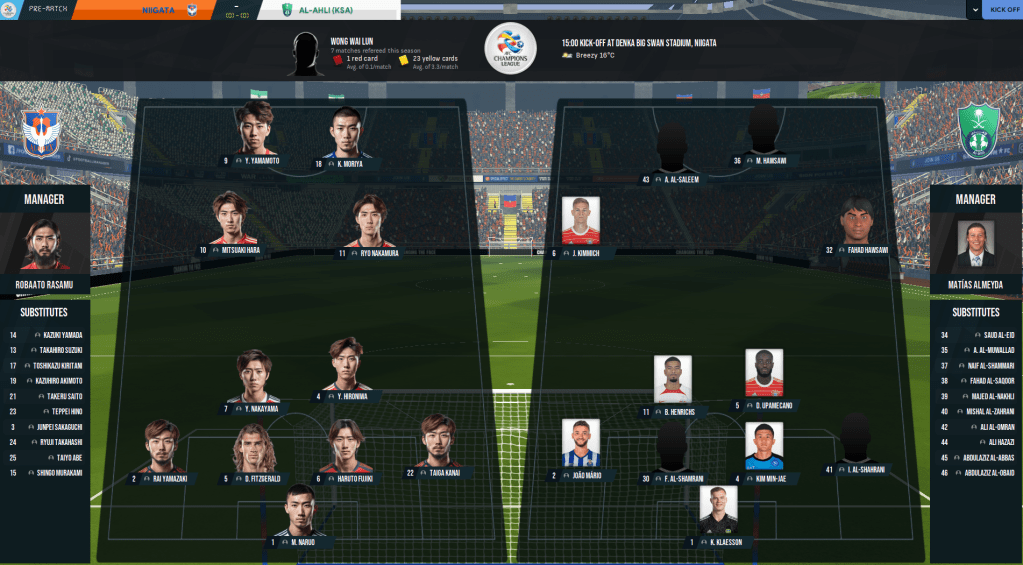
For the second successive season, Albirex Niigata reached the Asian Champions League Final and faced the prospect of a big-spending Saudi side. This time, they took on Al-Ahli, who had Joshua Kimmich earning £1.4m per week, Kim Min-Jae on £850k and Dayot Upamecano on £800k.
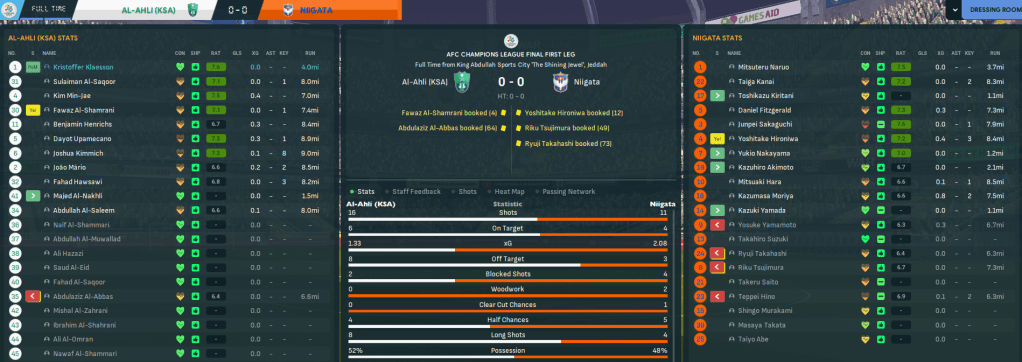
Niigata had three players suspended for the first leg at “The Shining Jewel” in Jeddah but started brightly as Yamamoto hit the post and Hara forced a smart save. Moriya then hit the post with a huge chance after an hour and Fitzgerald had a header superbly saved in injury time. Al-Ahli apparently had more shots without really threatening and Niigata were so unlucky to draw 0-0.
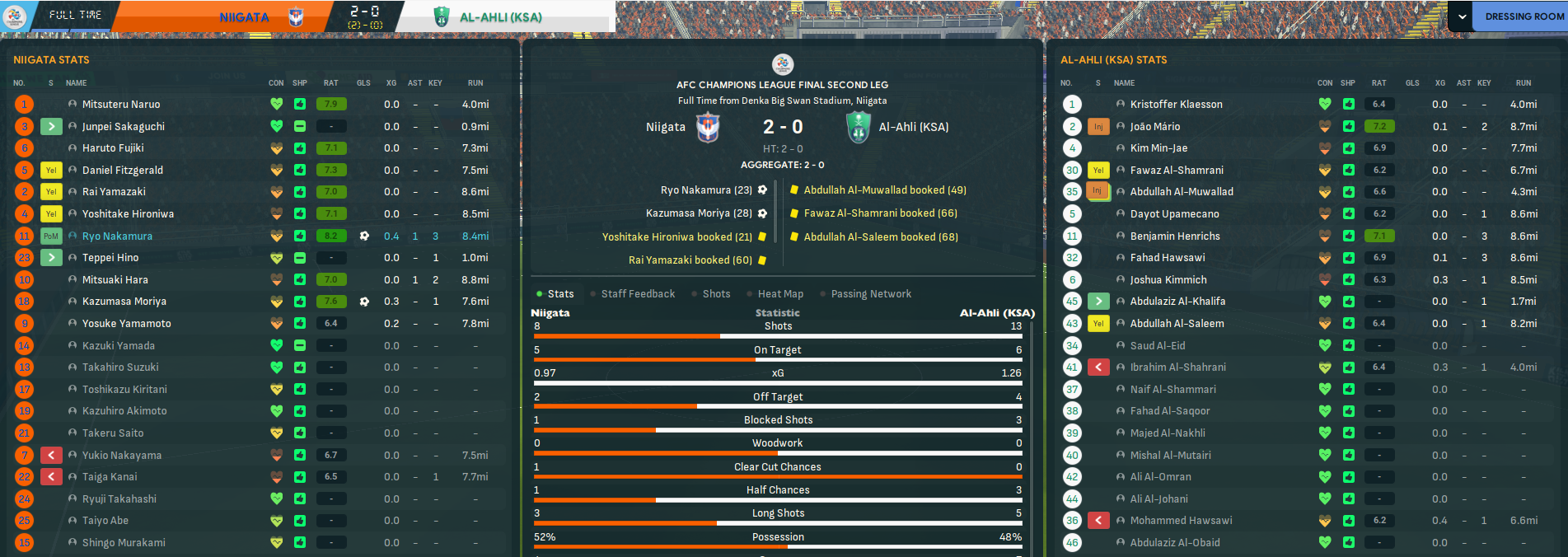
Back in Japan, Niigata bossed the early momentum and took advantage as Hara’s cross fell to Nakamura to tap home on 23 minutes. And they doubled their lead five minutes later as Nakamura fed Moriya to fire past the keeper from 25 yards. Al-Ahli offered a little threat, had a few shots and apparently racked up more xG but failed to seriously threaten Mitsutero Naruo, largely because they had two greyed-out attackers doing nothing and overpaid Kimmich had a shocker. So Niigata cruised to a 2-0 victory.
Albirex Niigata were Champions of Asia!!
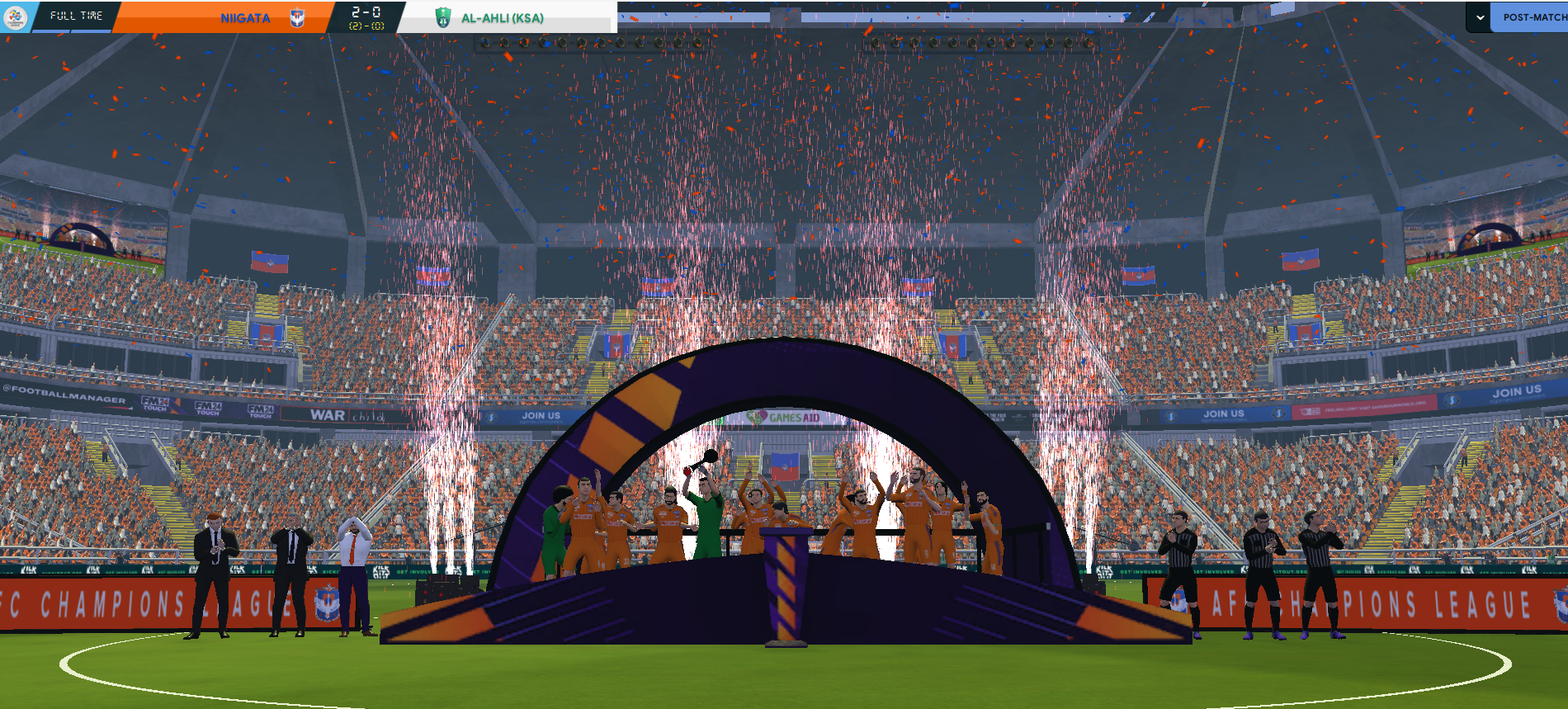

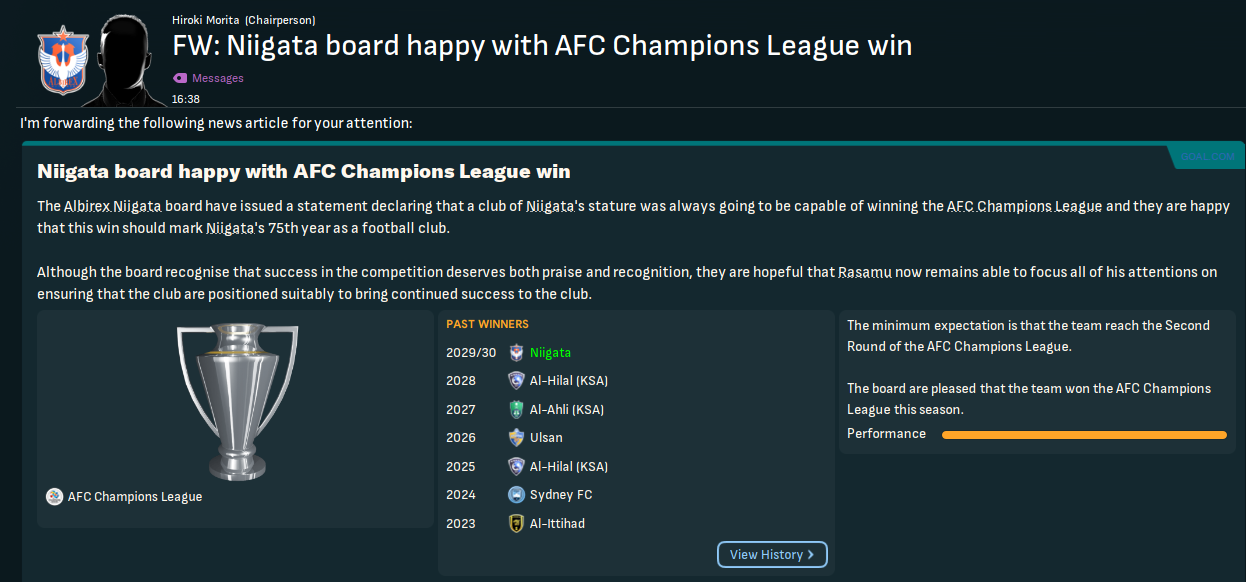
Rasamu was jubilant at his team’s success and a little taken aback at how bad his Saudi opponents had been over two legs. He believed this victory vindicated his philosophy to focus on youth and recycle players whenever big money was offered – aka selling to Saudi. Furthermore, it showed that signing ageing players for stupid money (such as 35-year-old Kimmich on £1.4m per week) doesn’t always work. So this was a victory for the football purists.
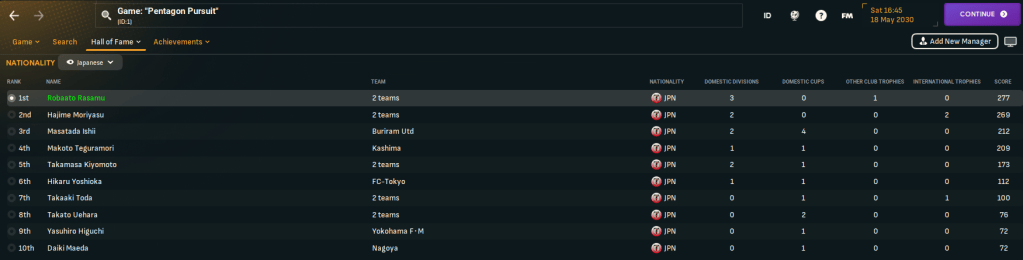
His Champions League success meant he ticked off the Asian leg of his Pentagon Pursuit bid to win every top-tier continental trophy. It also saw him become the greatest Japanese manager of all time!
The big question now was… where next? The sole African league, South Africa, is already loaded, so that seems the most logical next step. Rasamu decided it was time to load up North America and begin looking for opportunities in South Africa. But until one arose, he had planned to stick with Niigata, who he’d led to 4th place in J1 League halfway through the 2030 campaign. But he swiftly decided that it was time to move away from Niigata and explore his options.
With that, in a televised press conference, Rasamu bid a huge “Arigato” to Albirex Niigata and their supporters and announced his resignation to explore pastures new in the world of football. He departed Niigata after 234 games in charge, of which he won 150, drew 45 and lost just 39, scoring 528 and conceding 272. He led to the club to the J2 League title, its first-ever J1 League title and, of course, the big one as they became Champions of Asia for the first time.
Would Robaato Rasamu find a job in South Africa? Or would he head for the Americas?
You’ll have to wait until next year to find out! We’re taking some time away for Christmas and I’m flying to New Zealand on 3 January. So for now, Merry Christmas and a Happy New Year!


 Football Manager Addict
Leave a comment