
Ruprecht Prusseit was a Football Manager with a growing reputation, having led Hansa Rostock II to safety in his first season in professional football. The Rostock II board yet again agreed to allow Prusseit to go on another coaching course, which means he’ll now spend 12 months studying for the Continental A Licence.
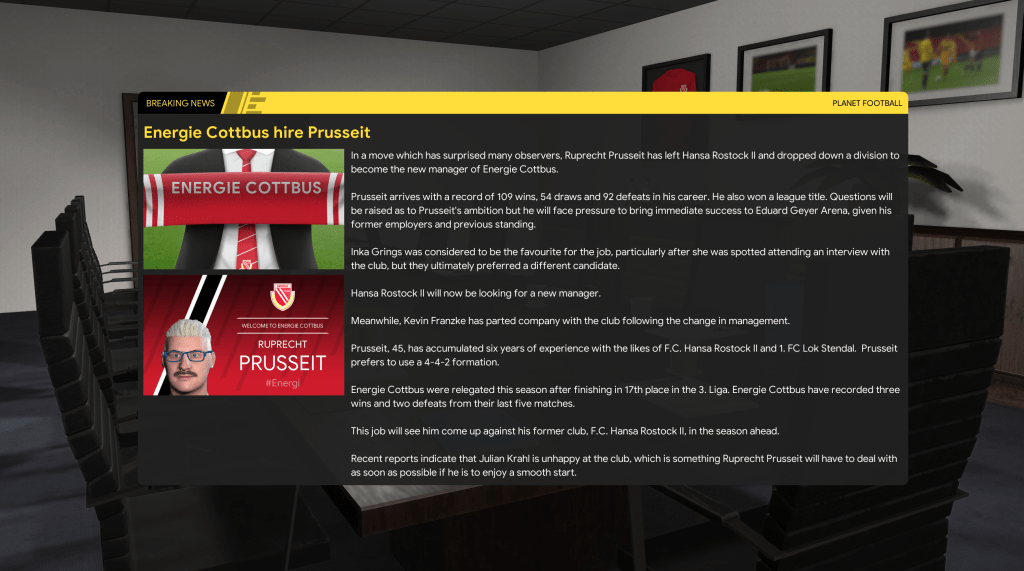
However, Prusseit felt his career would be best off at a club that wasn’t a B Team, which didn’t give him any control over actual club management and offered limited opportunities. No jobs were available at the start of the summer, so he was settled on staying in Rostock. But he soon received an invitation to an interview from Energie Cottbus, who’d just been relegated from 3. Liga, after having to reject an interview offer from Bundesliga side Augsburg.
A few days later, Cottbus asked for his staff changes and swiftly offered him the job on a one-year contract increasing his wage to £2k per week. So Prusseit was moving on to club four of his OstDeutscher Sieg adventure! It may sound odd to move from a third-tier side to one in tier four, but Prusseit firmly believed this was a great opportunity to strengthen his reputation.
Who Are Energie Cottbus?
Energie Cottbus is a professional club based in the city of Cottbus in the Brandenburg region in north-east Germany. Cottbus’ roots trace back to FSV Glückauf Brieske-Senftenberg, a club founded by coalminers in 1919 in the town of Marga that was banned by the Nazis in 1933. It reemerged in 1949 and went through various name changes before becoming the SC Energie Cottbus sports club in 1963. Reunification saw Cottbus emerge as one of the better East German sides, reaching Bundesliga in 2000 and staying there for three years before returning in 2006.
In this save, Cottbus spent the first three seasons in tier four before two consecutive promotions up to 2. Bundesliga then back-to-back relegations take them back into Regionalliga Nordost for the 2029/2030 campaign.
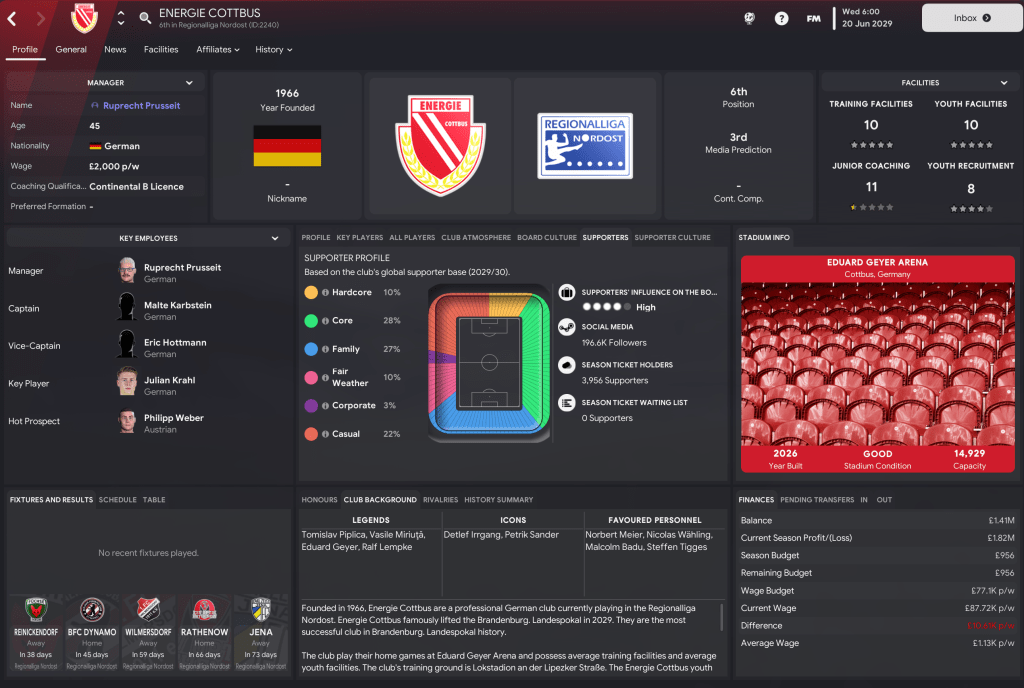
Prusseit’s new club play at the 14,929-capacity Eduard Geyer Arena, which was only built in 2026, and has fairly basic facilities. Cottbus have a bank balance of £1.4m but is spending well over its wage budget and has limited transfer budget.
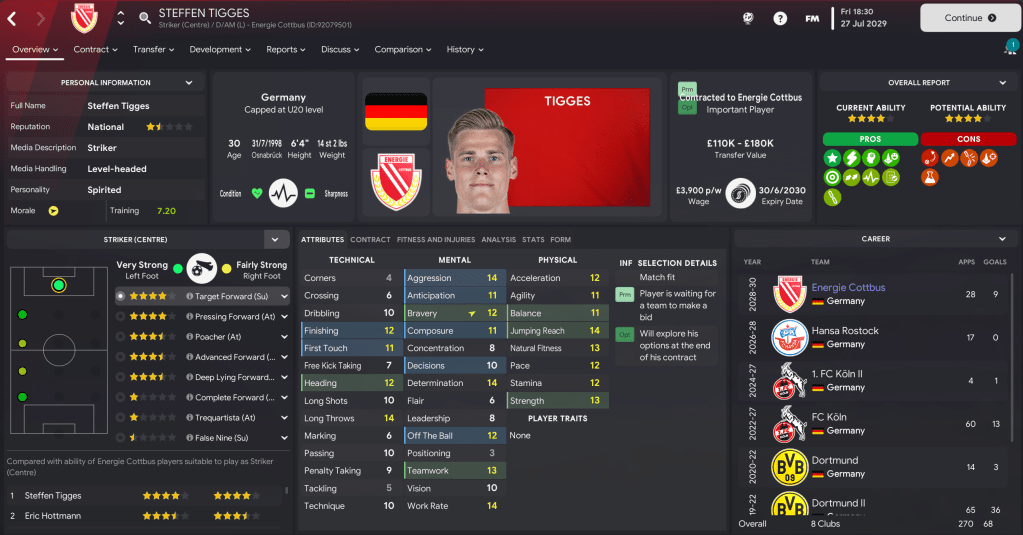
Cottbus had players that Prusseit had actually heard of, including former Dortmund left-back/striker Stefen Tigges. However, most of them wanted out as a result of the club’s relegation, so Prusseit had to farm out a few and keep hold of some to try and achieve immediate promotion.
The best player remaining at the club was Tigges, who’s considered a good 3. Liga player. Other key players include winger Micael Sanhá, midfielder Arnel Kujovic, Prusseit’s first Brazilian player left-back Mateus Brunetti and centre-back Malte Karbstein. There was also plenty of potential as six players had at least 4.5-star potential led by centre-back Daniel Klug, midfielder Daniel Yéo and midfielder/striker Dennis Carstens. And the quality in the squad was boosted by loaning in winger Phil Hennig and free transfers of right-back Emmanuel Ntsiakoh and promising striker Richard Busche.
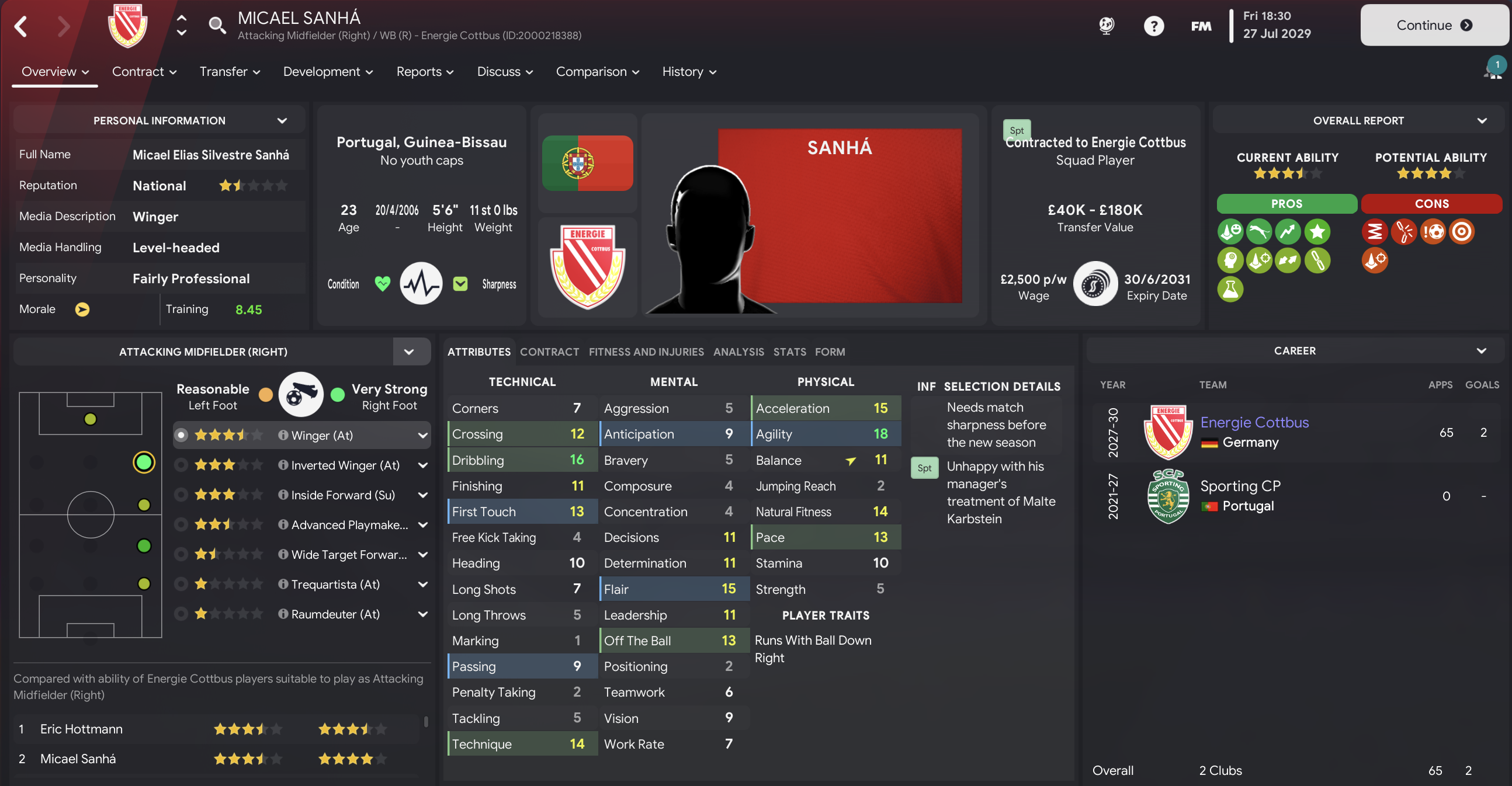
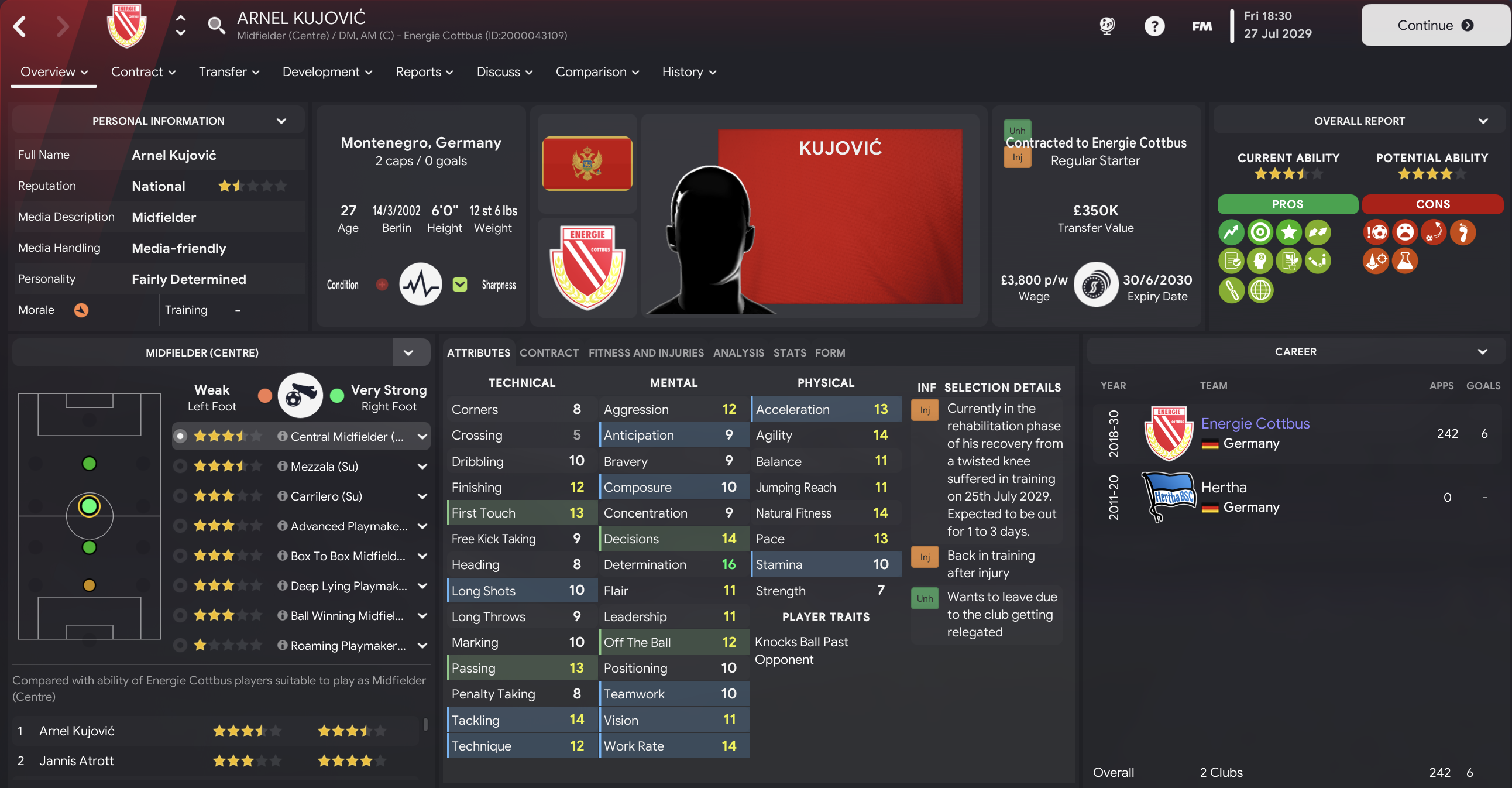

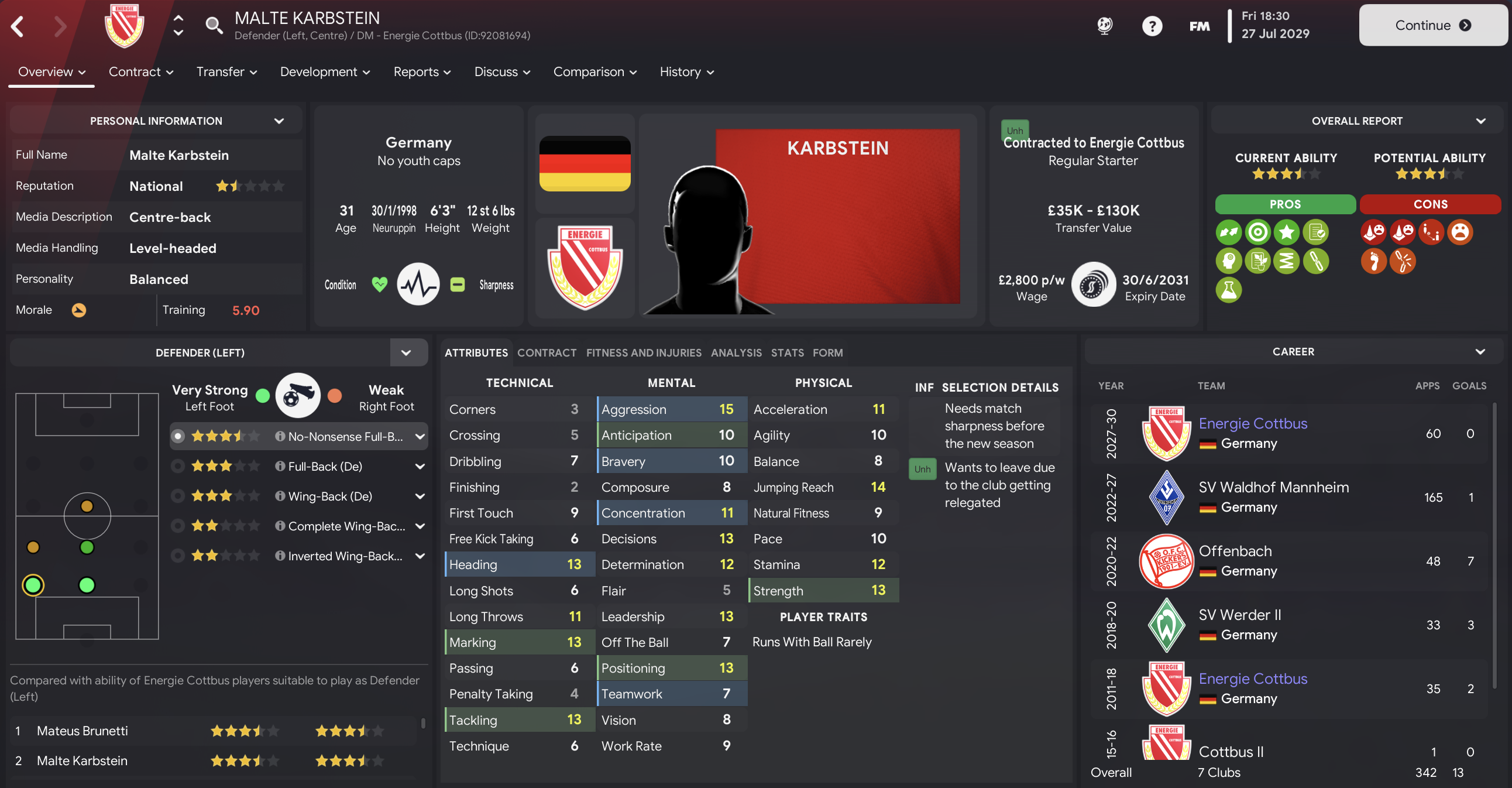
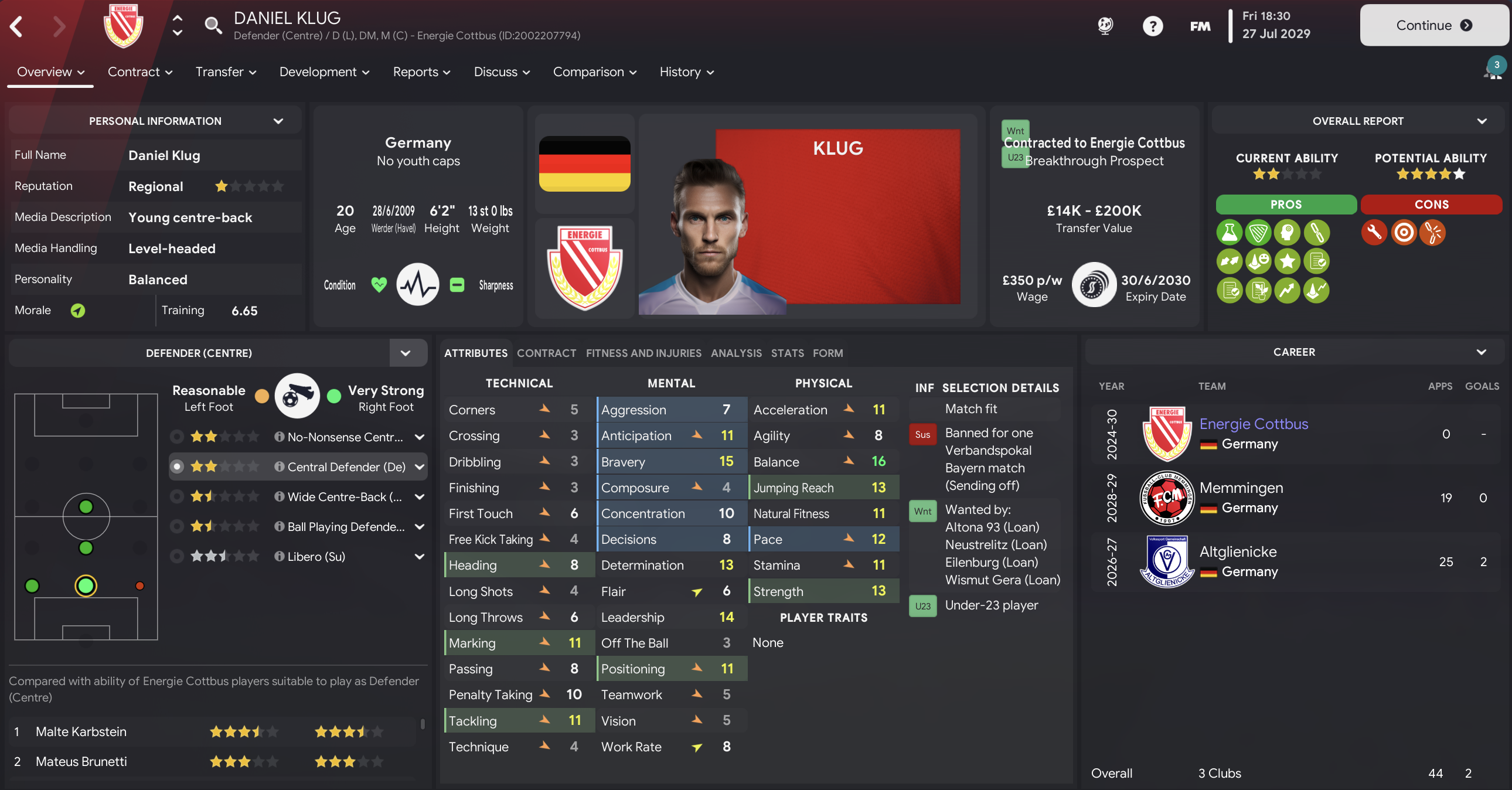
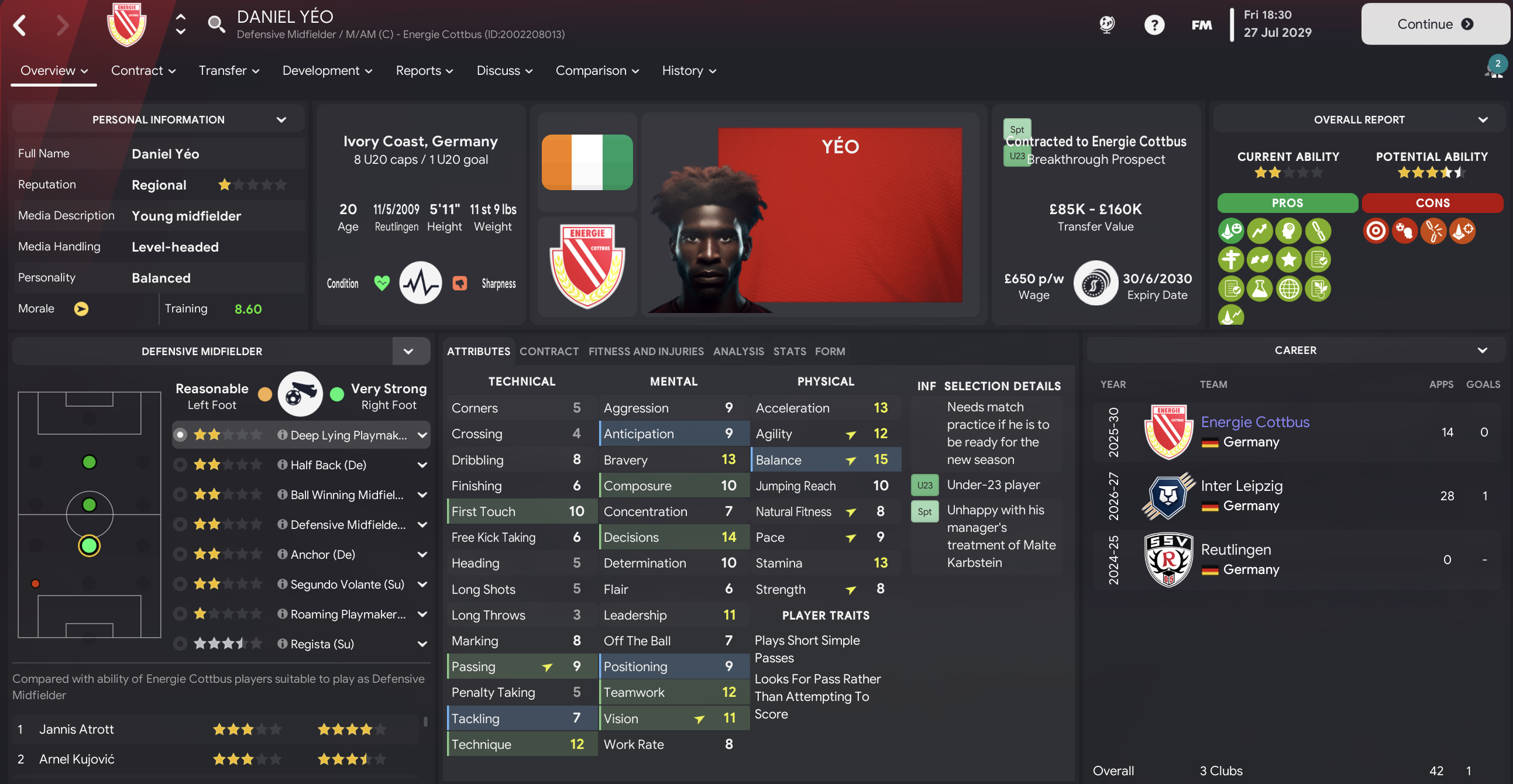
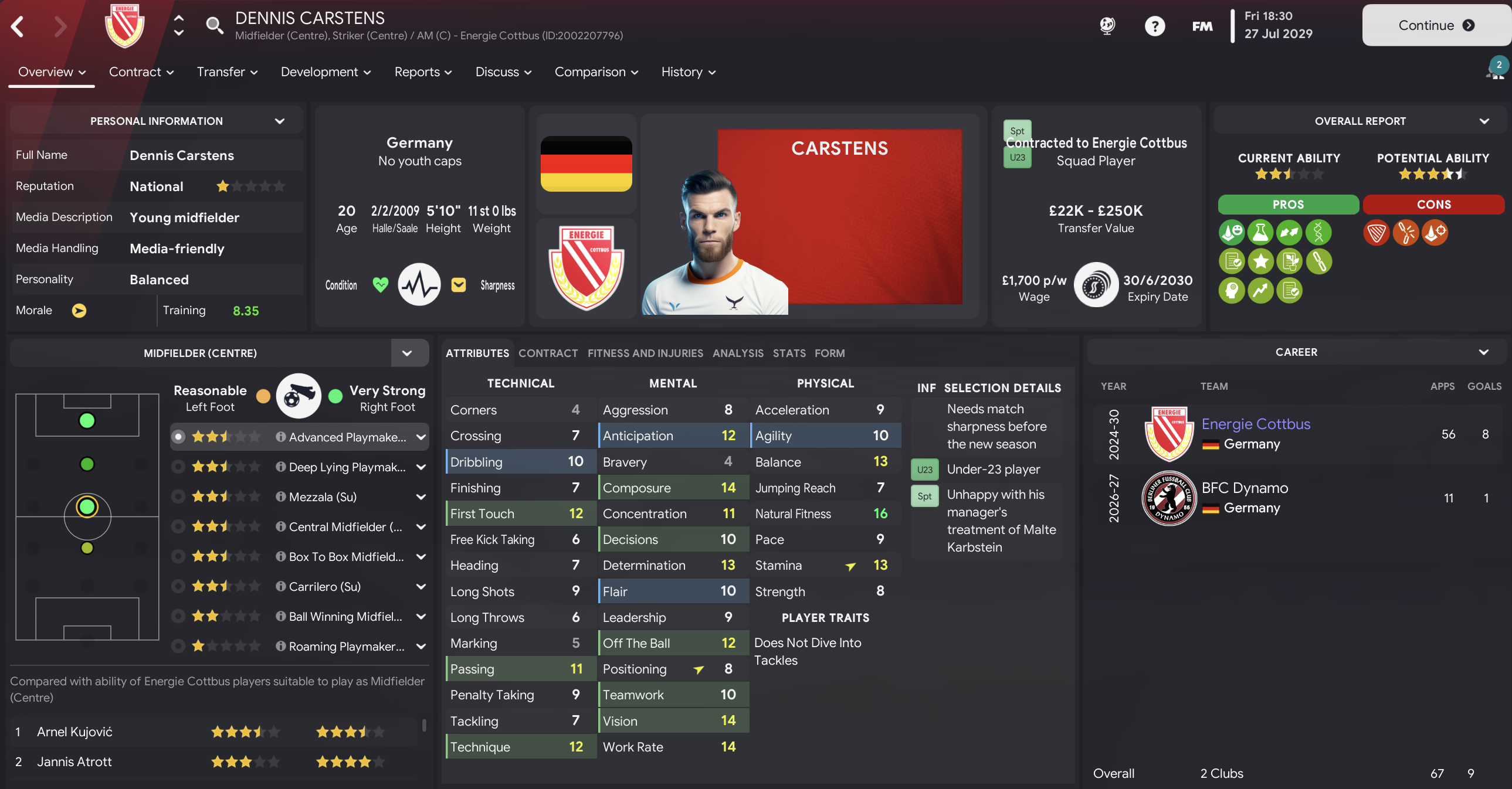
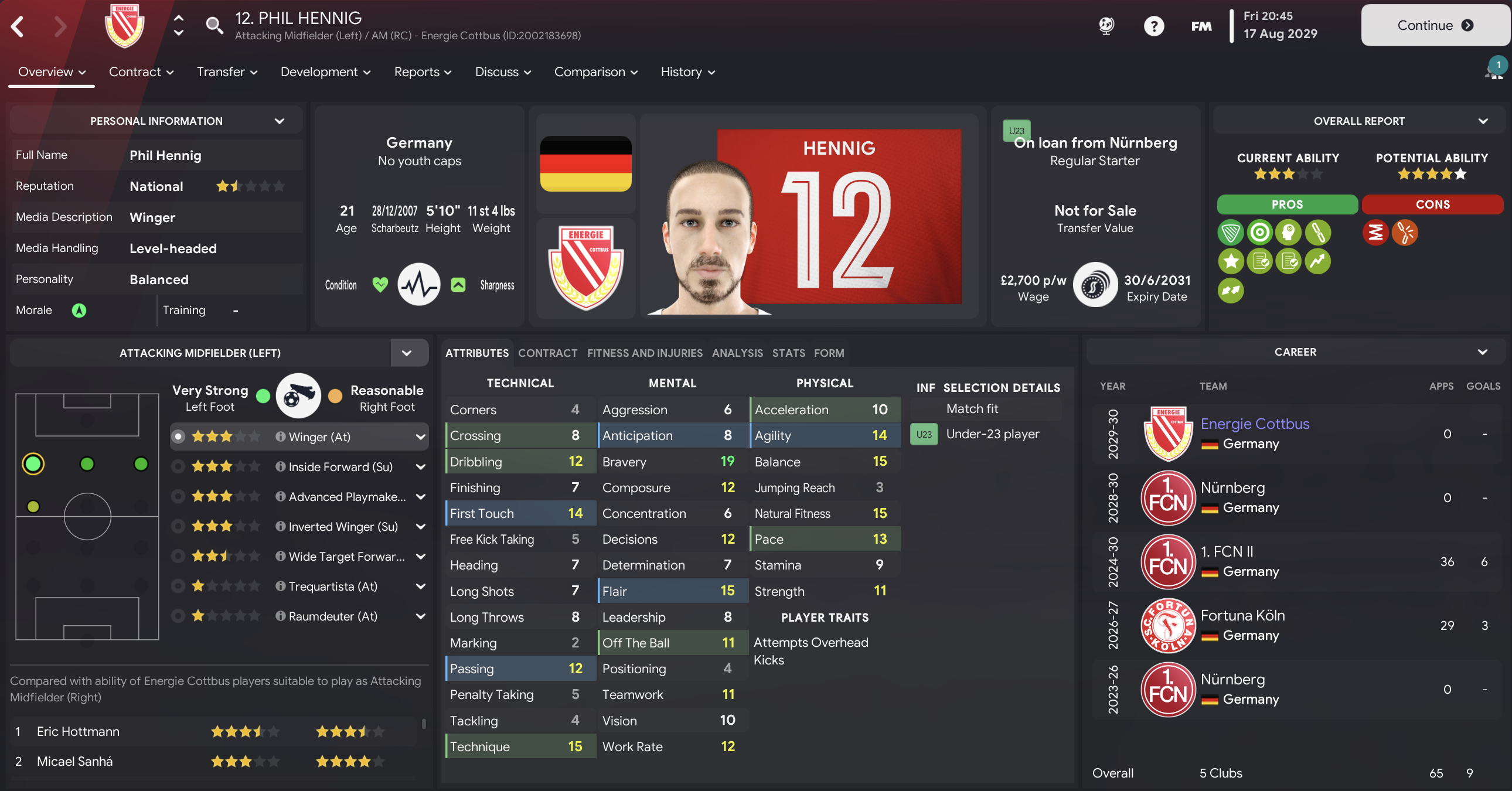


Having assessed the squad available to him, Prusseit decided to plug in the 4-4-2 system that led his Rostock II side to promotion from Regionalliga. And he was hpoepful the strikeforce of Tigges and Eric Hottmann would blow the league away.

Heading Back To Regionalliga Nordost
After a year up in the professional leagues, Prusseit found himself back in the fourth tier. His Cottbus side were third-favourites for Regionalliga Nordost at 9/4 behind old rivals Dynamo Dresden (1/16) and Chemnitzer (15/8).
Life back in tier four began at Reinickendorf and the strikeforce dominated as Hottmann scored inside seven minutes then a Tigges brace sealed a 3-0 victory. Both scored again in Prusseit’s first game at Eduard Geyer Arena then Hottmann and centre-back Jonas Böhmert secured another 2-0 win at Wilmersdorf. And Cottbus hit top gear with a 4-1 thumping of Rathenow with four different scorers, including Sanhá scoring one and creating two.
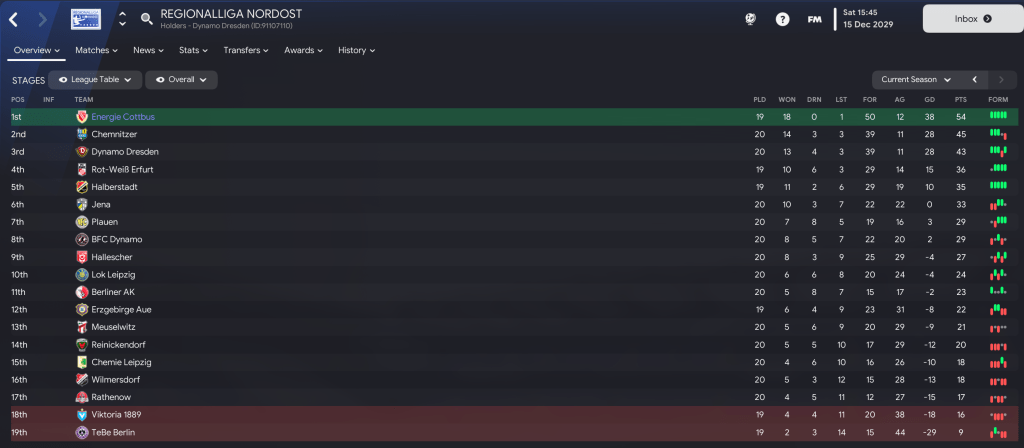
A 2-1 win at Berlin FC Dynamo before Hottmann and Tigges strikes earned a 2-0 win at home to Chemie Leipzig, which took Cottbus top of the league for the first time. And they didn’t let up there, going on to win their first nine league games which, combined with two cup victories, broke the club record for most consecutive victories.
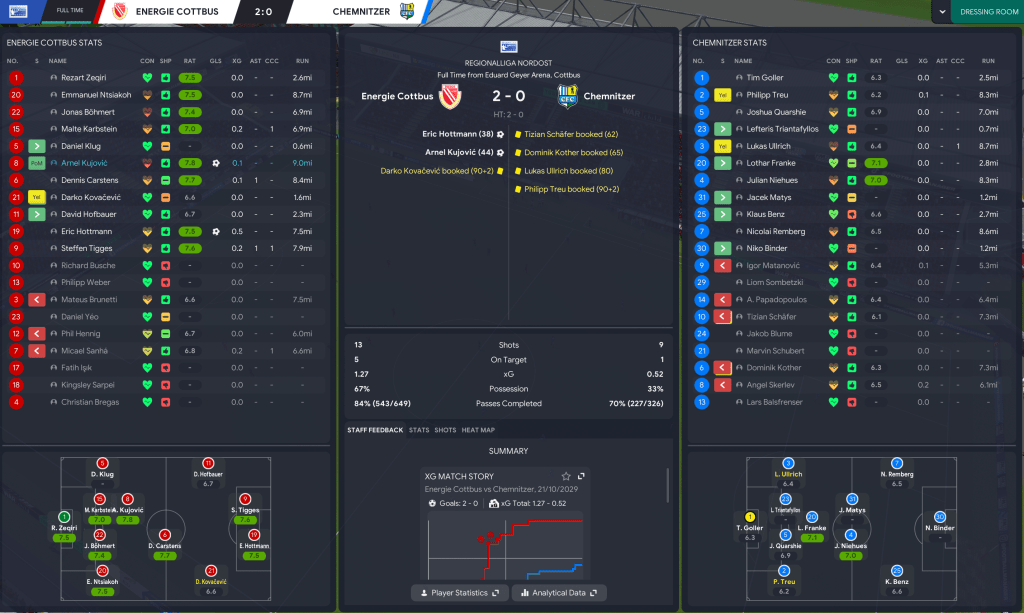
The winning run continued against two local rivals as Tigges hit a hat-trick in a 4-1 thumping of Erzgebirge Aue then a Brunetti penalty was the only goal at Rot-Weiß Erfurt. That teed up a top-of-the-table local clash as 100% Cottbus took on undefeated Chemnitzer. Both teams hit the bar early on but Cottbus seized control as a great Tigges run teed Hottmann up with a tap-in then a brilliant Kujovic 25-yarder doubled the lead just before half-time. They shut the game down after the break to move seven points clear and win 12 out of 12.
They backed that up by hammering strugglers TeBe Berlin 5-1 away led by a Hottmann hat-trick. But the outrageous start to the season ended with a 4-2 defeat at home to Prusseit’s old foes Dynamo Dresden. They got back on track with an easy 2-0 win at Berliner AK, in which they lost star man Hottmann for seven weeks with knee ligament damage. But his replacement Busche took his opportunity by scoring his first senior goal in a 2-0 win at home to Lokomotive Leipzig.
Another OstDeutsche side Plauen was seen off 3-0 away before yet another clean sheet in a 2-0 win at home to Meuselwitz with goals from Hennig and Tigges. And the same two players scored again in the final game of the year to seal a 3-1 win at home to Reinickendorf.
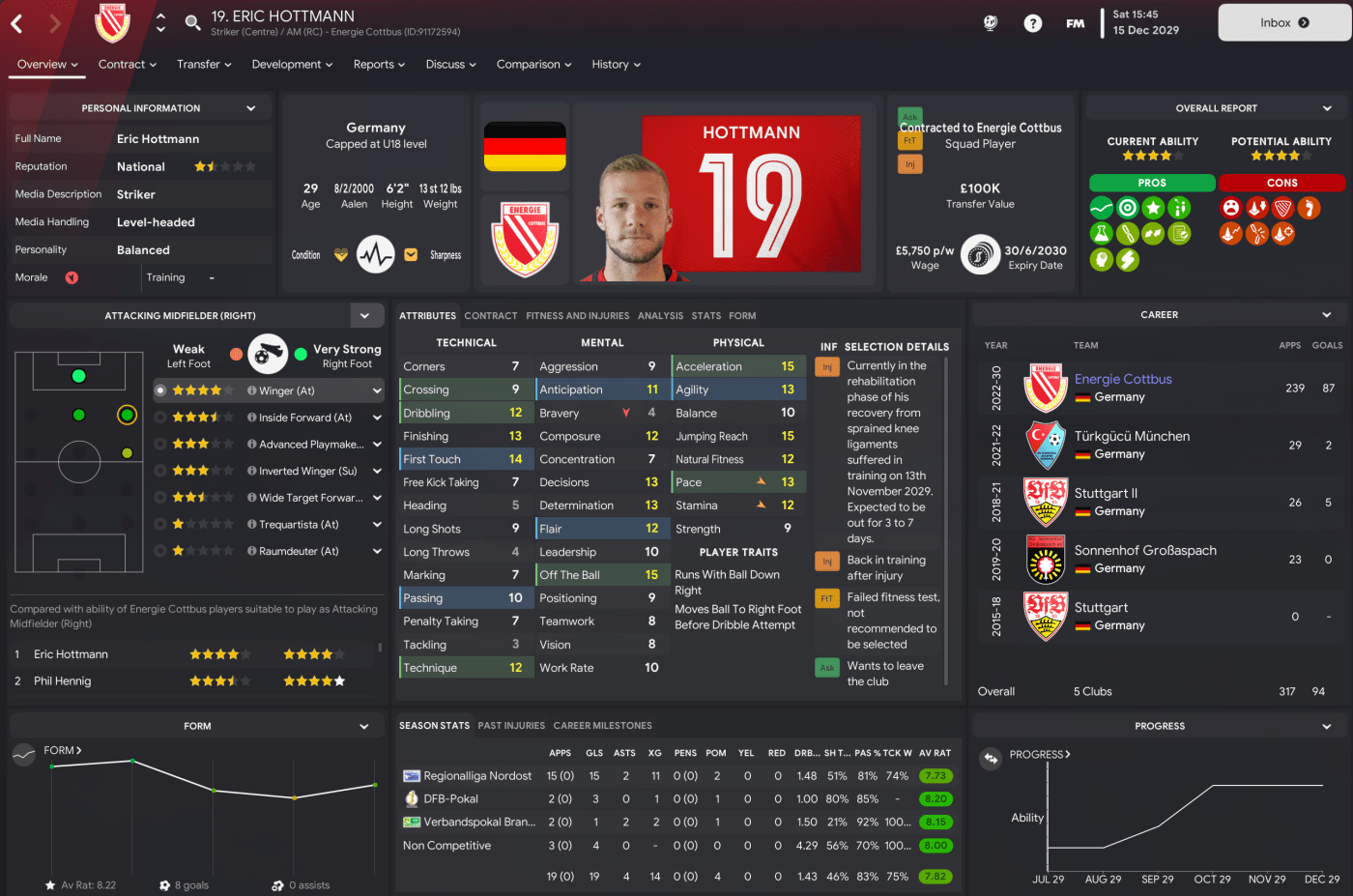
That took Cottbus into the winter break with an impressive nine-point lead over Chemnitzer and 11-point lead over Dresden with a game in hand. They’d still only dropped points once, scored a league-high 50 and conceded 12. Hottmann and Tigges lead the way with 15 goals each, Sanhá tops the assists with 12 and Tigges has the best average rating of 7.84 followed by Hottmann’s 7.73.
Prusseit’s First Taste Of DFB-Pokal
Prusseit’s first game in arguably the cup competition with the prettiest trophy, the DFB-Pokal (German Cup), also saw his first-ever clash with a Bundesliga team as Cottbus entertained Greuter Fürth in the first round. And their strong start to the season continued as a Brunetti penalty and injury-time goal by winger David Hofbauer sealed a famous 2-0 win. Cottbus then took down a 2. Bundesliga side in round two as a Hottmann hat-trick down Heidenheim 3-2.
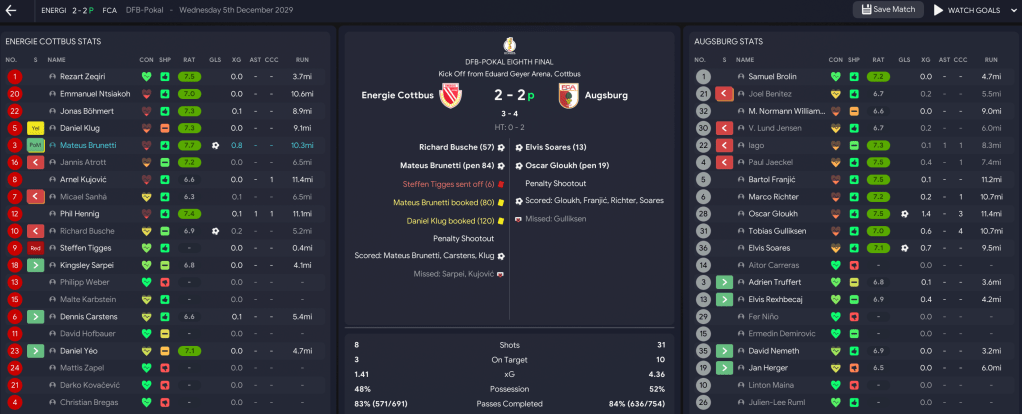
Another 2. Bundesliga side followed as they hosted Augsburg in the “Eighth Final,” or last 16 to normal people. And they again gave it a really good go, even after Tigges was very harshly sent off after just six minutes. Augsburg raced into a 2-0 lead through a penalty that was as dodgy as the sending-off, but Prusseit rallied his troops and they fought back to earn a 2-2 through Busche and Bonetti’s late penalty. But their luck ran out in a penalty shootout, losing it 4-3 on spot kicks with Kujovic missing their sixth.
Could Prusseit maintain Cottbus’ exceptional form and win Regionalliga for the second time in three years? Join us on Monday to find out!


 Football Manager Addict
Leave a comment